
Single drug for reducing sugar surpasses tiverpotide. Combined use is superior to simeglutide. Borui Pharmaceutical (688166.SH) BGM0504 competes for global sugar reduction benchmark
The Zhitong Finance App learned that Borui Pharmaceutical (688166.SH) BGM0504 injection has successively obtained two positive clinical results in hypoglycemic phase III, pointing the competitive reference to the two global sugar reduction benchmarks for tirpotide and simeglutide. In the single-drug study, glycated hemoglobin (HbA1c) decreased 2.6 percentage points from the baseline after 32 weeks of BGM0504 treatment, 93.4% of patients reached HbA1c < 7%, and 51.8% reached the stricter HbA1c < 5.7% target. The reduction value exceeded the results of the listed telpopeptide and simeglutide monotherapy studies, and the ratio of achieving strict sugar control goals also showed outstanding performance.
In a combination treatment study based on oral hypoglycemic agents, the BGM0504 10 mg group had a head-to-head efficacy with the simeglutide 1.0 mg group in the 32nd week main endpoint analysis. HbA1c decreased by an additional 0.46 percentage points, and this advantage was maintained until 52 weeks; the 5mg group also achieved statistical efficacy in the 52-week supplementary analysis. Using the tilpopeptide SURPASS-2 study as an external reference, the BGM0504 10 mg group's glycemic reduction amplitude and HbA1c < 5.7% compliance rate also showed numerical advantages. From the large reduction and high standard rate of a single drug to the direct efficacy and continuous sugar control of combination treatment, BGM0504 is challenging the global sugar reduction benchmark with data from two Phase III studies.
The decline in single drugs surpassed the strict sugar control target of titerpopeptides, and the rate of achievement of strict sugar control targets was outstanding
This single-drug phase III study was a multicenter, randomized, double-blind, placebo-controlled study. A total of 227 subjects were included, and the baseline average HbA1c was about 8.3%. The subjects received BGM0504 5 mg, 10 mg, or placebo, respectively, and were injected subcutaneously once a week. The core treatment period was 32 weeks, and the extended treatment period was 20 weeks after completion.
Based on the treatment plan estimation target (TRE), HbA1c in the 5 mg and 10 mg groups of BGM0504 decreased by 2.2% and 2.6%, respectively, compared with the baseline, and decreased by 0.51% in the placebo group. Both dosage groups achieved statistically superior efficacy compared to placebo, and the 10mg group also achieved statistically superior efficacy compared to the 5mg group. Under the efficacy estimation target (EE), the declines in the two dose groups were also about 2.2% and 2.6%, respectively, and the analysis results of the two estimated targets were highly consistent.
Comparing this result with the telpopeptide monotherapy study, the reduction value of BGM0504 was outstanding. In the SURPASS-CN-MONO phase III study of tirpopeptide in the Chinese single-drug study, HbA1c decreased by 2.19%, 1.75%, and 2.03%, respectively, after 40 weeks of treatment in the TRE caliber, 5 mg, 10 mg, and 15 mg groups, respectively. [1] The reduction in BGM0504 after 32 weeks of treatment was 2.2% and 2.6%, respectively. Among them, the reduction in the 5mg group was higher than in the above three dose groups, and the 10mg group further expanded the decline.
The main efficacy of single-drug studies compared with the decrease in HbA1c
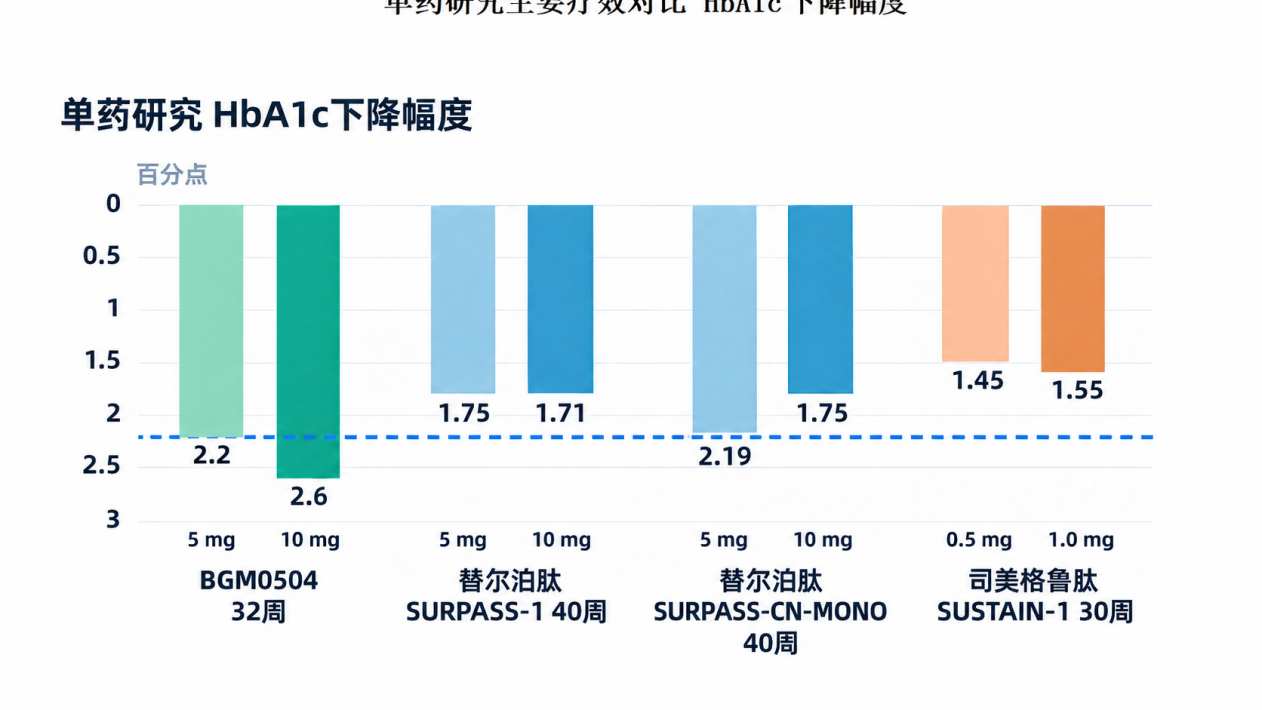
Note: The reduction in the figure uses the TRE caliber, without deducting the placebo effect [1-3]
In the global SURPAS-1 study, the 40-week TRE reduction in the tirpotide 5 mg and 10 mg groups was 1.75% and 1.71%, respectively; in the simeglutide SUSTAIN-1 study, the 30-week reductions were 1.45% and 1.55% in the 0.5 mg and 1.0 mg groups, respectively. [2,3] Judging from the numerical comparison of the above cross-study values, the BGM0504 5 mg group showed a larger glycemic reduction ratio at 32 weeks. The reduction value was higher than the listed tiverpotide and simeglutide dose groups; the drop in the 10 mg group further reached 2.6%, which was most prominent in comparison with data from several other groups of studies.
In addition to the average drop, another outstanding performance of BGM0504 is its high rate of compliance with saccharification standards. At 32 weeks of treatment, the ratio of HbA1c < 7% in the 5mg and 10mg groups was 82.2% and 93.4%, respectively, and 21.7% in the placebo group; 39.9% and 51.8%, respectively, and 2.6% in the placebo group. This means that more than 90% of patients in the 10mg group achieved the HbA1c < 7% target, and more than half reached the stricter HbA1c < 5.7% level.
According to TRE caliber, the compliance rates for terpotide 5mg and 10mg groups listed in Surpass-CN-Mono were 90.4% and 79.2%, respectively, and the ratio of HbA1c < 5.7% was 40.4% and 29.8%, respectively. [1] Both compliance values for the BGM0504 10mg group were higher than those two dosage groups; the strict compliance ratio of 51.8% was 11.4 percentage points higher than the higher value of 40.4% in the two groups.
Among the 5 mg and 10 mg groups listed by the Global Surpass-1 Research Institute, the compliance rates of titerpotide HbA1c < 5.7% were 30.9% and 26.8%, respectively; the 0.5 mg and 1.0 mg HBA1C < 7% compliance rates were 74.0% and 72.0%, respectively. [2,3] This data comparison provides a reference for understanding the sugar control performance of BGM0504, and also shows that it has surpassed telpotide and simeglutide in terms of glycation reduction and compliance rate.
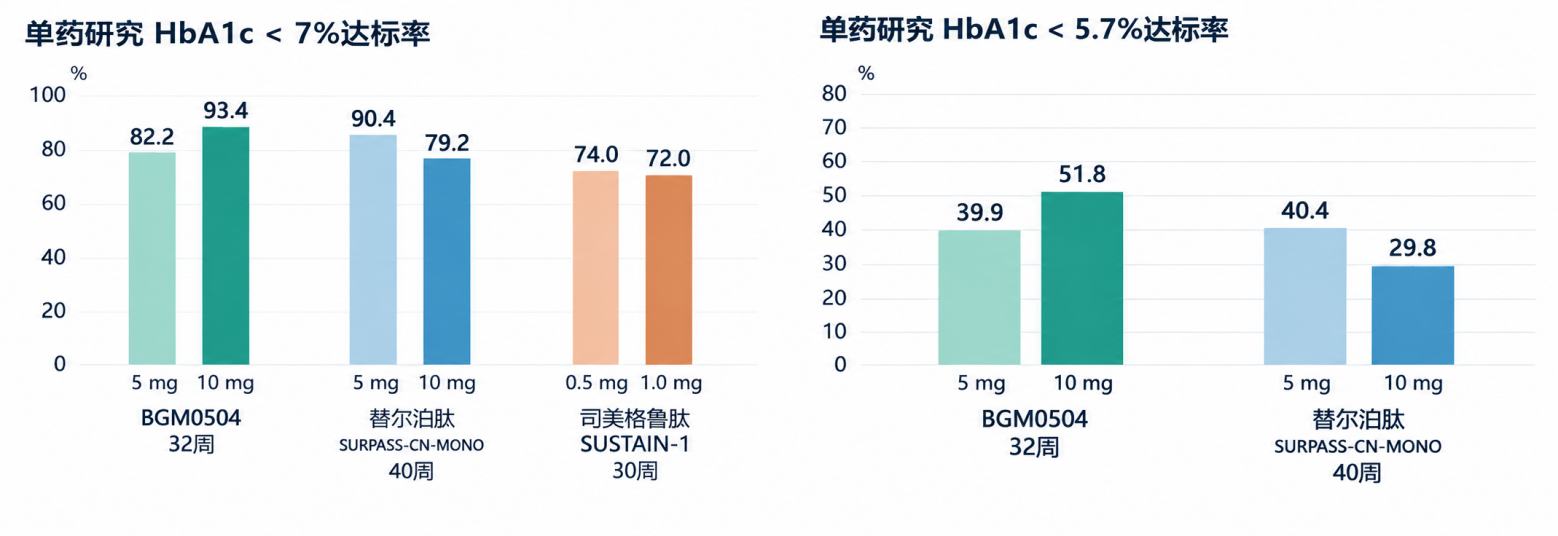
Note: The compliance rate in the figure uses TRE caliber; SURPASS-CN-MONO shows 5 mg and 10 mg groups, and Sustain-1 does not show HBA1c < 5.7% data. [1,3]
In terms of safety and tolerability, according to the announcement, BGM0504 performed well overall in single-drug studies. Most common gastrointestinal adverse reactions are transient, mild to moderate, and can recover in a short time without intervention or simple symptomatic treatment. During the 52-week treatment period, the rate of withdrawal of the test group due to adverse events and the incidence of severe hypoglycemia events were 0.
Combining head-to-head treatment was effective with simeglutide in hypoglycemic performance versus standard tirpotide
In addition to the single-drug study, another phase III study of BGM0504 used simeglutide 1.0 mg as a positive control to directly test its ability to further control blood sugar based on treatment with oral hypoglycemic agents such as metformin. The study targeted Chinese adult type 2 diabetics with poor blood sugar control after previous oral medication. Subcutaneous injections were given once a week. The treatment period was 52 weeks. The main end point was changes in HbA1c relative to baseline in week 32.
The main efficacy results showed that in the 32nd week of treatment, HbA1c decreased by 2.05%, 2.41%, and 1.95% in the BGM0504 injection 5 mg group, 10 mg group, and smeglutide 1.0 mg group, respectively, compared with the baseline. The BGM0504 10 mg group decreased 0.46 and 0.36 percentage points more than the simeglutide 1.0 mg group and the BgM0504 5 mg group, respectively. Both comparisons achieved statistically significant efficacy. By week 52, the three groups of HbA1c decreased by 2.07%, 2.34%, and 1.88%, respectively; the BGM0504 10 mg group decreased 0.46 and 0.27 percentage points more than the simeglutide 1.0 mg group and the 5 mg group, respectively, all of which achieved statistically significant benefits.
The BGM0504 injection 5 mg group also showed continuous hypoglycemic effects. Supplementary analysis in week 52 showed that the 5mg group was 0.19% lower than the simeglutide group, achieving statistically significant efficacy. The above results showed that the 10 mg group showed clear advantages in reducing sugar at both observation time points, while the 5 mg group showed superior efficacy compared to simeglutide in the 52nd week of supplementary analysis, further highlighting the long-term sugar control performance of the 5 mg group.
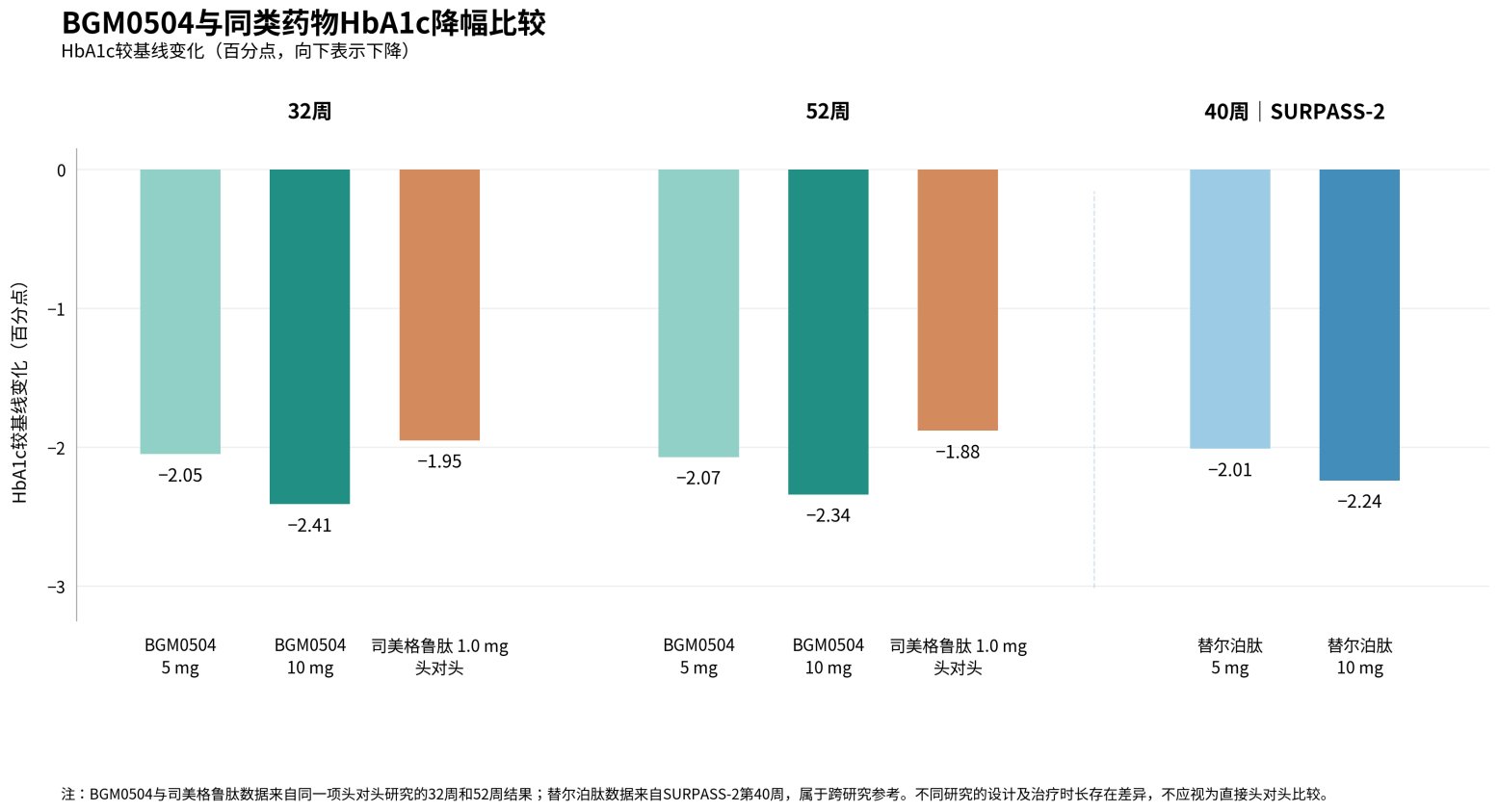
Note: The above is a direct comparison of the same combined treatment study. The TRE caliber was used; the 5 mg group achieved non-poor results in 32 weeks, the 52-week supplementary analysis achieved excellent results, and the 10 mg group achieved statistically superior results at 32 weeks and 52 weeks.
BGM0504 also showed outstanding performance in combination treatment studies against tirpopeptides, a global benchmark for hypoglycemia. According to TRE caliber, in the SURPASS-2 study, the decrease in HbA1c in the 5 mg and 10 mg groups after 40 weeks of treatment was 2.01 and 2.24 percentage points, respectively; in the BGM0504 study, the declines in the 5 mg and 10 mg groups after 32 weeks of treatment were 2.05 and 2.41 percentage points, respectively. In this cross-study numerical comparison, the additional glycemic reduction range of the BGM0504 10 mg group was higher than that of the 5 mg and 10 mg groups of terpopeptides, showing strong competitiveness in reducing sugar.
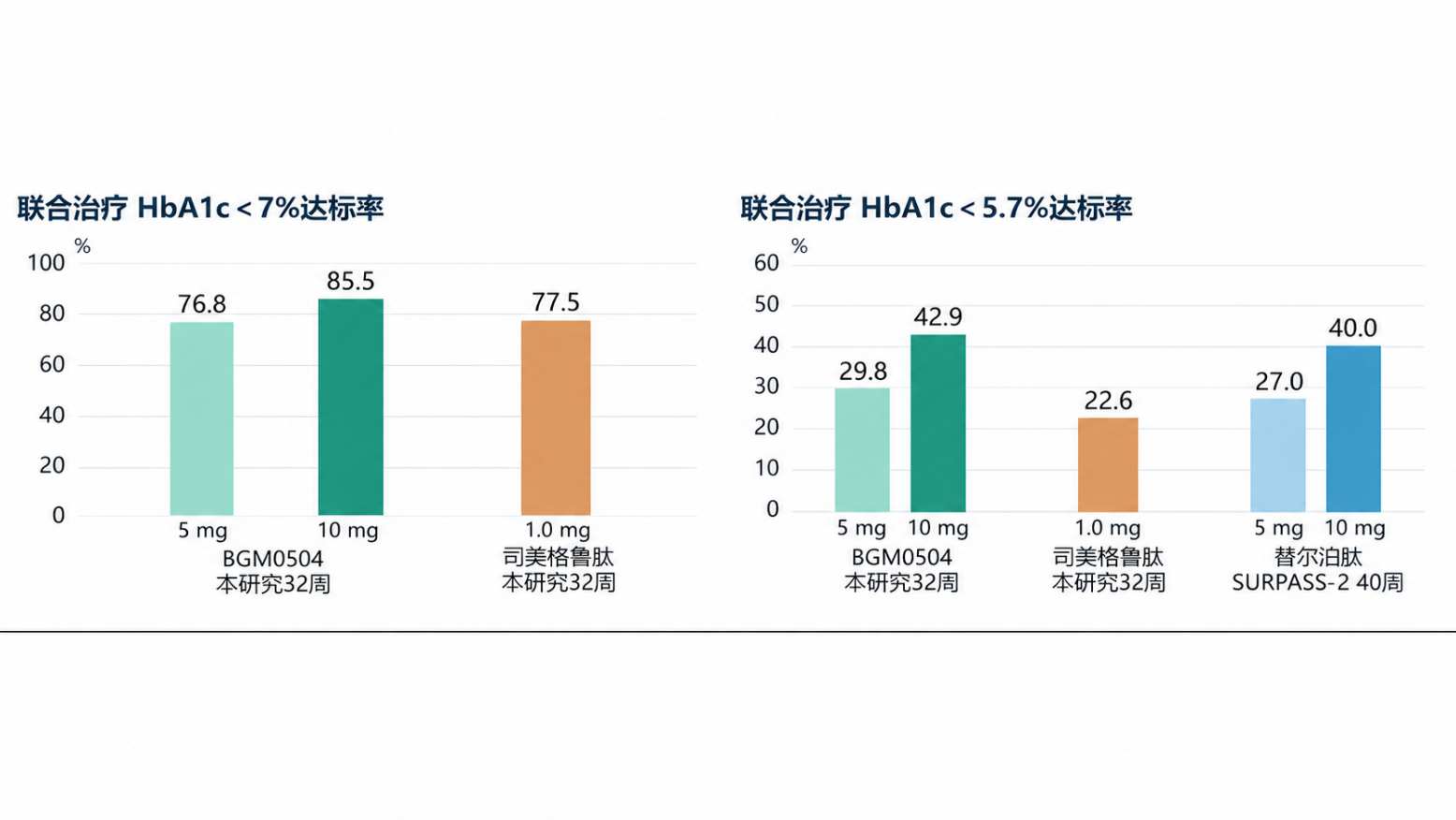
Note: The comparison between BGM0504 and simeglutide in this study was a 32-week data, and the telpotide was a 40-week data for SURPASS-2, using TRE caliber. The average baseline HbA1c in the BGM0504 study was 8.43%, and SURPAS-2 was 8.28% [4]; cross-study comparisons were for descriptive reference only.
The rate of compliance with glycation standards further showed the benefits of head-to-head research. At 32 weeks of treatment, the ratio of HbA1c < 7% in the BGM0504 10mg group was 85.5%, and 77.5% in the simeglutide group. The former was 8.0 percentage points higher; the proportion that reached the stricter HbA1c < 5.7% target was 42.9% and 22.6%, respectively, and 20.3 percentage points higher in the BGM0504 group.
Looking at the stricter HbA1c < 5.7% target, the 32-week compliance rates for BGM0504 were 29.8% and 42.9%, respectively, higher than 27.0% and 40.0% of the same dose group listed in SURPASS-2 for 40 weeks. [4]
In terms of safety and tolerability, according to the announcement, BGM0504 performed well overall in combination treatment studies. Most common gastrointestinal adverse reactions are transient, mild to moderate, and can recover in a short time without intervention or simple symptomatic treatment. During the 52-week treatment period, only 0.54% of the trial group withdrew from the trial due to adverse events related to the study drug, and no serious hypoglycemia events occurred.
A double breakthrough in reduction and compliance with standards BGM0504 shows strong ability to control sugar
To evaluate a hypoglycemic drug, it is necessary to combine the average reduction in HbA1c with the patient's actual compliance rate. The former reflects an improvement in overall blood sugar, while the latter reflects the proportion of patients meeting pre-set glycation goals. The core value of this BGM0504 data lies in the large reduction rate and high strict compliance ratio under TRE in single-drug studies, as well as direct evidence of the efficacy of simeglutide in combination treatment. Numerical leadership across studies and statistical efficiency within the same study should be understood separately.
In the single-drug phase III study, the BGM0504 10 mg group showed strong hypoglycemic efficacy: HbA1c decreased by an average of 2.6 percentage points under the TRE caliber, up to 93.4% of participants met the HbA1c < 7% standard, and 51.8% of participants reached the stricter HbA1c < 5.7% target. In the combined treatment study for patients with poor oral medication control, BGM0504 also performed well: a head-to-head comparison showed that the reduction in HbA1c in the 10 mg group on the main efficacy endpoint index in week 32 was significantly superior to that of simeglutide 1.0 mg (achieving statistically superior efficacy), and the compliance rate of HbA1c < 7% and < 5.7% was 8.0 and 20.3 percentage points higher, respectively. This reduction remained stable in week 52, supporting its strong sugar control performance that continued until 52 weeks. Based on the control drug selection in different studies, the excellent efficacy achieved by BGM0504 directly compared to simeglutide 1.0 mg, and the maintenance of this advantage until 52 weeks, provided a more direct basis for evaluating its incremental value as a relatively mature hypoglycemic treatment.
Professor Ji Linong, the main investigator of the phase III clinical study of BGM0504 injection for adult type 2 diabetes and director of the Department of Endocrinology at Peking University People's Hospital, said, “I am very satisfied with the results of the two phase III clinical trials of BGM0504 injection for single drug and combination treatment in adult type 2 diabetics! Among participants receiving monotherapy, glycated hemoglobin decreased by 2.6%, the proportion of participants who achieved HbA1c < 7% reached 93.4%, and participants who achieved normal glycation levels of HbA1c < 5.7% reached 51.8%. In the combination treatment group, the results of a head-to-head comparison study of BGM0504 and simeglutide showed that the 10mg group met the pre-set non-poor efficacy indicators and achieved statistical efficacy at 32 weeks and 52 weeks; the 5mg group also achieved non-poor efficacy indicators at 32 weeks and achieved excellent efficacy in supplementary analysis at 52 weeks; participants in this treatment group could reduce glycated hemoglobin by 2.41%, achieving 85.5% of participants with HbA1c < 7%, achieving a normal glycation level of hB1h1< 7% 5.7% of participants It reached 42.9%. Furthermore, key secondary indicators such as fasting blood sugar were significantly improved, and cardiovascular indicators such as body weight and blood pressure all benefited significantly. What is even more encouraging is that BGM0504 shows excellent safety. I am very much looking forward to these two studies providing key supporting evidence for the approval and marketing of BGM0504, providing efficient and safe treatment options for the vast majority of patients with type 2 diabetes.”
Dr. Yuan Jiandong, Chairman of Borui Pharmaceutical, said, “Currently, the chronic disease management concept for adult diabetes in China is continuing to be upgraded. It is no longer just about controlling blood sugar levels, but is shifting to comprehensive management that takes into account overall improvement of cardiovascular metabolism, reduces the risk of complications, and improves long-term quality of life. For the majority of patients with type 2 diabetes, if a drug can simultaneously improve key metabolic indicators such as body weight, blood pressure, and blood lipids, it will bring new value to long-term disease management. We will make every effort to accelerate the marketing application of BGM0504. We also look forward to this innovative peptide drug benefiting patients as soon as possible, carrying our vision of continuing to use innovative drugs to empower chronic disease management and benefit patients, and provide new treatment options for domestic type 2 diabetics that balance sugar reduction and metabolic protection.”
Competition data source
[1] Tirpotide (Eli Lilac) SURPASS-CN-MONO study. Yin Y, Ma J, Liu D, et al. Tirzepatide monotherapy in Chinese patients with early type 2 diabetes: A randomized, double-blind, placebo-controlled phase 3 trial (SURPASS-CN-MONO). Med. 2026; 7:101183. The 40-week TRE reduction and HBA1c compliance rate in the article are shown in the published supplementary materials Table S2 and Figure S2 (Table S2 is on page 5 of the supplementary PDF). DOI: 10.1016/j.medj.2026.101183 Open Supplementary Material
[2] Telpotide (Eli Lilac) SURPAS-1 study. Rosenstock J, Wysham C, Frias JP, et al. Complications and safety of a novel dual GIP and GLP-1 receptor agonist tirzepatide in patients with type 2 diabetes (SURPASS-1): a double-blind, randomised, phase 3 trial. Lancet. 2021; 398 (10295) :143—155. In the article, the 40-week TRE reduction and HbA1c < 5.7% compliance rate are shown in the public supplementary material Table S6 (Treatment-Regimen Estimand, Supplementary PDF, starting page 15). DOI: 10.1016/S0140-6736 (21) 01324-6
[3] Smeglutide (Novo Nordisk) STUDY 1. Sorli C, Harashima SI, Tsoukas GM, et al. Once-weekly semaglutide monotherapy versus placebo in patients (1): a double-blind, randomised, placebo-controlled, parallel-group, Multinational, multicentre phase 3a trial. Lancet Diabetes Endocrinol. 2017; 5 (4): 251—260. The 30-week HbA1c decline in the article is shown in Table 2, and the HbA1c < 7% compliance rate is shown in Table 3. DOI: 10.1016/S2213-8587 (17) 30013-X
[4] Telpotide (Eli Lilac) SURPASS-2 study. Frías JP, Davies MJ, Rosenstock J, et al. Tirzepatide vs. Semaglutide Once Weekly in Patients with Type 2 Diabetes. N Engl J Med. 2021; 385:503 —515. See main text and Figure 1A for the 40-week TRE reduction in the article. The HbA1c < 5.7% compliance rate is shown in Figure 1C; the average baseline HbA1c is shown in Table 1. DOI: 10.1056/NejMoA2107519