
Missed Arhaus's Run? Here's What Holders Bought Into
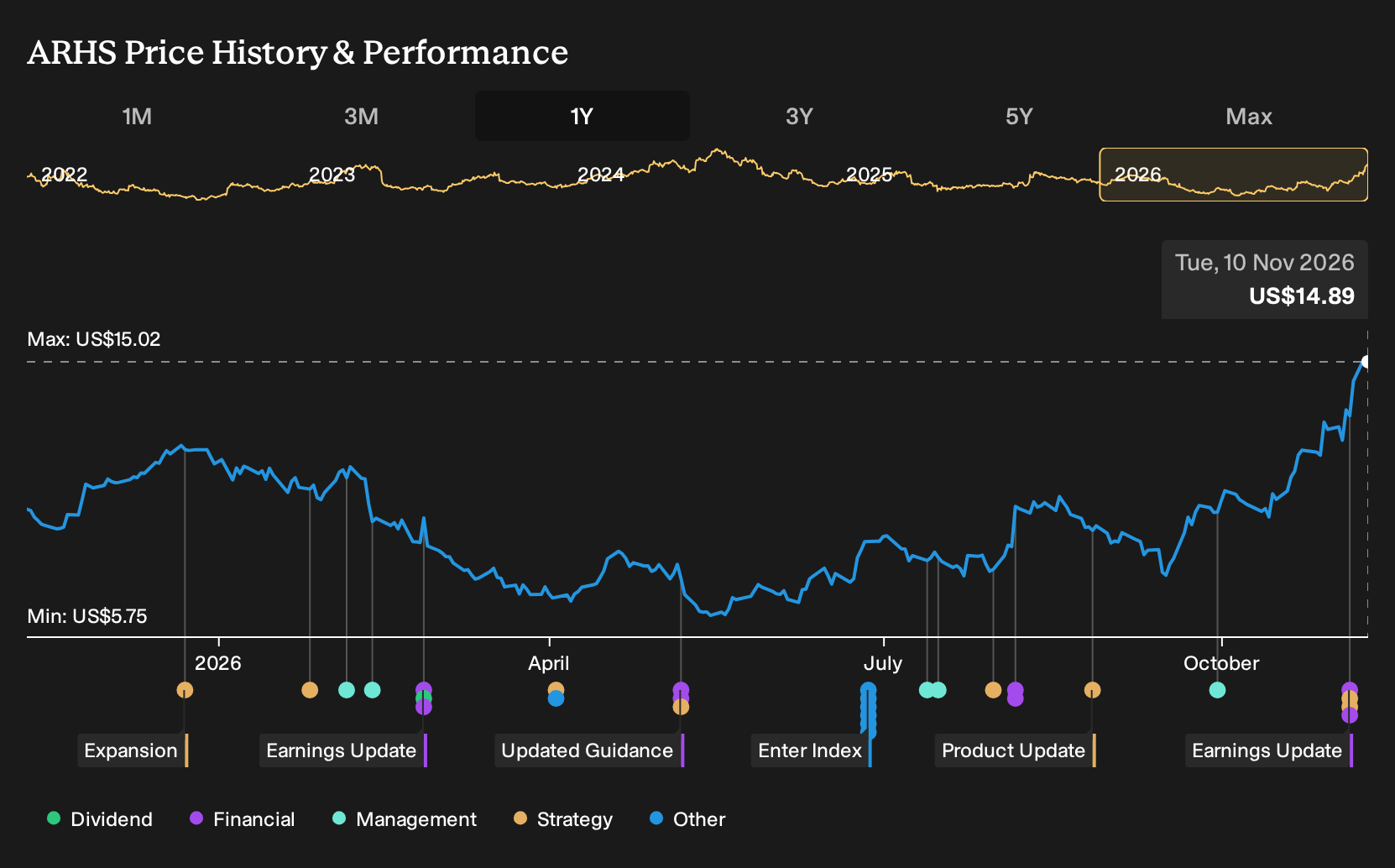
If you had paused in November 2025 over the split views on Arhaus, wondering whether premium showrooms or shrinking living spaces would matter more, that hesitation looks very different today. Investors who held Arhaus over the past year are up 63.9%, including dividends. With fresh headlines about record quarterly revenue, a new Chief Digital Officer, and mixed commentary on same-store trends, the real question is what early buyers were weighing about margins, capital intensity, and digital execution.
The easy part of this move is behind Arhaus. Zero in on 36 high quality undervalued stocks for companies trading below our estimates.
The Two Arhaus Stories Investors Had To Weigh
The shares cost US$9.57 at the start of the period, and Arhaus sat between two very different but plausible stories about its future.
On the optimistic side, the bull view saw a lifestyle brand benefiting from premium, customizable and sustainable furnishings, with a Fair Value of US$12.08, a price implied by assumptions like 6.7% annual revenue growth and a 5.3% profit margin.
The bearish narrative pointed to shrinking living spaces and digital rivals, attaching a Fair Value of US$8.5 based on expectations of 6.2% revenue growth and margins drifting to 4.6%.
What The Arhaus Results Actually Tested
Record Q3 2026 net revenue of US$368.1 million, helped by high end demand and new showrooms, leaned toward the optimistic Arhaus case that focused on brand appeal and store expansion. The same period showed net income of US$7.8 million and a net margin of 2.1%, below the prior 3.5%, which challenged the stronger margin story. Overall, the evidence cut both ways.
The key assumption here was not demand; it was profitability. When you study another retailer, track whether net margin is moving in the same direction as revenue before relying on any premium growth thesis.
What Arhaus Buyers Are Paying For Now
Arhaus now trades at US$14.88, and the analyst consensus Narrative on Simply Wall St places its Fair Value below that level. That view leans on strong showroom and design channel momentum, plus a multi year push into upgraded digital and supply chain systems.
The key question for anyone paying today is whether those technology and logistics projects genuinely convert into the hoped for cost savings rather than being swallowed by tariffs, freight and occupancy pressures.
"The main execution risk is that investments in omnichannel platforms and supply chain systems such as the transportation management system, ERP, OMS and POS need to translate into the targeted transportation savings and SG&A leverage rather than being absorbed by ongoing tariff, fuel and occupancy cost headwinds."
The price and this Narrative do not agree. → Uncover what this Narrative says Arhaus is actually worth
Looking Beyond Arhaus
When you think about Arhaus, you probably picture showrooms, not software.
Yet every Arhaus order still relies on payments, credit checks and delivery networks operating quietly in the background.
Elsewhere, a different business focuses almost entirely on that plumbing, running an online marketplace connected to its own payments and lending engine.
It uses that lending arm to fund purchases, move cash and coordinate logistics for buyers still early in their online shopping habits.
If that kind of ecosystem keeps deepening, your watchlist might need to include the infrastructure alongside the furniture brands you already know.
The case is on the record, with the assumptions it rests on. → See the Narrative that values this company 61% above its price
Have feedback on this article? Concerned about the content? Get in touch with us directly. Alternatively, email editorial-team@simplywallst.com