
Will AEye (NASDAQ:LIDR) Spend Its Cash Wisely?
We can readily understand why investors are attracted to unprofitable companies. For example, although software-as-a-service business Salesforce.com lost money for years while it grew recurring revenue, if you held shares since 2005, you'd have done very well indeed. But while history lauds those rare successes, those that fail are often forgotten; who remembers Pets.com?
Given this risk, we thought we'd take a look at whether AEye (NASDAQ:LIDR) shareholders should be worried about its cash burn. In this article, we define cash burn as its annual (negative) free cash flow, which is the amount of money a company spends each year to fund its growth. We'll start by comparing its cash burn with its cash reserves in order to calculate its cash runway.
When Might AEye Run Out Of Money?
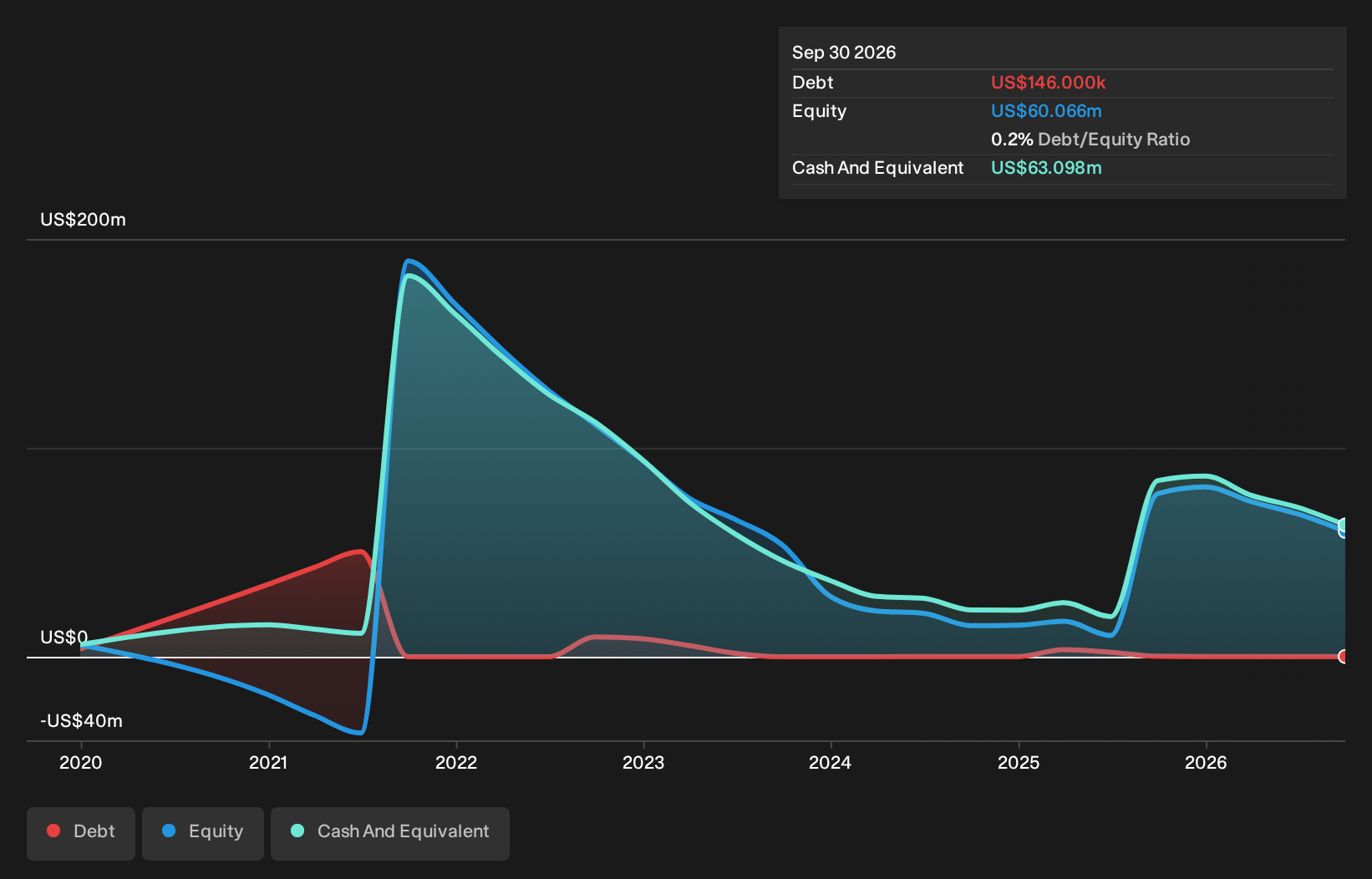
A company's cash runway is calculated by dividing its cash hoard by its cash burn. As at September 2026, AEye had cash of US$63m and such minimal debt that we can ignore it for the purposes of this analysis. Importantly, its cash burn was US$32m over the trailing twelve months. Therefore, from September 2026 it had 2.0 years of cash runway. That's not too bad, but it's fair to say the end of the cash runway is in sight, unless cash burn reduces drastically. Depicted below, you can see how its cash holdings have changed over time.
Check out our latest analysis for AEye
How Is AEye's Cash Burn Changing Over Time?
In our view, AEye doesn't yet produce significant amounts of operating revenue, since it reported just US$906k in the last twelve months. As a result, we think it's a bit early to focus on the revenue growth, so we'll limit ourselves to looking at how the cash burn is changing over time. With the cash burn rate up 26% in the last year, it seems that the company is ratcheting up investment in the business over time. However, the company's true cash runway will therefore be shorter than suggested above, if spending continues to increase. While the past is always worth studying, it is the future that matters most of all. For that reason, it makes a lot of sense to take a look at our analyst forecasts for the company.
Can AEye Raise More Cash Easily?
Given its cash burn trajectory, AEye shareholders may wish to consider how easily it could raise more cash, despite its solid cash runway. Issuing new shares, or taking on debt, are the most common ways for a listed company to raise more money for its business. Many companies end up issuing new shares to fund future growth. We can compare a company's cash burn to its market capitalisation to get a sense for how many new shares a company would have to issue to fund one year's operations.
AEye has a market capitalisation of US$40m and burnt through US$32m last year, which is 79% of the company's market value. That's very high expenditure relative to the company's size, suggesting it is an extremely high risk stock.
How Risky Is AEye's Cash Burn Situation?
On this analysis of AEye's cash burn, we think its cash runway was reassuring, while its cash burn relative to its market cap has us a bit worried. Looking at the factors mentioned in this short report, we do think that its cash burn is a bit risky, and it does make us slightly nervous about the stock. On another note, AEye has 4 warning signs (and 1 which is a bit unpleasant) we think you should know about.
Of course, you might find a fantastic investment by looking elsewhere. So take a peek at this free list of interesting companies, and this list of stocks growth stocks (according to analyst forecasts)
Have feedback on this article? Concerned about the content? Get in touch with us directly. Alternatively, email editorial-team (at) simplywallst.com.