
Missed Talanx's Run? Here Is What Holders Saw
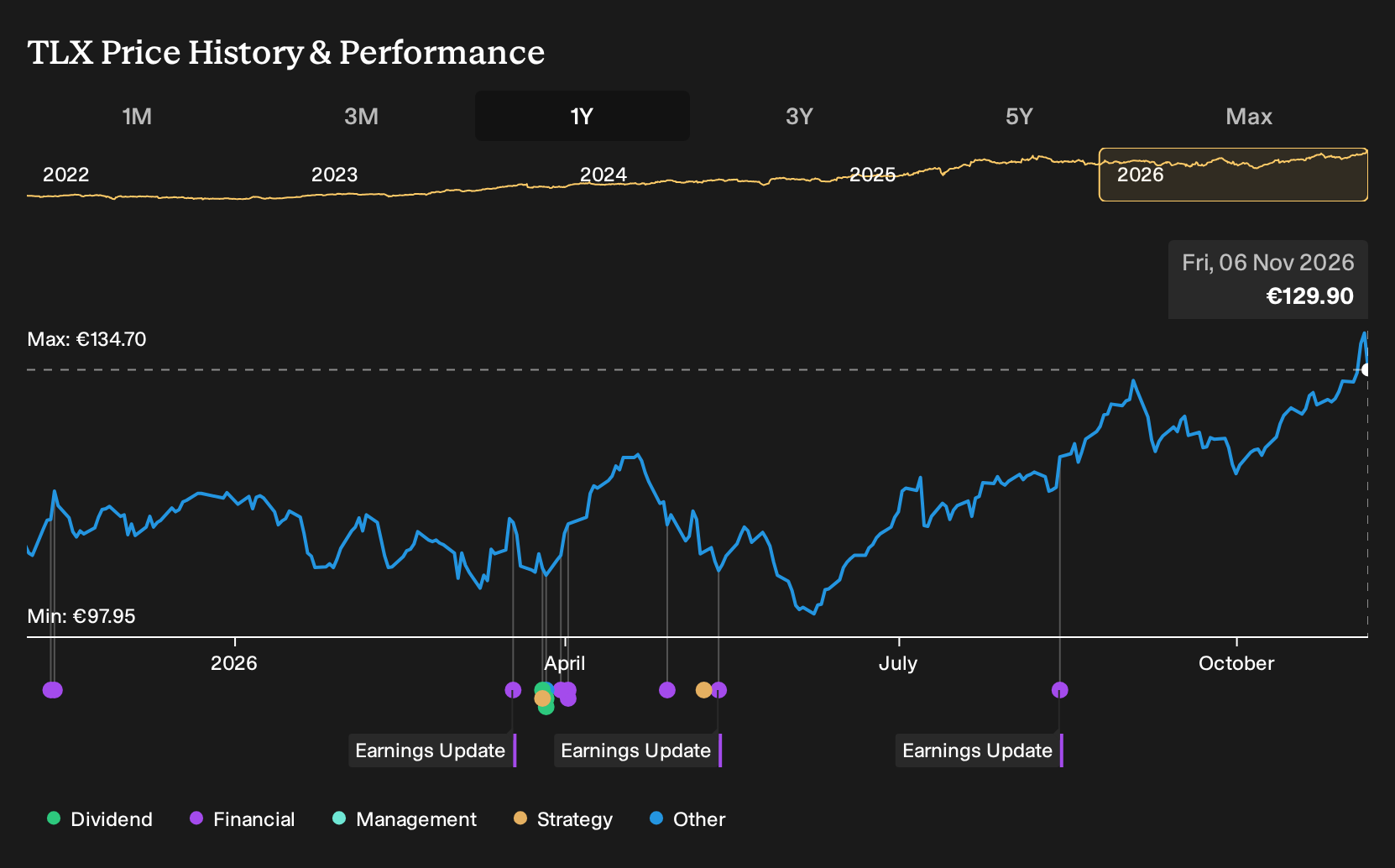
If you had paused on Talanx back on 6 November 2025, the debate between bullish growth hopes and bearish climate and digital worries was already on record. Holding Talanx over the past year would have returned 27.2%, including dividends. That outcome now throws a sharper light on what early buyers were weighing. Were climate exposure, softening markets, and digital lag enough to offset global insurance demand and strong solvency or not quite?
This theme extends beyond Talanx. See which of 40 profitable AI stocks that aren't just burning cash may still merit a closer look.
The Argument You Would Have Been Weighing On Talanx
The shares cost €106 at the start of the period, which put anyone looking at Talanx in the middle of a live argument about what that price really implied.
The bullish story pointed to a Fair Value of €125, a notional target price based on the idea that global wealth and climate risks would lift insurance demand and support structural earnings growth. Supporters leaned on assumptions that Talanx could keep expanding internationally while using digitalisation to trim costs.
The bearish view anchored on a Fair Value of €76, a theoretical level if climate hazards, stricter regulation, and digital disruption steadily eroded margins. That side focused on risks from higher catastrophe losses, pressure on investment income, and competition from alternative risk transfer and insurtech rivals.
What The Results Changed For The Talanx Debate
The Q2 2026 report gave Talanx supporters and sceptics fresh numbers to argue over. Revenue moved from €13,437m in Q2 2025 to €10,540m in Q2 2026 and net income slipped from €769m to €725m, while net margin widened from 5.7% to 6.9%. That mix of softer top line and firmer profitability cut both ways for the original cases.
The useful takeaway is simple. When a thesis leans heavily on earnings quality, as with Talanx, it is important to track both margin and absolute profit together in later filings rather than treating either one in isolation.
What Today's Talanx Price Already Assumes
Today Talanx trades at €130, up sharply from €106 a year ago. The selected Narrative sets its Fair Value below that level, arguing that the current quote already bakes in resilient earnings, strong solvency and confident capital use.
The key question for buyers is what must keep going right for that price to hold. The Narrative highlights that investors are effectively assuming Retail International keeps delivering high growth and that expansion and reinvestment plans translate cleanly into sustained, profitable progress.
"The focus now shifts from broad structural headwinds to more specific concerns around meeting medium term growth targets, reliance on Retail International, and execution risk in capital allocation and expansion plans. Very strong recent profitability at Talanx, with record first quarter net income of €774m in 2026 and €1.5b for the first half of 2026 together with ROE above 21%, could signal that the business model is more resilient than the bearish view allows and that earnings and return on equity remain higher for longer than expected."
That disagreement has a full argument behind it. → Uncover the lower Fair Value this Narrative argues for
Looking Past Talanx Today
Once you have an opinion on Talanx, the next step is context. You can compare how another large insurer is reshaping its own economics.
Here the shared need is clear. Big carriers want underwriting that wastes less money and claims processes that move faster.
One European group is leaning hard on AI for marketing, risk selection and claims handling. It is also pushing roadside assistance toward fully digital, faster responses.
The same insurer is broadening health coverage and developing its asset management activities. That combination aims for steadier protection business and fee income.
If you want a comparison point for Talanx, that kind of AI heavy, multi pillar model offers a different way to think about scale.
That argument has a Narrative and a number behind it. → See the company one Narrative values 30% above its price
Have feedback on this article? Concerned about the content? Get in touch with us directly. Alternatively, email editorial-team@simplywallst.com