
Don't Race Out To Buy Hindustan Unilever Limited (NSE:HINDUNILVR) Just Because It's Going Ex-Dividend
It looks like Hindustan Unilever Limited (NSE:HINDUNILVR) is about to go ex-dividend in the next three days. The ex-dividend date is commonly two business days before the record date, which is the cut-off date for shareholders to be present on the company's books to be eligible for a dividend payment. The ex-dividend date is important as the process of settlement involves at least two full business days. So if you miss that date, you would not show up on the company's books on the record date. This means that investors who purchase Hindustan Unilever's shares on or after the 12th of November will not receive the dividend, which will be paid on the 25th of November.
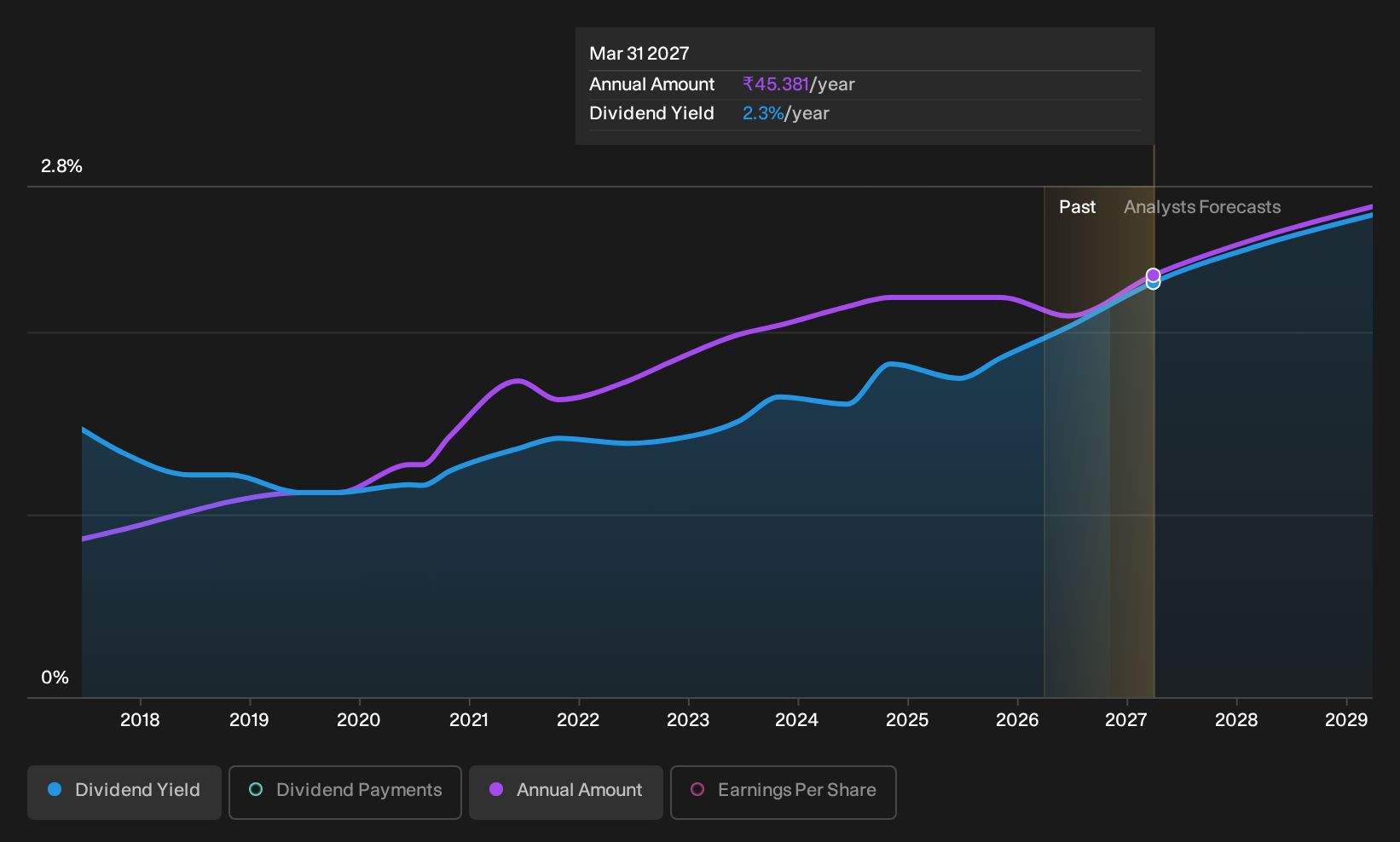
The company's next dividend payment will be ₹19.00 per share. Last year, in total, the company distributed ₹41.00 to shareholders. Based on the last year's worth of payments, Hindustan Unilever has a trailing yield of 2.1% on the current stock price of ₹1998.40. If you buy this business for its dividend, you should have an idea of whether Hindustan Unilever's dividend is reliable and sustainable. We need to see whether the dividend is covered by earnings and if it's growing.
Dividends are typically paid out of company income, so if a company pays out more than it earned, its dividend is usually at a higher risk of being cut. Last year Hindustan Unilever paid out 91% of its profits as dividends to shareholders, suggesting the dividend is not well covered by earnings. A useful secondary check can be to evaluate whether Hindustan Unilever generated enough free cash flow to afford its dividend. It paid out 85% of its free cash flow as dividends, which is within usual limits but will limit the company's ability to lift the dividend if there's no growth.
It's good to see that while Hindustan Unilever's dividends were not well covered by profits, at least they are affordable from a cash perspective. Still, if this were to happen repeatedly, we'd be concerned about whether the dividend is sustainable in a downturn.
See our latest analysis for Hindustan Unilever
Click here to see the company's payout ratio, plus analyst estimates of its future dividends.
Have Earnings And Dividends Been Growing?
Stocks in companies that generate sustainable earnings growth often make the best dividend prospects, as it is easier to lift the dividend when earnings are rising. Investors love dividends, so if earnings fall and the dividend is reduced, expect a stock to be sold off heavily at the same time. This is why it's a relief to see Hindustan Unilever earnings per share are up 5.8% per annum over the last five years.
Another key way to measure a company's dividend prospects is by measuring its historical rate of dividend growth. Hindustan Unilever has delivered an average of 9.9% per year annual increase in its dividend, based on the past 10 years of dividend payments. It's encouraging to see the company lifting dividends while earnings are growing, suggesting at least some corporate interest in rewarding shareholders.
The Bottom Line
Has Hindustan Unilever got what it takes to maintain its dividend payments? While earnings per share have been growing slowly, Hindustan Unilever is paying out an uncomfortably high percentage of its earnings. However it did pay out a lower percentage of its cashflow. Bottom line: Hindustan Unilever has some unfortunate characteristics that we think could lead to sub-optimal outcomes for dividend investors.
So if you're still interested in Hindustan Unilever despite it's poor dividend qualities, you should be well informed on some of the risks facing this stock. Case in point: We've spotted 1 warning sign for Hindustan Unilever you should be aware of.
Generally, we wouldn't recommend just buying the first dividend stock you see. Here's a curated list of interesting stocks that are strong dividend payers.
Have feedback on this article? Concerned about the content? Get in touch with us directly. Alternatively, email editorial-team (at) simplywallst.com.