
Top 3 Canadian Energy Stocks With Earnings Growth Over 78%
Energy is back in the spotlight as wars in Ukraine and the Middle East focus governments and households on fuel costs, power security and the pace of electrification. Canadian oil and gas companies sit right in the crosshairs of that debate, with producers, pipelines and service groups all touched by shifting demand and policy. This article highlights three Canadian oil and gas stocks from our screener that many investors are watching closely.
The three stocks below are just a small sample, with our full Oil and Gas screen surfacing 45 more companies worldwide that carry equally compelling narratives for investors tracking this sector.
If you want to identify and analyze potential high conviction ideas tailored to your own filters, head straight into the Oil and Gas screener.
Spartan Delta (TSX:SDE)
Overview: Spartan Delta is a Calgary based producer that drills for and develops crude oil and natural gas in Western Canada’s Duvernay and Deep Basin.
Operations: Spartan Delta generates about CA$611 million in revenue from exploration, development and production of oil and gas reserves in North America.
Market Cap: CA$2.30b
Spartan Delta provides upstream exposure to Western Canadian oil and gas, with Duvernay and Deep Basin assets that are directly linked to its production plans. The company targets higher condensate output within its broader operating strategy. Investors may wish to consider how margins would be affected if a single key assumption on future drilling returns were to change.
If that drilling math is front of mind for you, pull up the DCF valuation analysis for Spartan Delta to see how small shifts in assumptions could reshape Spartan Delta’s risk reward profile.
Cenovus Energy (TSX:CVE)
Overview: Cenovus Energy develops and refines crude oil and natural gas, with a heavy focus on Canadian oil sands feeding its integrated operations.
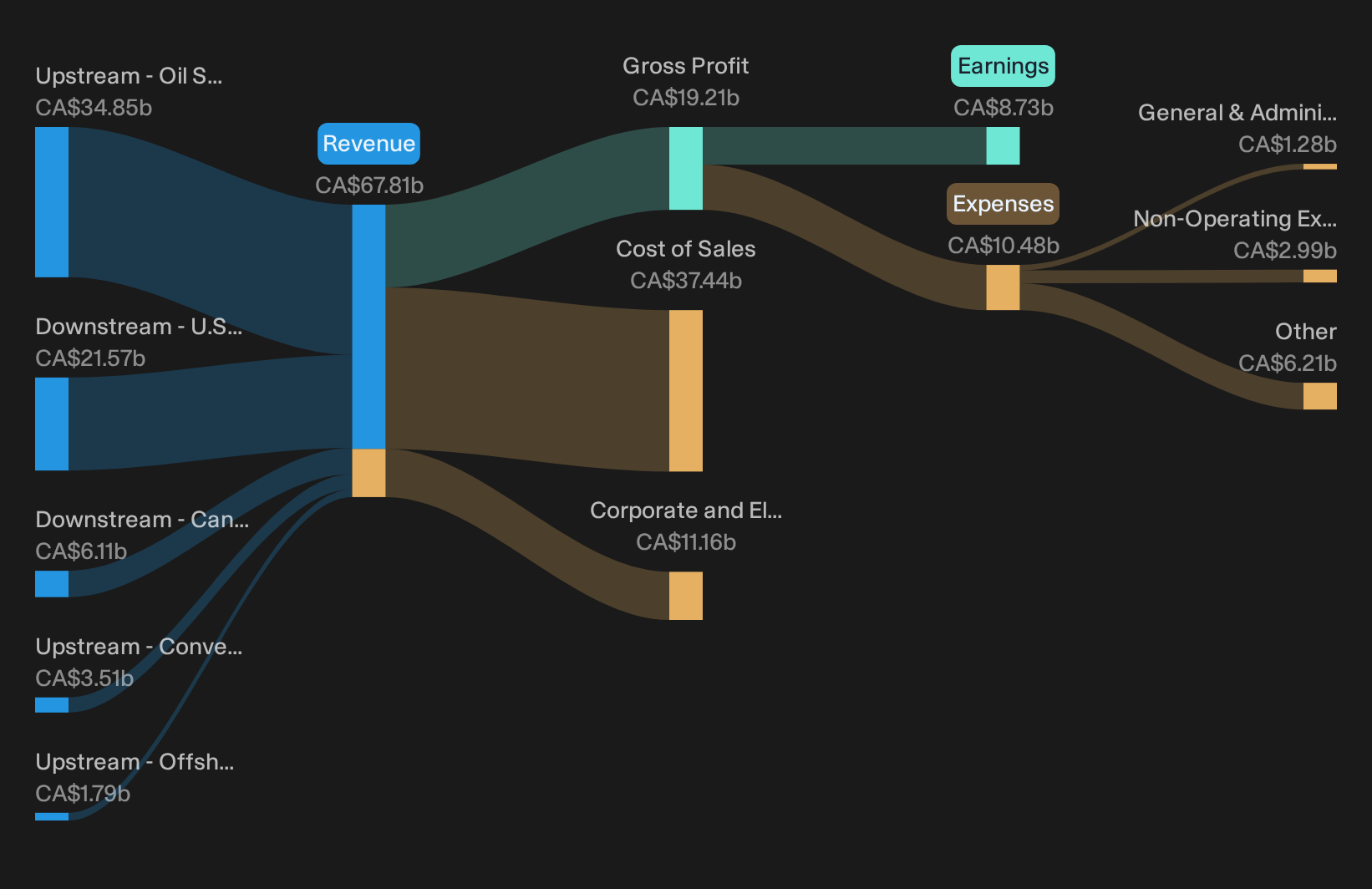
Operations: Cenovus generates about CA$35.8b from oil sands, CA$3.5b from conventional assets and CA$1.8b offshore, with CA$21.6b from U.S. refining and CA$6.1b from Canadian refining, while most revenue comes from Canada and the United States.
Market Cap: CA$70.0b
Cenovus Energy matters for this Oil and Gas screen because it ties large scale Canadian oil sands production directly into its own refineries and fuels network, which puts both sides of the barrel, extraction and processing, inside one integrated system that depends heavily on project execution.
"Successful completion of key growth projects such as Narrows Lake, West White Rose, and the Foster Creek optimization is set to deliver significant new, stable, long-life production with lower steam oil ratios and reduced capital spending needs moving forward, positioning Cenovus Energy for higher free cash flow and earnings."
The real swing factor for Cenovus Energy is how one evolving cost pressure ultimately feeds through into those future margin and cash flow ambitions.
That cost pressure is only half the story, with the full narrative for Cenovus Energy unpacking how Cenovus Energy’s execution, capital choices and risk trade offs could reshape the next phase.
Suncor Energy (TSX:SU)
Overview: Suncor Energy is an integrated producer that mines Alberta oil sands bitumen, upgrades it into crude and sells refined fuels.
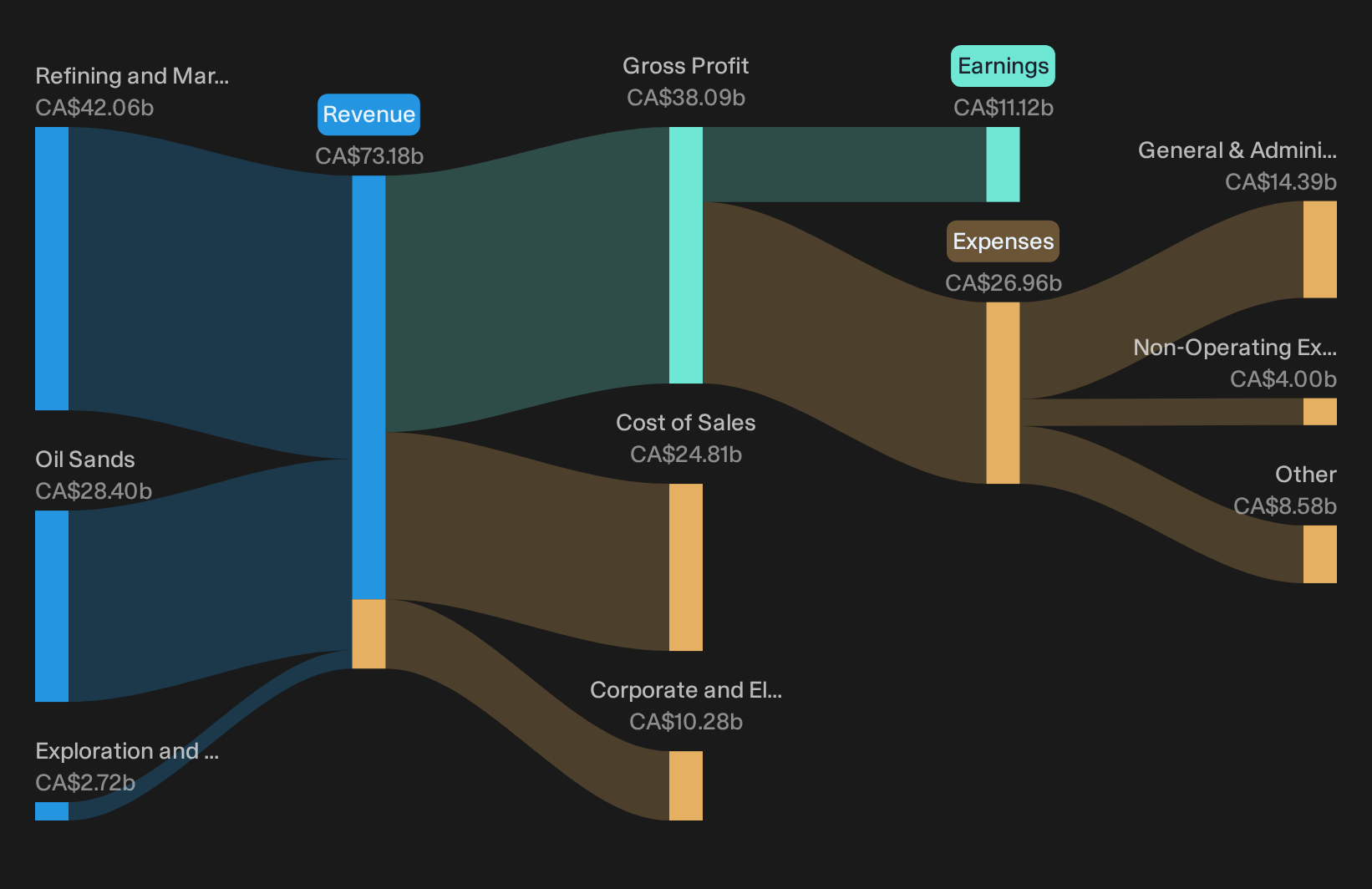
Operations: Suncor generates about CA$28.4b from Oil Sands and CA$42.1b from Refining and Marketing, with CA$2.7b from Exploration and Production.
Market Cap: CA$111.8b
Suncor Energy matters in this Oil and Gas screen because its oil sands mining and upgrading feed directly into a large refining and fuel sales network, tying upstream bitumen production to downstream cash generation in a single integrated chain.
"Reliance on very high utilization of existing oil sands and refining assets, including refinery runs consistently at or above 100% and upgrader utilization above 100%, leaves little unused capacity to offset unplanned outages, which could pressure volumes and compress margins if reliability slips from current record levels."
For investors, the key question is what happens to Suncor Energy’s margin profile if a single reliability or cost assumption no longer holds.
If that reliability question is front of mind, the full narrative for Suncor Energy explains how Suncor Energy could turn operating strain into accelerating cash strength and overlooked optionality.
Seeking Alternatives Beyond Oil And Gas?
Fresh ideas move fast. Some sectors quietly build breakout momentum while attention stays elsewhere and the best entry points get caught and gone before the crowd. Act now.
- Spot income anchors for a choppy market and scan a curated pool of resilient payers using the 3 dividend fortresses while yields and prices still align.
- Ride the next wave of real-world automation and track carefully filtered operators through the 90 robotics and automation stocks before capital floods in and compresses your opportunity.
- Position ahead of the next computing shift and review a tight selection of enablers with the 53 AI infrastructure stocks while they remain under the radar for now.
Have feedback on this article? Concerned about the content? Get in touch with us directly. Alternatively, email editorial-team@simplywallst.com