
Hamilton Insurance Group Earnings Report Means For Shareholders
- Hamilton Insurance Group reported third quarter 2026 revenue of US$828.04 million and net income of US$81.46 million, with diluted EPS from continuing operations of US$0.81.
- For the first nine months of 2026, Hamilton Insurance Group generated revenue of US$2.43 billion and net income of US$358.78 million, with higher top-line figures alongside softer earnings per share.
- We will now look at how Hamilton Insurance Group's revenue growth together with lower net income could reshape its broader investment narrative.
Compare Hamilton Insurance Group's earnings profile with other insurers by scanning list of solid balance sheet and fundamentals (25 results) that could handle similar profit swings without stressing their finances.
Hamilton Insurance Group Investment Narrative Recap
For Hamilton Insurance Group, the core belief as a shareholder is that disciplined underwriting in specialty and reinsurance can support earnings through profit swings. The latest quarter shows that story under some pressure, with revenue at US$828.04 million and net income at US$81.46 million. The near term hinge point is whether underwriting quality and pricing hold up while earnings per share sit below last year’s level.
The biggest immediate risk is that reliance on specialty and catastrophe exposed reinsurance lines keeps loss ratios choppy, which could further strain net income if large events hit. Recent results, with higher revenue but softer EPS, do not radically change that risk profile. They simply make execution on Hamilton Insurance Group’s underwriting discipline and use of third party capital more important over the next few quarters.
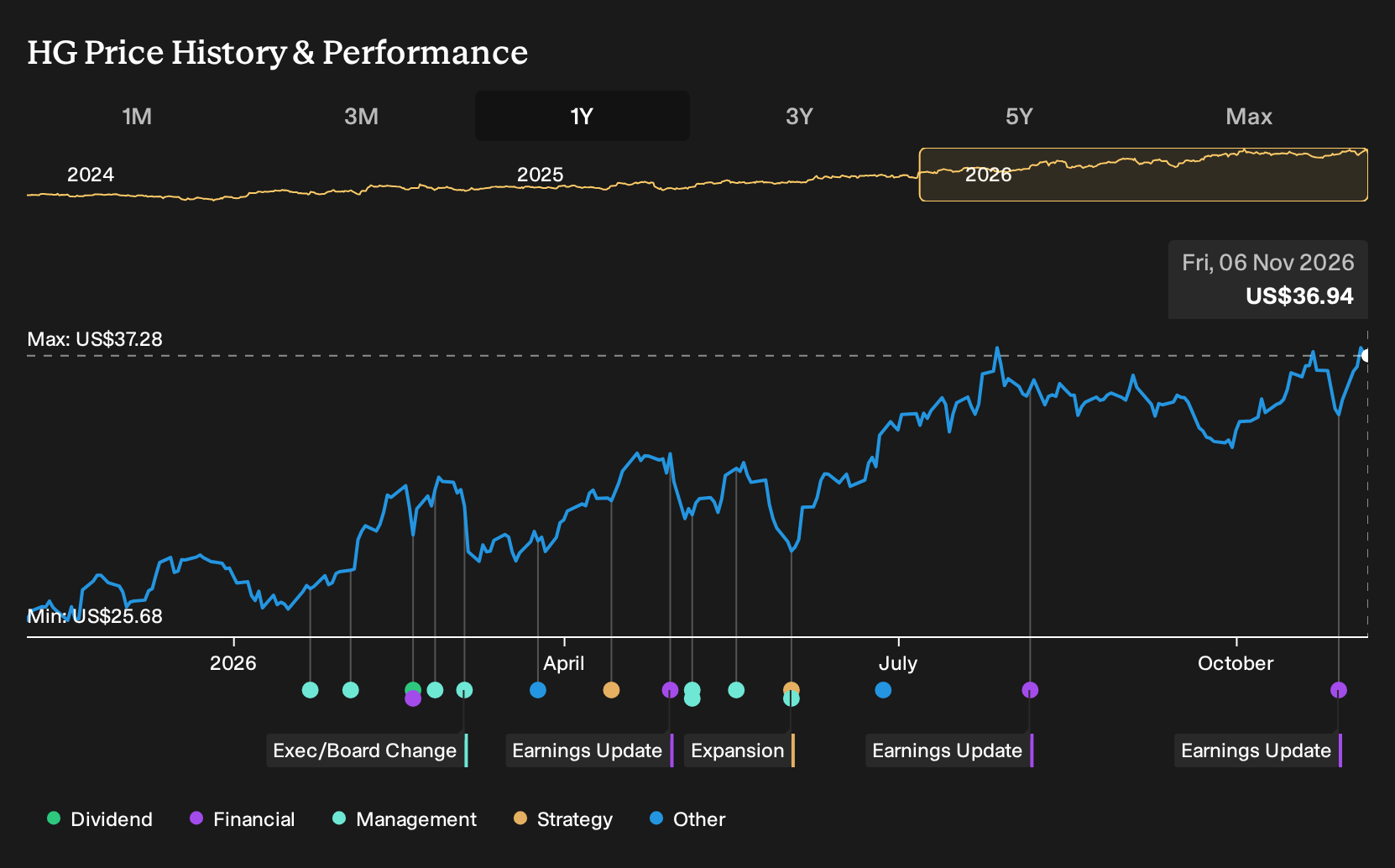
The fresh earnings report itself is the key announcement to focus on for Hamilton Insurance Group. For the nine months to September 30, 2026, the insurer delivered revenue of US$2.43b and net income of US$358.78 million, with diluted EPS from continuing operations of US$3.54. Revenue and profit are both solidly in the black, yet earnings per share are below the prior year period.
For you as an investor, that mix matters. In the short term the catalyst remains how efficiently Hamilton Insurance Group turns that larger top line into underwriting and fee income while managing catastrophe exposure and third party capital structures. The risk side is straightforward. If competitive pressure in property and certain U.S. professional lines forces weaker pricing, or if loss events remain heavy, the recent EPS compression could persist rather than ease.
Hamilton Insurance Group's current earnings are US$585.7 million and analysts are assuming revenue will grow by 3.1% a year, with the consensus pointing to revenues of US$3.3b and earnings of US$546.3 million by 2029. This implies an earnings decline of about US$39.4 million from today.
Uncover why Hamilton Insurance Group's fair value indicates a 4% potential upside to its current price that could narrow quickly.
Exploring Other Perspectives
One alternate view places greater emphasis on pressure in Hamilton Insurance Group’s property reinsurance pricing. The most cautious analysts were estimating roughly flat revenue of about US$2.9b and earnings of around US$561.7 million by 2029 before this earnings release. That is a more pessimistic setup, so use this quarter’s numbers to assess where you agree or disagree and to consider how those forecasts might change from here.
Explore another Hamilton Insurance Group fair value estimate, including one that suggests it could be worth just $38.29.
The Verdict Is Yours
Disagree with existing narratives? Extraordinary investment returns rarely come from following the herd, so consider forming your own view.
- A great starting point for your Hamilton Insurance Group research is our analysis highlighting 4 key rewards and 1 important warning sign that could impact your investment decision.
- See our latest analysis for Hamilton Insurance Group. The report includes a fundamental analysis summarized in a single visual, the Snowflake, making it easier to review Hamilton Insurance Group's overall financial profile at a glance.
Looking for more investment ideas beyond Hamilton Insurance Group?
Once you have formed a view on Hamilton Insurance Group, it can help to line it up against other companies with different risk and income profiles. The Simply Wall St Screener gives you several ways to do that side by side.
- If you want steadier balance sheets to compare with Hamilton Insurance Group, start with a 31 resilient stocks with low risk scores that score well on resilience and financial strength.
- For investors who care most about dependable cash returns, scan a set of 7 dividend fortresses that may offer income while you wait for capital returns.
- If you are hunting for overlooked opportunities, line Hamilton up against a 19 high quality undiscovered gems that pair solid fundamentals with lower market attention.
Have feedback on this article? Concerned about the content? Get in touch with us directly. Alternatively, email editorial-team@simplywallst.com