
Webull And 2 Other Top Penny Stocks To Watch
Markets have been hit hard by the recent selloff in AI related stocks, which has dragged major indexes lower and shaken confidence in many high profile stories. That kind of turmoil often pushes attention away from smaller, financially healthier penny stocks that are not tied to AI hype. This article walks through three such low priced companies from a financially robust penny stock universe and discusses why they might warrant closer attention at this time.
The three stocks highlighted here offer a compelling starting point if you want exposure to lower risk early-stage businesses built on relatively solid financial health. However, if you want the absolute best, these 9 elite penny stocks are the cream of the crop.
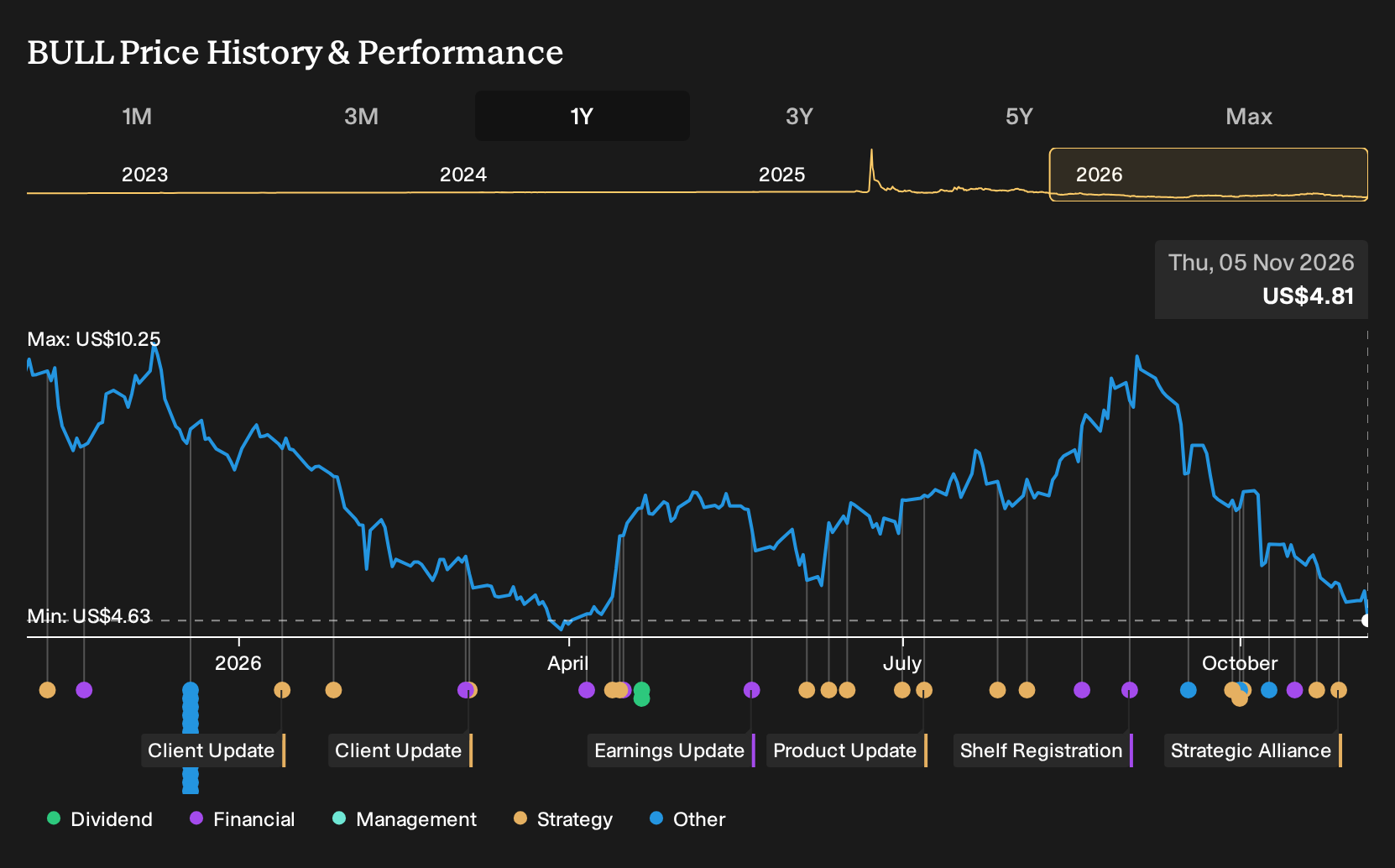
Webull (BULL)
Webull is already familiar to many retail traders as a low cost brokerage. For the Financially Fit Penny Stocks theme it matters because its platform is built to handle sub 5 trading, screening and data in a way smaller speculative brokers often cannot.
Webull Corporation runs a digital investing platform built around brokerage services, where it generated about US$672 million from brokerage revenue, and the stock carries a market value near US$2.6b.
"Ongoing expansion into new international markets, including recent launches in Canada, Latin America, and Europe, is rapidly diversifying Webull's customer base and driving robust growth in assets under management (AUM), which supports future revenue and top-line growth."
The real test is how one unresolved pressure on Webull's business model ultimately feeds through to fee levels, user activity and profit margins.
How that pressure reshapes pricing power and engagement is exactly what the full narrative for Webull unpacks, including how Webull's expansion could accelerate or stall under different scenarios.
Aurora Innovation (AUR)
Aurora Innovation is a self-driving technology specialist whose Aurora Driver platform is a direct fit with the Financially Fit Penny Stocks theme, because it targets commercial use in freight and ride-hail fleets. The business generated about US$7 million from computer services, all in the United States, and carries a market value near US$8.1b.
Aurora Innovation gives this screener exposure to autonomous freight, where a single software and hardware platform is being built to support trucking customers that care about both efficiency and financial resilience.
"Aurora Innovation is currently operating driverless trucks in daily commercial freight without safety drivers and has accumulated more than 500,000 commercial miles, which can position the company as a preferred partner for carriers that want proven autonomy at scale and support higher subscription style revenue as additional fleets seek similar deployment."
The outcome for future margins and cash needs depends heavily on how one capital intensive phase of that rollout ultimately plays out.
That turning point is exactly what the full narrative for Aurora Innovation unpacks, separating capital burn risk from the upside that daily driverless miles could unlock for Aurora Innovation.

Clover Health Investments (CLOV)
Clover Health Investments runs Medicare Advantage PPO and HMO plans for Medicare-eligible members, backed by its Clover Assistant software that supports care management. The insurer generated about US$2.7b in insurance revenue in the United States and has a market value near US$2.4b.
Clover Health Investments brings a different angle to this Financially Fit Penny Stocks list, because its core business is recurring Medicare Advantage premium income supported by a software platform that aims to keep medical spending in check and reward financial discipline over time.
"The company's differentiated technology-driven care model, particularly the Clover Assistant platform, positions it to participate in the healthcare industry's accelerated shift toward technology adoption and data-driven, value-based care, supporting lower medical costs and higher medical margins, with implications for both revenue and net margins."
Everything now hinges on how pressure in medical cost trends eventually flows through to those margins and the earnings profile investors are watching.
That margin question is exactly what the full narrative for Clover Health Investments tackles, mapping how Clover Health Investments could turn medical cost pressure into accelerating earnings power and a more resilient profile.

Seeking Alternatives Before Momentum Flies
Fresh opportunities can move quickly. Some of the strongest setups may gain momentum quietly before wider attention arrives, then move sharply once more investors focus on them. Scan what is still under the radar and consider it while interest remains limited.
- Look for relatively resilient operators that appear to hold up when others weaken by running a quick pass through the 32 resilient stocks with low risk scores while it may still be off most radars.
- Focus on companies that are already generating cash and earnings by running the 42 high quality undervalued stocks before any renewed interest potentially narrows entry ranges.
- Review structural demand in critical metals by screening the 16 top copper producer stocks while projects, producers, and supply constraints may still be assessed differently by slower investors.
Have feedback on this article? Concerned about the content? Get in touch with us directly. Alternatively, email editorial-team@simplywallst.com