
Tesla Will Wind Down Cybertruck Production by Mid-2027 — But the Real Story Is What Replaces It
Tesla (TSLA) CEO Elon Musk announced on Friday, November 6, that the company will wind down Cybertruck production at its Gigafactory Texas around mid-2027, freeing up manufacturing capacity for the Cybercab — Tesla's purpose-built autonomous robotaxi — in a decisive pivot away from a vehicle whose U.S. sales cratered 48% year-over-year in 2025.
The move marks the third product Tesla has canceled this year, following the discontinuation of both the Model S sedan and the Model X SUV at Fremont to make room for Optimus humanoid robot production. This string of cancellations raises the question of whether Musk is strategically streamlining or simply retreating from hardware that failed to deliver.
Cybertruck Sales Never Came Close
Musk once projected annual Cybertruck sales of 250,000 units, yet third-party estimates from Kelley Blue Book indicate U.S. sales totaled only approximately 20,237 units in 2025 — a stunning 48% decline from roughly 38,965 in 2024. In the first nine months of 2026, the trajectory worsened further, with Tesla's broader "Other Models" reporting category recording just 8,295 deliveries in Q3 2026, down from 12,364 the prior quarter.
The vehicle's polarizing angular design, a price that ballooned from an initially promised $39,900 to over $80,000 for the cheapest current configuration, numerous recalls, and a complete inability to gain regulatory approval in Europe all contributed to the underperformance.
The Cybercab Takes Center Stage
The Cybercab — a two-seat autonomous vehicle with butterfly doors and no steering wheel, pedals, or mirrors — is now the focal point of Tesla's Austin manufacturing strategy. Tesla began offering paid Cybercab rides in Austin in September 2026 and has been expanding unsupervised robotaxi operations across multiple Texas and Florida cities, with Fort Worth becoming the seventh U.S. city just this week.
Vehicle engineering chief Lars Moravy indicated that Tesla is targeting initial Cybercab deliveries to external customers by the end of 2026, though production so far has been allocated entirely to Tesla's own fleet.
A Turbulent Week for Musk's Empire
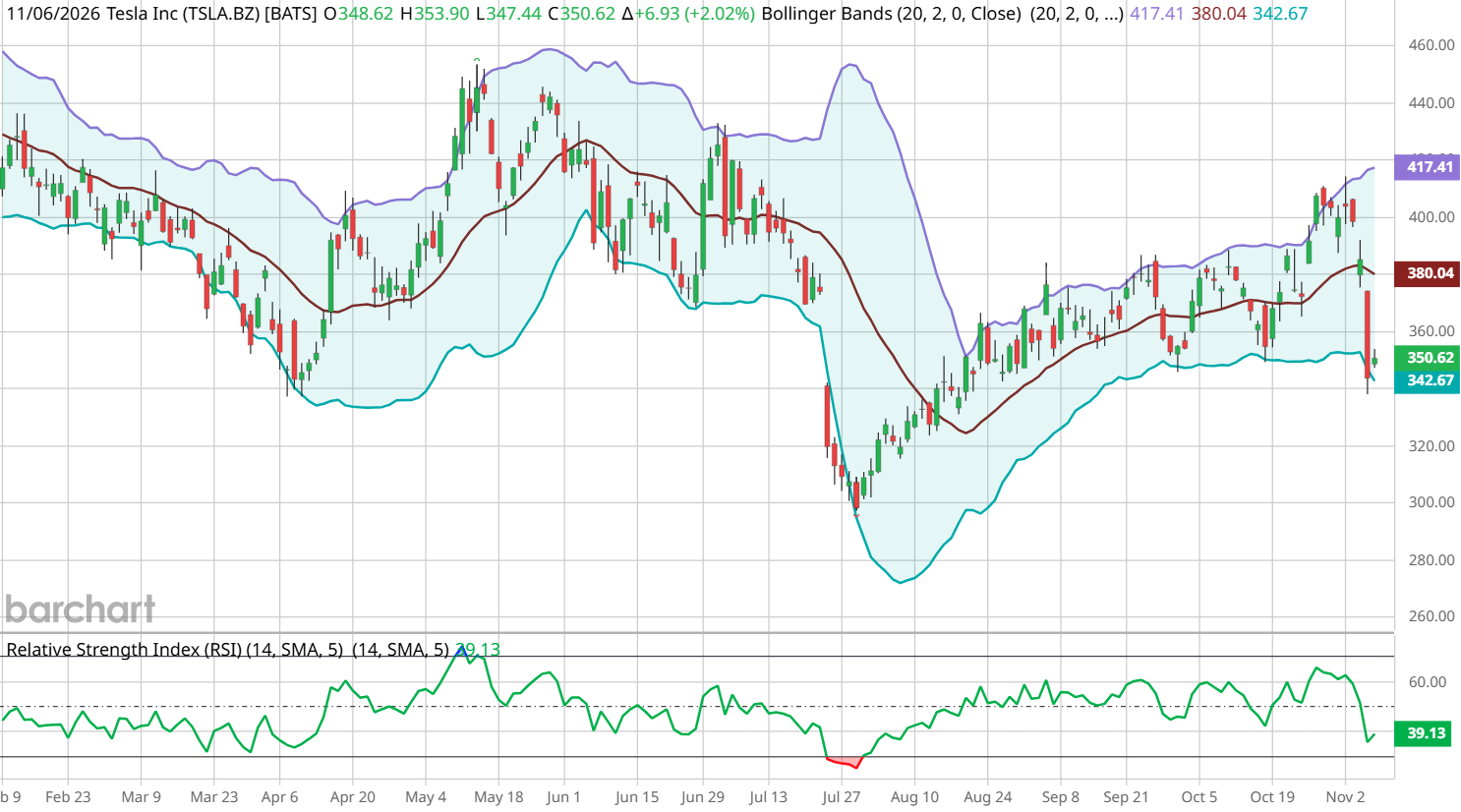
The timing of Musk's announcement is notable, arriving during a week in which Tesla shares plunged over 13% following the November 3 midterm elections — where Democrats swept both chambers of Congress and won the Texas governorship — raising investor concerns about tighter regulatory oversight of AI infrastructure, autonomous vehicles, and Musk's government contracts.
Gigafactory Texas is the only known facility equipped to manufacture the Cybertruck's specialized stainless-steel components, and Musk did not clarify whether production would relocate or cease entirely, leaving the model's long-term fate uncertain.
The Counterpoint Investors Can't Ignore
While the Cybertruck's lead engineer characterized the truck as a technology development platform whose innovations live on through the Cybercab, the broader risk for investors is whether Tesla can successfully scale autonomous vehicle operations and justify its premium valuation at a moment when federal safety regulators continue to scrutinize the Cybercab's self-certification compliance.
The string of product cancellations — three models in a single year — could signal either visionary focus or a company retreating from commercial markets it failed to conquer.
What Comes Next
The next catalyst to watch is whether Tesla delivers Cybercabs to external customers by year-end 2026, as Moravy targeted. It’s a milestone that could transform the Cybercab from an internal fleet experiment into a revenue-generating product line, and potentially answer the question of whether winding down a truck that once symbolized Tesla's bold ambitions was a strategic masterstroke or an expensive admission of defeat.
After closing below its lower Bollinger Band amid Thursday’s bloodbath, TSLA stock is ticking 2% higher ahead of the bell this morning.
This article was created with the support of automated content tools from our partners at Sigma.AI. Together, our financial data and AI solutions help us to deliver more informed market headline analysis to readers faster than ever.
On the date of publication, Sarah Holzmann did not directly have a position in any of the securities mentioned in this article. All information and data in this article is solely for informational purposes. For more information please view the Barchart Disclosure Policy here.