
What Vesuvius Holders Bought Into
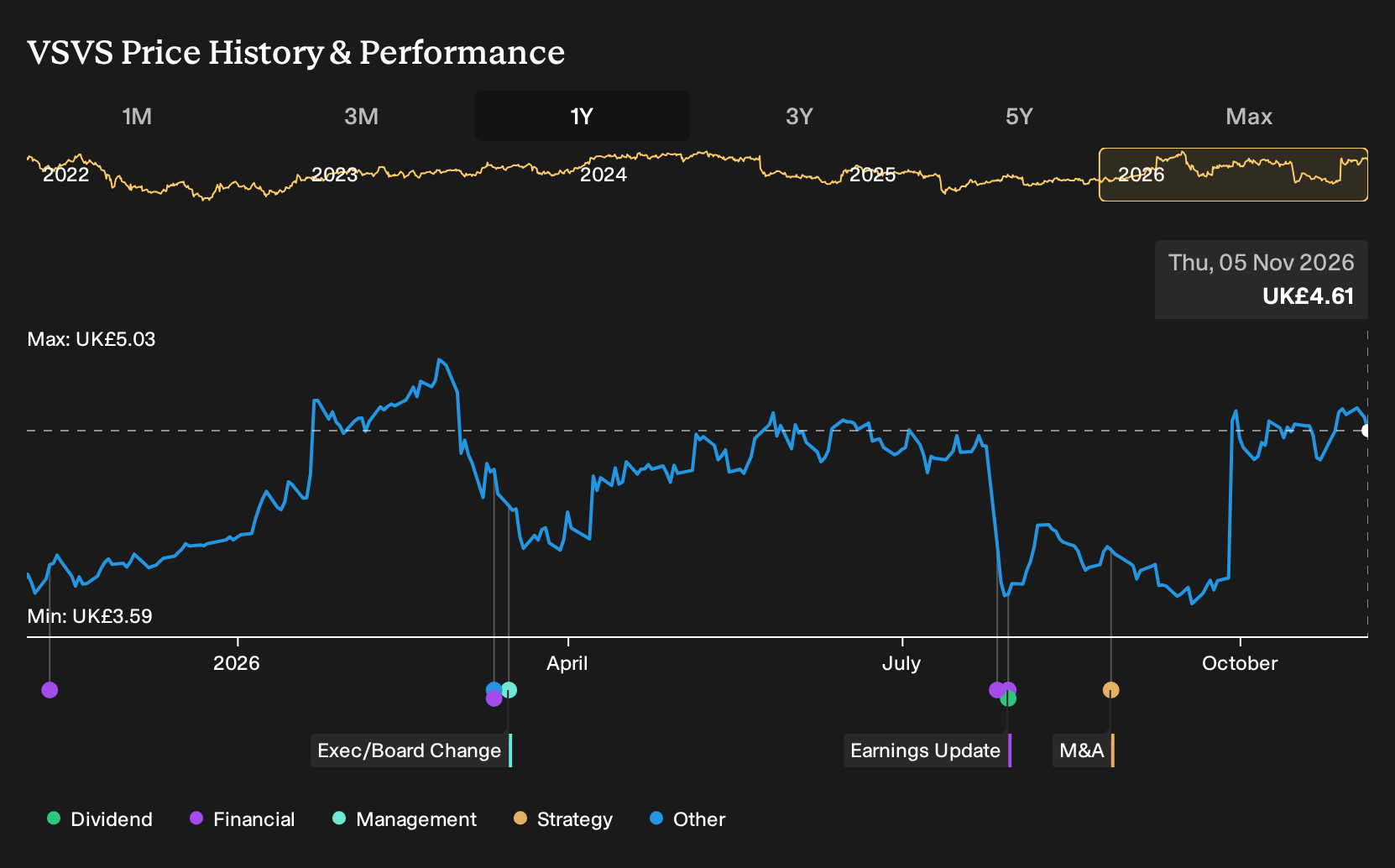
If you had bought Vesuvius on 5 November 2025 and simply sat tight, holding Vesuvius over the past year would have returned 31.0%, including dividends. That outcome now sits beside a very different memory from the starting line, when one group of analysts leaned into India, R&D and non ferrous growth, while another fixated on electric arc adoption and decarbonization risk. If you were making that call back then, which side of that split would have carried more weight for you?
Vesuvius has already moved. See which of 15 high quality undervalued stocks still trade below our estimates.
The Argument You Would Have Been Weighing Up On Vesuvius
The shares cost £3.77 at the start of the period, and anyone looking at Vesuvius then had to choose between two very different stories.
The bullish view pointed to India, R&D and non ferrous expansion and said the fair value was £4.38. That price only made sense if higher margin Indian operations and technology driven products kept gaining ground. This relied on assumptions for revenue and earnings to climb steadily, helped by improved free cash flow after restructuring.
The bearish narrative put fair value at £3.3, a level that reflected concern about electric arc furnace adoption cutting refractory demand and permanent pressure from decarbonization rules. That scenario leaned on the risk of structural decline in European steel, customer trade downs to cheaper products, and rising low cost competition compressing profitability.
What The Vesuvius Evidence Actually Tested
The key development was the possible offer for Vesuvius by RHI Magnesita, plus sizeable disclosed holdings by Vanguard, Dimensional and Man Group, which supported the idea that the business had assets worth courting. Set against that, H1 2026 results showed revenue at £922.9m, net income at £16.9m and net margin at 1.8%, which challenged the cleaner profitability path in the bullish case. Overall, the evidence cut both ways.
The live question here was not sentiment. It was whether Vesuvius could turn its story about higher quality growth into stronger net margins. When you look at another cyclical industrial, test that same claim against reported net income and margin trends rather than stopping at deals, interest from potential bidders or large shareholders building stakes.
What Vesuvius’ Price Now Asks You To Believe
Today Vesuvius trades at £4.61, with the selected Narrative arguing that its Fair Value sits above that level. The focus has shifted from broad hopes to whether execution, cost cuts and recovering identified lost revenue can support that view.
For anyone paying today’s price, the critical test is whether Vesuvius really can deliver the recurring cost savings and revenue recovery the Narrative assumes.
"Sustained execution on the structural cost reduction and footprint optimisation programme, including delivery of the targeted recurring savings by 2028, has to go right for the earnings and cash flow ambition to hold."
That disagreement has a full argument behind it. → Uncover the higher Fair Value this Narrative argues for
Before The Next Story Makes Headlines
The story behind this run has already been told. The next one could be taking shape somewhere else. Where could you start looking before it becomes the headline?
- Company 1 - 30% below our estimate - targets inflows by structuring tax-efficient pooled vehicles for institutions.
- Company 2 - 27% below our estimate - converts rising client trading into recurring fees on a unified platform.
- Company 3 - 17% below our estimate - attracts senior lawyers with a tech-led, low-cost model and fee-sharing.
Three companies from the same screener. Open the full list of 9 financially solid companies →
Have feedback on this article? Concerned about the content? Get in touch with us directly. Alternatively, email editorial-team@simplywallst.com