
FTAI Infrastructure (NASDAQ:FIP) surprises with Q3 2026 sales

Infrastructure investment and operations firm FTAI Infrastructure (NASDAQ:FIP) reported revenue ahead of Wall Street’s expectations in Q3 2026, with revenue up 55.8% year on year to $219 million. Its GAAP loss of $1.27 per share was significantly below analysts’ consensus estimates.
For more on FTAI Infrastructure, read our free full research report.
FTAI Infrastructure (FIP) Q3 2026 highlights:
- Revenue $219 million vs S&P analysts’ consensus estimates of $195 million (55.8% year-on-year growth, 12.3% beat)
- EPS (GAAP) -$1.27 vs analysts’ consensus estimates of -$0.55 (significant miss)
- Adjusted EBITDA $95.33 million vs analysts’ consensus estimates of $74.56 million (43.5% margin, 27.9% beat)
- Free cash flow -$63.38 million compared to -$90.75 million in the same quarter last year
- Market capitalization $325 million
Revenue growth
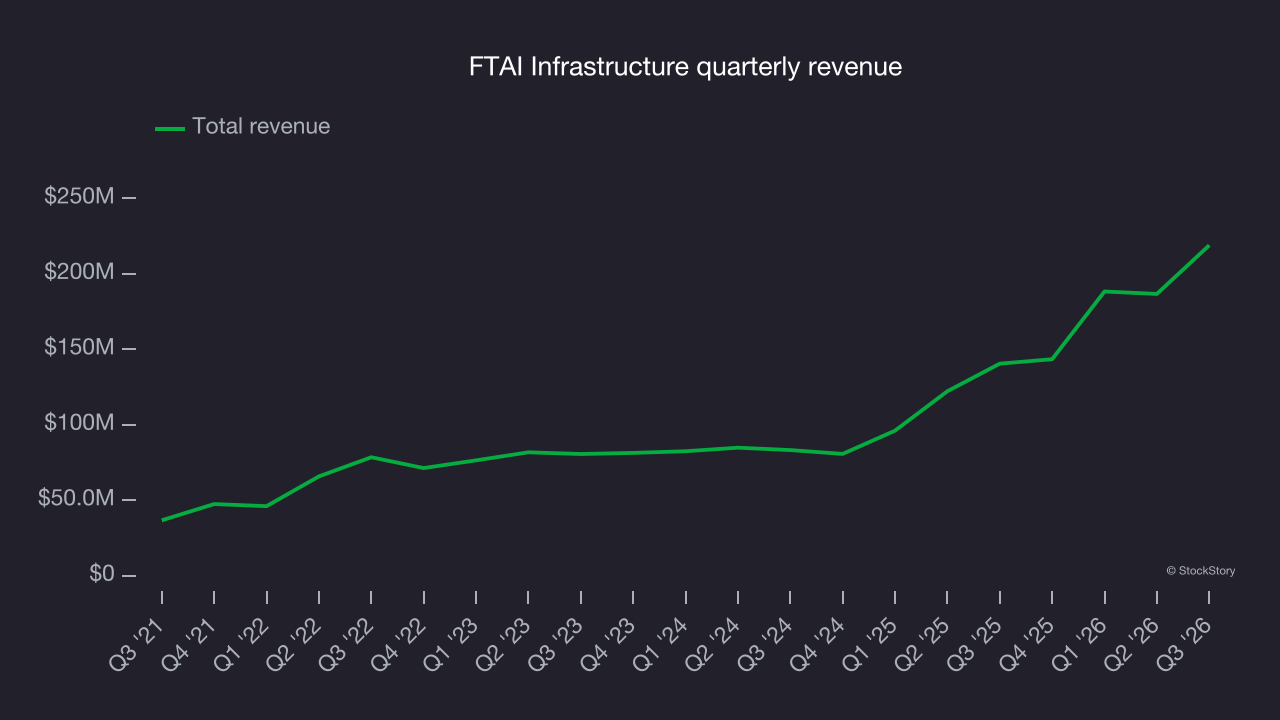
A company’s long-term revenue performance is one signal of its overall quality. Any business can deliver a good quarter or two, but the best consistently grow over the long haul. FTAI Infrastructure’s 52.2% annualized revenue growth over the last five years was strong. Its growth beat the average industrials company and shows its offerings resonate with customers.
Long-term growth is the most important, but within industrials, a half-decade historical view may miss new industry trends or demand cycles. FTAI Infrastructure’s annualized revenue growth of 49% over the last two years is below its five-year trend, but the results still suggest healthy demand. 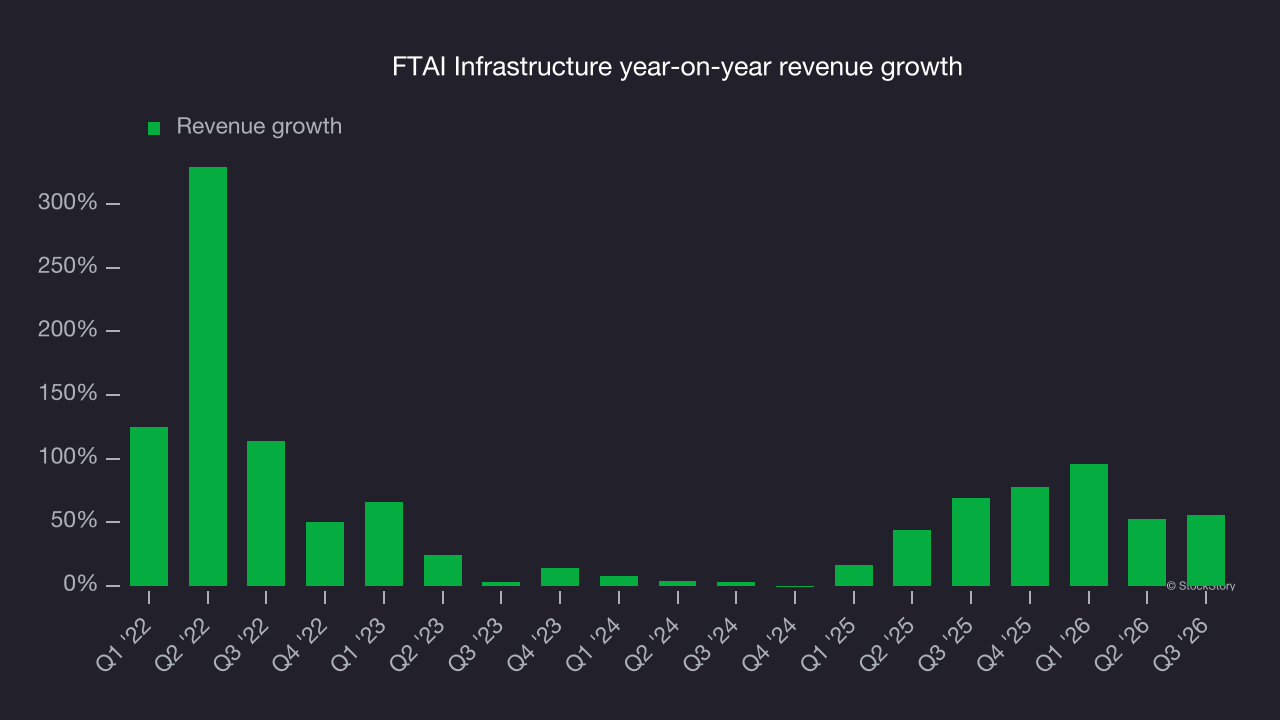
This quarter, FTAI Infrastructure reported strong year-on-year revenue growth of 55.8%, and its $219 million of revenue beat Wall Street’s consensus estimates by 12.3%.
Looking ahead, sell-side analysts expect revenue to grow 9.9% over the next 12 months, according to S&P, a deceleration versus the last two years. Despite the slowdown, this projection is solid and indicates the market is forecasting success for its products and services.
Operating margin
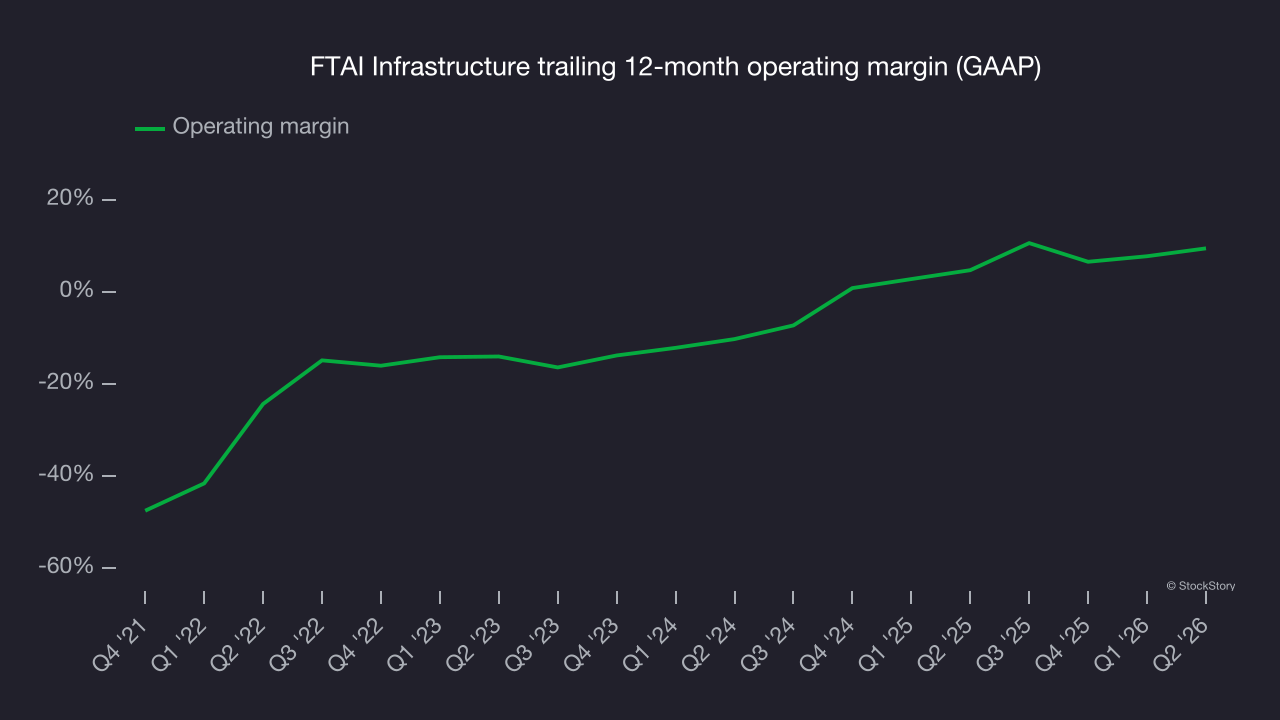
FTAI Infrastructure’s high expenses have contributed to an average operating margin of negative 1.4% over the last five years. Unprofitable industrials companies require extra scrutiny because they can be vulnerable when business conditions deteriorate.
On the positive side, FTAI Infrastructure’s operating margin rose by 25.6 percentage points over the last five years, as its revenue growth provided operating leverage. Still, it will take much more for the company to reach long-term profitability.
Earnings per share
We track the long-term change in earnings per share, or EPS, for the same reason as long-term revenue growth. Compared to revenue, however, EPS highlights whether a company’s growth is profitable.
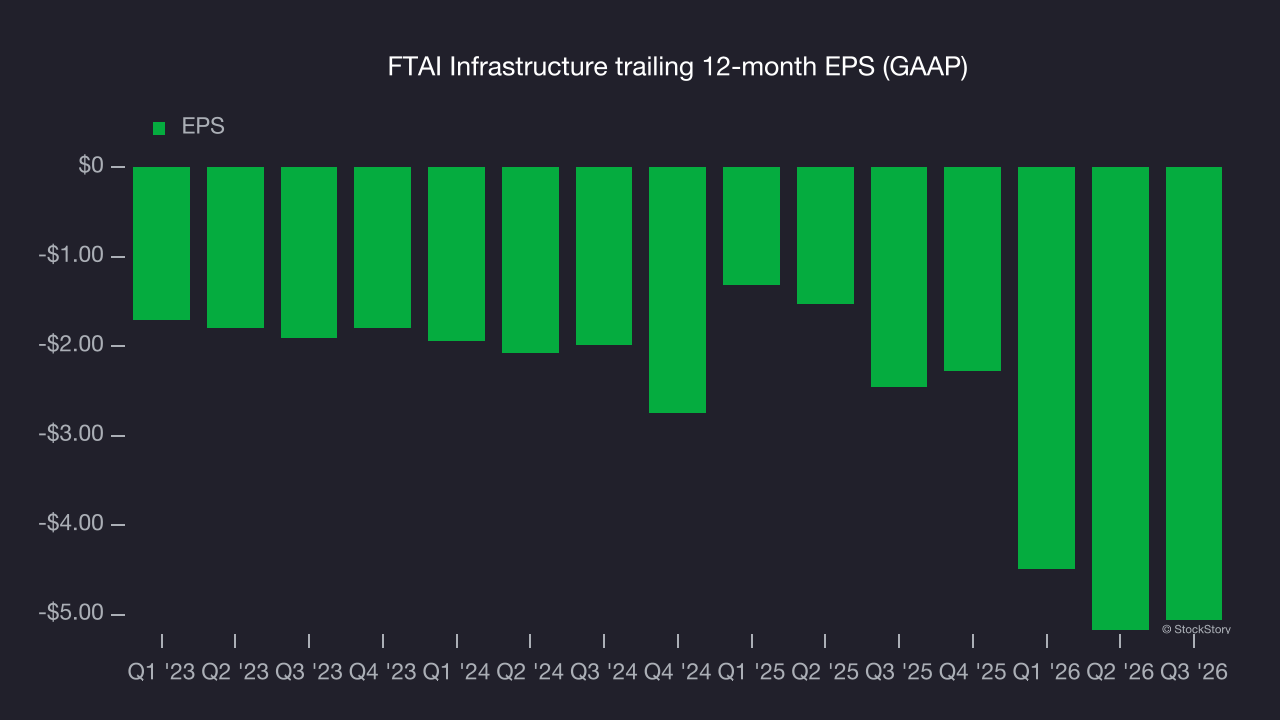
FTAI Infrastructure’s losses deepened over the last four years as its EPS dropped 38.4% annually. Diminishing earnings could imply changing secular trends and preferences.
Like with revenue, we analyze EPS over a more recent period because it can provide insight into an emerging theme or development for the business.
For FTAI Infrastructure, its two-year annual EPS declines of 59.9% show it’s continued to underperform. These results were poor across both periods.
In Q3, FTAI Infrastructure reported EPS of negative $1.27, up from negative $1.38 in the same quarter last year. Despite improving year on year, this result missed analysts’ consensus estimates. Over the next 12 months, Wall Street expects FTAI Infrastructure to narrow its losses. Analysts forecast its full-year EPS will improve from negative $5.06 to negative $1.47, according to S&P.
Key takeaways from FTAI Infrastructure’s Q3 results
FTAI Infrastructure delivered a decent quarter, with revenue and EBITDA both topping Wall Street’s consensus estimates by wide margins. EPS was the shortfall, coming in below expectations. Shares rose 4.1% to $3.09 immediately after the results.
FTAI Infrastructure may have had a good quarter, but that alone does not make it a buy. The latest quarter matters, but not nearly as much as longer-term fundamentals and valuation when deciding whether to invest. Read the full research report here (it’s free).