
Doximity’s (NYSE:DOCS) Q3 CY2026 sales beat estimates but stock drops

Medical professional network Doximity (NYSE:DOCS) announced better-than-expected revenue in calendar Q3 2026 (fiscal Q2 2027), with revenue up 3.6% year on year to $174.5 million. The company expects next quarter’s revenue to be around $195.5 million, close to analysts’ consensus estimates. Its non-GAAP profit of $0.36 per share was in line with analysts’ consensus estimates.
For more on Doximity, read our free full research report.
Doximity (DOCS) Q3 CY2026 highlights:
- Revenue $174.5 million vs S&P analysts’ consensus estimates of $171.1 million (3.6% year-on-year growth, 2% beat)
- Adjusted EPS $0.36 vs S&P analysts’ consensus estimates of $0.35 (in line)
- Adjusted EBITDA $88.87 million vs analysts’ consensus estimates of $81.47 million (50.9% margin, 9.1% beat)
- Revenue guidance The company slightly lifted its revenue guidance for the full year to $680.5 million at the midpoint from $676 million
- EBITDA guidance $321 million at the midpoint for the full year, in line with analysts’ consensus estimates
- Operating margin 25.2%, down from 37.8% in the same quarter last year
- Free cash flow margin 52.3%, up from 25.3% in the previous quarter
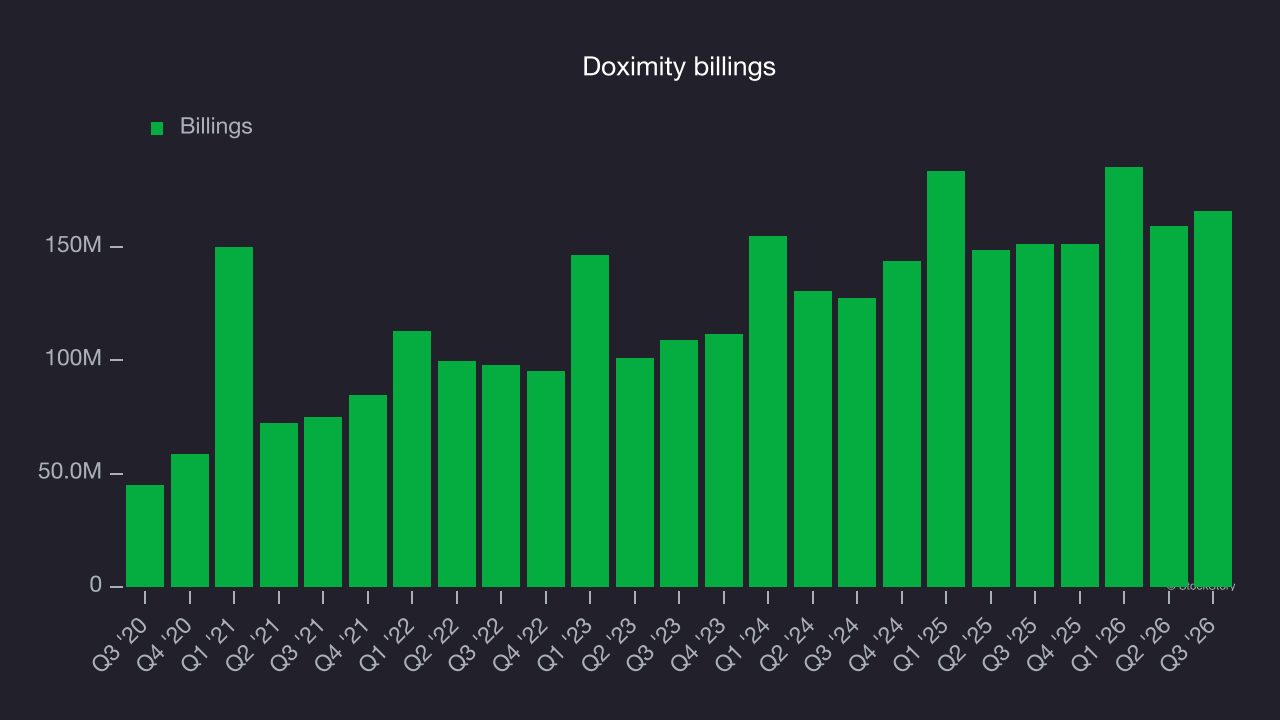
- Billings $165.7 million at quarter end, up 9.5% year on year
- Market capitalization $6.18 billion
“We delivered another quarter of record engagement while investing heavily in AI and maintaining a 51% adjusted EBITDA margin,” said Jeff Tangney, co-founder and CEO of Doximity. “More than 190 health systems have now purchased our AI suite, and with UpToDate and DoseCheck, we’re extending our lead in distribution and trust.”
Revenue growth
A company’s long-term revenue performance can indicate its overall quality. Even a weak business can perform well for one or two quarters, but a high-quality one grows for years. Doximity’s 19% annualized revenue growth over the last five years was decent. Its growth was slightly above the average software company and shows its offerings resonate with customers.
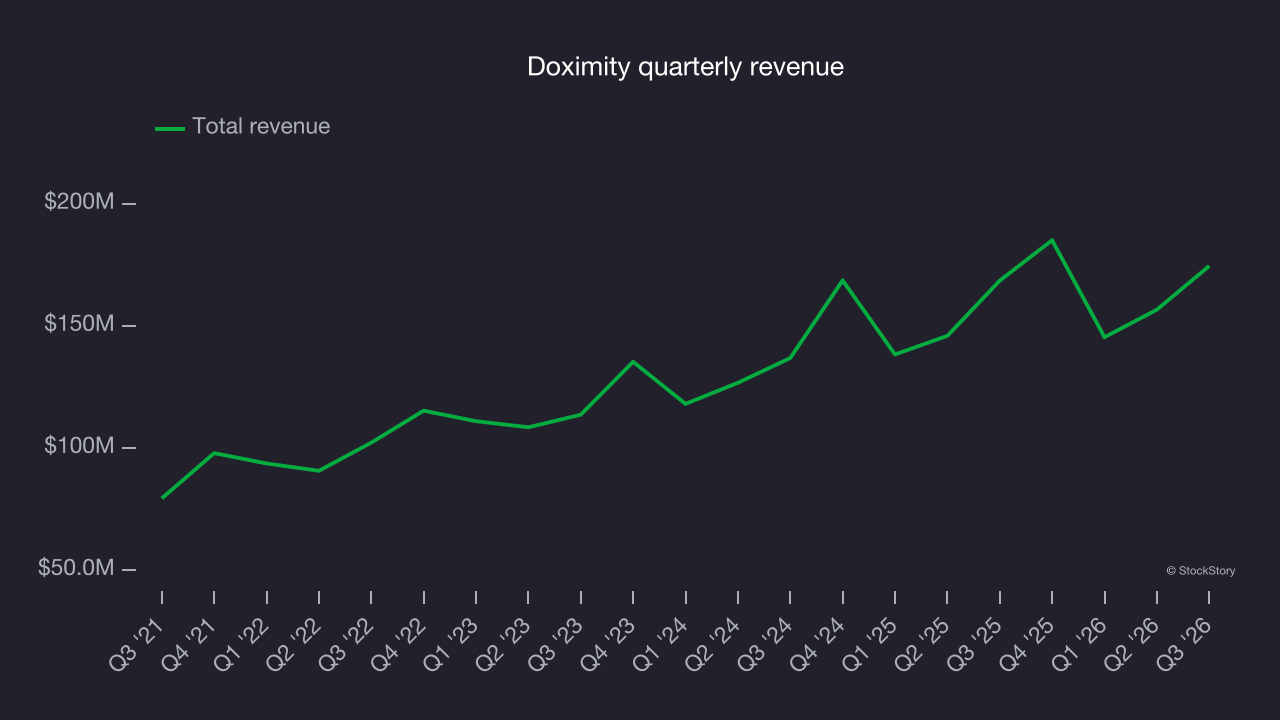
Long-term growth matters most, but within software, a half-decade historical view may miss recent innovations or disruptive industry trends. Doximity’s recent performance shows its demand has slowed as its annualized revenue growth of 13.1% over the last two years was below its five-year trend. Decelerating revenue growth in the sector is a concern, as it could signal changing consumer tastes aided by low switching costs.
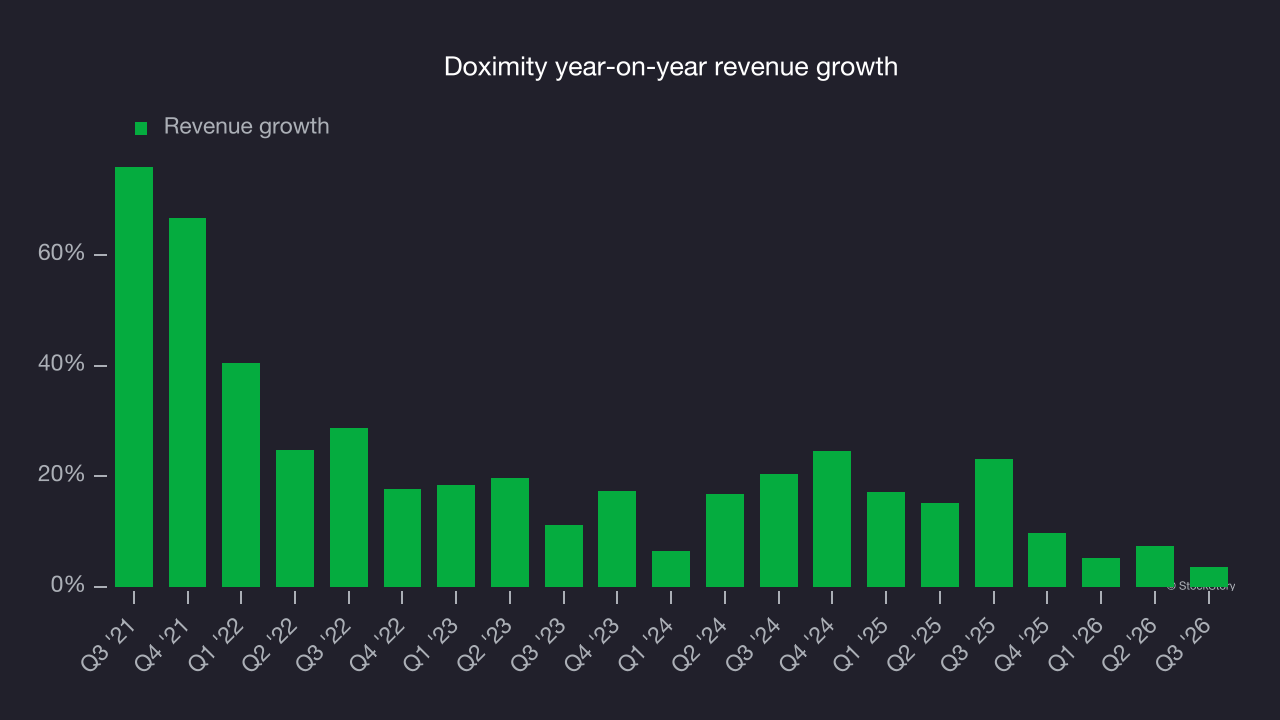
This quarter, Doximity reported modest year-on-year revenue growth of 3.6% but beat Wall Street’s consensus estimates by 2%. Company management is currently guiding for a 5.6% year-on-year increase in revenue next quarter.
Looking further ahead, sell-side analysts expect revenue to grow 5.7% over the next 12 months, according to S&P, a deceleration versus the last two years. This projection is underwhelming and indicates its products and services will face some demand challenges.
Billings
Billings is a non-GAAP metric that is often called “cash revenue” because it shows how much money the company has collected from customers in a certain period. This is different from revenue, which must be recognized in pieces over the length of a contract.
Doximity’s billings came in at $165.7 million in Q3, and over the last four quarters, its growth was underwhelming as it averaged 5.6% year-on-year increases. This performance mirrored its total revenue and suggests that increasing competition is making it harder to acquire and retain customers.
Customer acquisition efficiency
The customer acquisition cost, or CAC, payback period measures the months a company needs to recoup the money spent on acquiring a new customer. This metric helps assess how quickly a business can break even on its sales and marketing investments.
Doximity is highly efficient at acquiring new customers, and its CAC payback period was 6.9 months this quarter. The company’s rapid recovery of its customer acquisition costs means it can attempt to spur growth by increasing its sales and marketing investments.
Key takeaways from Doximity’s Q3 results
Doximity’s quarter had some key positives, with adjusted operating income beating Wall Street’s consensus estimates by a wide margin. But billings missed, and the market appeared to be hoping for more. Shares tumbled 6.7% to $31.01 immediately after the release.
To assess Doximity at its current price, consider its valuation and business quality as well as what happened in the latest quarter. For more on Doximity, read the full research report here (it’s free).