
Why Xero Fell 51% Even As Sales Rose
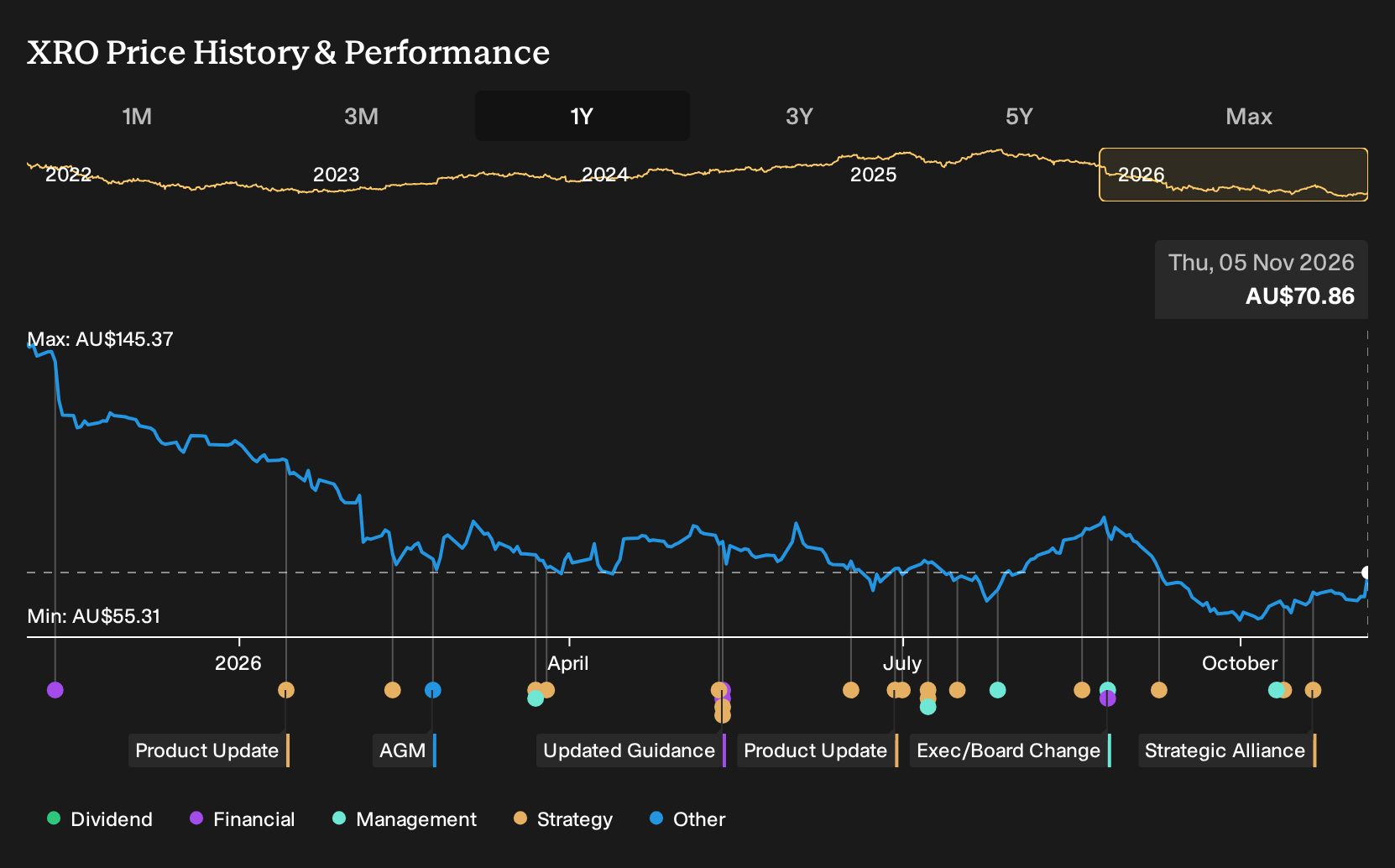
Holding Xero over the past year would have meant a 51.3% loss, including dividends. If you had bought after analysts in late 2025 were modelling 18.1% annual revenue growth, an 18.2% profit margin and a 61.4x future P/E, that outcome would feel brutal rather than unlucky. The stock has been affected by Melio integration costs, AI spending and margin pressure. What, then, did that original growth and profitability story fail to anticipate?
The move put Xero in the middle of this trade. Scan 53 AI infrastructure stocks for other companies exposed to it.
The Two Stories Xero Investors Had To Weigh
The shares cost A$145 at the start of the period, and buyers were essentially choosing between two very different stories for Xero.
The bullish narrative pointed to a Fair Value of A$195. This price only made sense if assumptions like 18.1% annual revenue growth and an 18.2% profit margin played out over roughly three years.
The bearish narrative anchored on a Fair Value of A$100 and highlighted risks such as rising regulatory and cybersecurity costs that could strain profitability and slow subscriber growth.
What The Results Changed For The Xero Thesis
Xero’s FY26 update put hard numbers against both stories. Operating revenue reached about NZ$1,558.9m in H2 2026 compared with NZ$1,106.8m in H2 2025, which backed the growth leg of the bullish case. Net income excluding one-offs fell from NZ$132.7m to NZ$32.6m, and the net margin moved from 12.0% to 2.1%. That profitability drop supported the cautious narrative. Overall, the evidence cut both ways.
The key lesson is simple. When a thesis rests on higher margins as well as rising sales, you need to track net income and net margin in every result, not just revenue, to see whether the story is actually playing out.
What You Would Be Paying For In Xero Today
Xero now trades at A$70.86, roughly half the starting price a year ago. The selected Narrative places its Fair Value above that level and argues the market is underrating what the business could still do with AI and its existing software economics.
For this drop to look like an opening rather than a warning, a buyer today would need confidence that scalable cloud margins and AI tools can grow earnings without a repeat of recent cost pressure.
"Increasing subscriber numbers alongside increasing ARPU yields 20% annual revenue growth as more and more businesses turn to cloud based accounting solutions with strong integrations and eventual AI features to run their businesses. Xero has high scalability of its products, with current gross margin of ~88%."
That disagreement has a full argument behind it. → Uncover the higher Fair Value this Narrative argues for
Where Xero’s Story Overlaps Elsewhere
Xero leans on cloud software and AI tools to support its pitch. That is one way to play the theme.
You could also look at the broader need those tools create. Businesses adopting AI workflows often want the underlying productivity suite fully connected.
Another large platform is building that layer. It folds AI assistants into email, documents and collaboration software used daily.
The angle is straightforward. If knowledge workers keep trying these assistants, their software budgets may shift in new directions.
It is written up in full, assumptions and all. → Explore the Narrative that puts this company 21% above its price
Have feedback on this article? Concerned about the content? Get in touch with us directly. Alternatively, email editorial-team@simplywallst.com