
Oil Price Predictions: Why Goldman Sachs Is Betting on Brent to Climb to $140
The global economy has been navigating challenging times that’s characterized by trade wars, geopolitical tensions, supply chain disruptions, and energy price driven inflation.
In addition to these headwinds, the El Niño is “firmly established and is expected to strengthen further.” This increases the risk of “floods, drought and extreme heat.” Food price inflation can therefore be another challenge the world is likely to face.
Coming to energy prices, Goldman Sachs believes that Brent crude oil could reach “$140/bbl and average ~$130/bbl next year if Persian Gulf oil production remains significantly below pre-war levels.” Goldman views “intensified shipping attacks, damage to oil infrastructure, and a more persistent risk premium” as catalysts for higher oil prices.
On the other hand, Brent is likely to fall to $60 per barrel range if Persian Gulf production recovers faster than expected. This is only possible if the U.S. and Iran reach a sustainable deal.
However, with a “lasting diplomatic breakthrough” expected to be “difficult,” Goldman expects “markets to price in a higher risk premium.” Given this scenario, it’s likely that inflation pressure will persist, which implies potentially higher interest rates.
Of course, Goldman is not the only one sounding the alarm on potentially higher oil prices. According to the International Energy Agency, global supply of oil is expected to fall by 5.7 million barrels per day in 2026. While the IEA sees weakening demand, the supply is “falling even faster,” and this implies higher oil prices.
Additionally, demand has fallen more than expected in 2026. However, the IEA expects demand to rise by 2.6 million barrels per day in 2027. OPEC also sees demand increasing by 2.36 million barrels per day next year. Therefore, if supply issues remain unresolved, Goldman’s prediction of Brent hitting $140 might come true.
Amidst the view that oil can trend higher, it’s important to note that J.P. Morgan expects interest rates to increase by a quarter point in December. While JPM has ruled out a “longer-term hiking cycle,” persistent inflation on the back of geopolitical tensions and El Niño can change the outlook.
The risk with higher interest rates is significant GDP growth deceleration. This, in turn, can negatively impact oil demand. Another obvious factor is de-escalation of tensions in the Middle East. It’s worth noting that the Democrats will establish control of both the House and the Senate. The implication of this political event remains to be seen on the Iran conflict.
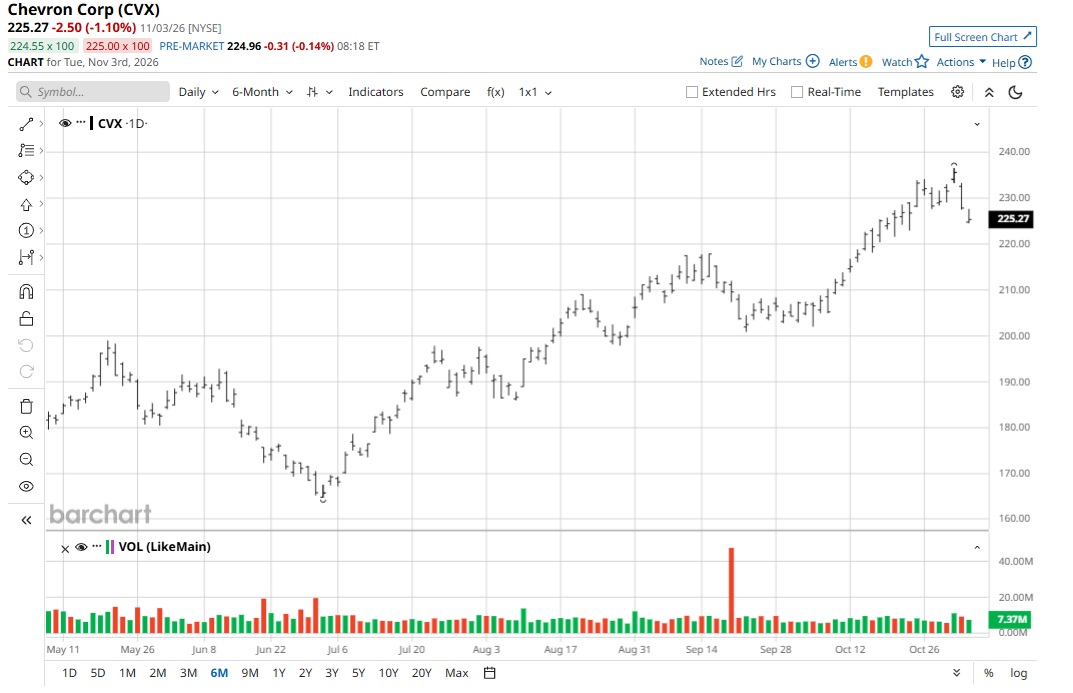
From an investment perspective, Chevron (CVX) looks attractive even after a rally of 46.2% in the last 52 weeks. The company has an investment-grade rating and is expected to grow free cash flows by 10% annually. Further, the dividend and capex breakeven is $50 per barrel. Therefore, even if Brent prices are in the range of $80 to $100 per barrel, the cash flow potential is significant. A current dividend yield of 3.02% is also attractive, and dividends will likely continue to grow in the next few years.
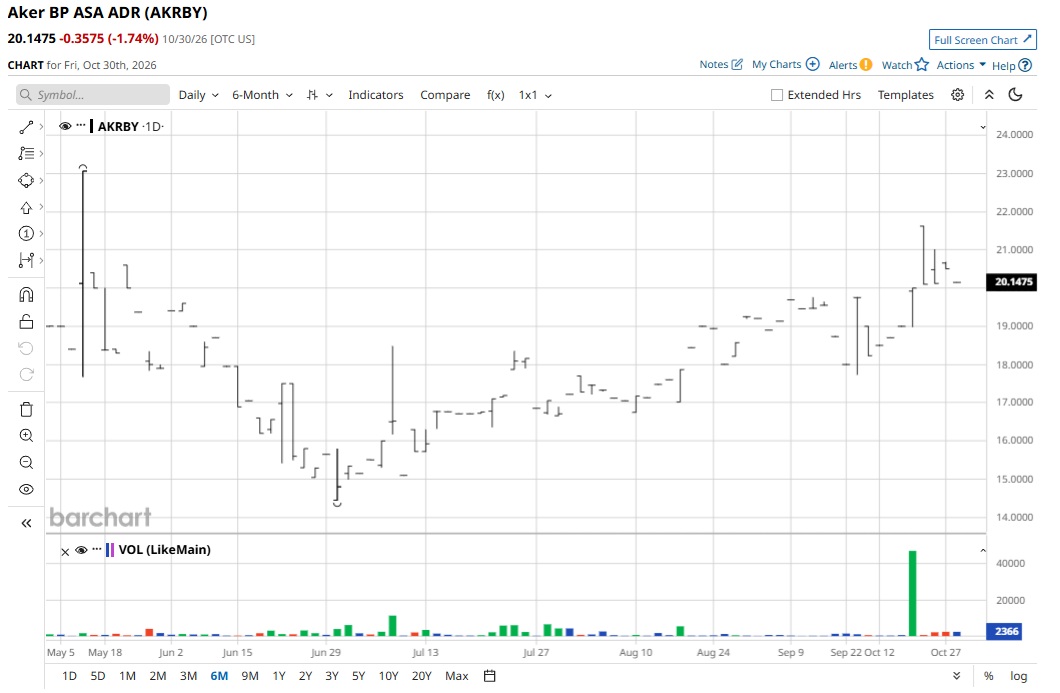
Aker BP ASA (AKRBY) is another attractive name in the oil & gas exploration sector. The company has assets with a focus on the Norwegian Continental Shelf. At a forward price-earnings ratio of 11.85, AKRBY stock is interesting and offers a dividend yield of 3.62%. Aker BP stock, in sync with higher oil prices, has trended higher by 51.66% in the last 52 weeks. It’s worth noting that the company’s production cost was $9 per barrel in Q3 FY26. Therefore, even if oil corrects from highs, the company is positioned to deliver healthy cash flows.
Overall, geopolitical risk continues to be the biggest factor for the premium in Brent prices. Potential de-escalation can have a positive impact on the global economy. At the same time, investors need to remain cautiously optimistic as persistent inflation can impact risky asset classes.
On the date of publication, Faisal Humayun Khan did not directly have a position in any of the securities mentioned in this article. All information and data in this article is solely for informational purposes. For more information please view the Barchart Disclosure Policy here.