
Beishui Trends | Beishui traded net sales of 21.326 billion. Beishui undercut AI hardware stocks throughout the day and sold Technet stocks and Hong Kong stock ETFs on high
The Zhitong Finance App learned that on November 5, in the Hong Kong stock market, Beishui traded net sales of HK$21.326 billion. Among them, Hong Kong Stock Connect (Shanghai) had net sales of HK$13.339 billion and Hong Kong Stock Connect (Shenzhen) had net sales of HK$7.987 billion.
The individual stocks that Beishui Net bought the most were Jiantao Laminate (01888), Changfei Optical Cable (06869), and SMIC (00981). The individual stocks sold the most by Beishui Net were Yingfu Fund (02800), Southern Hang Seng Technology (03033), and Tencent (00700).
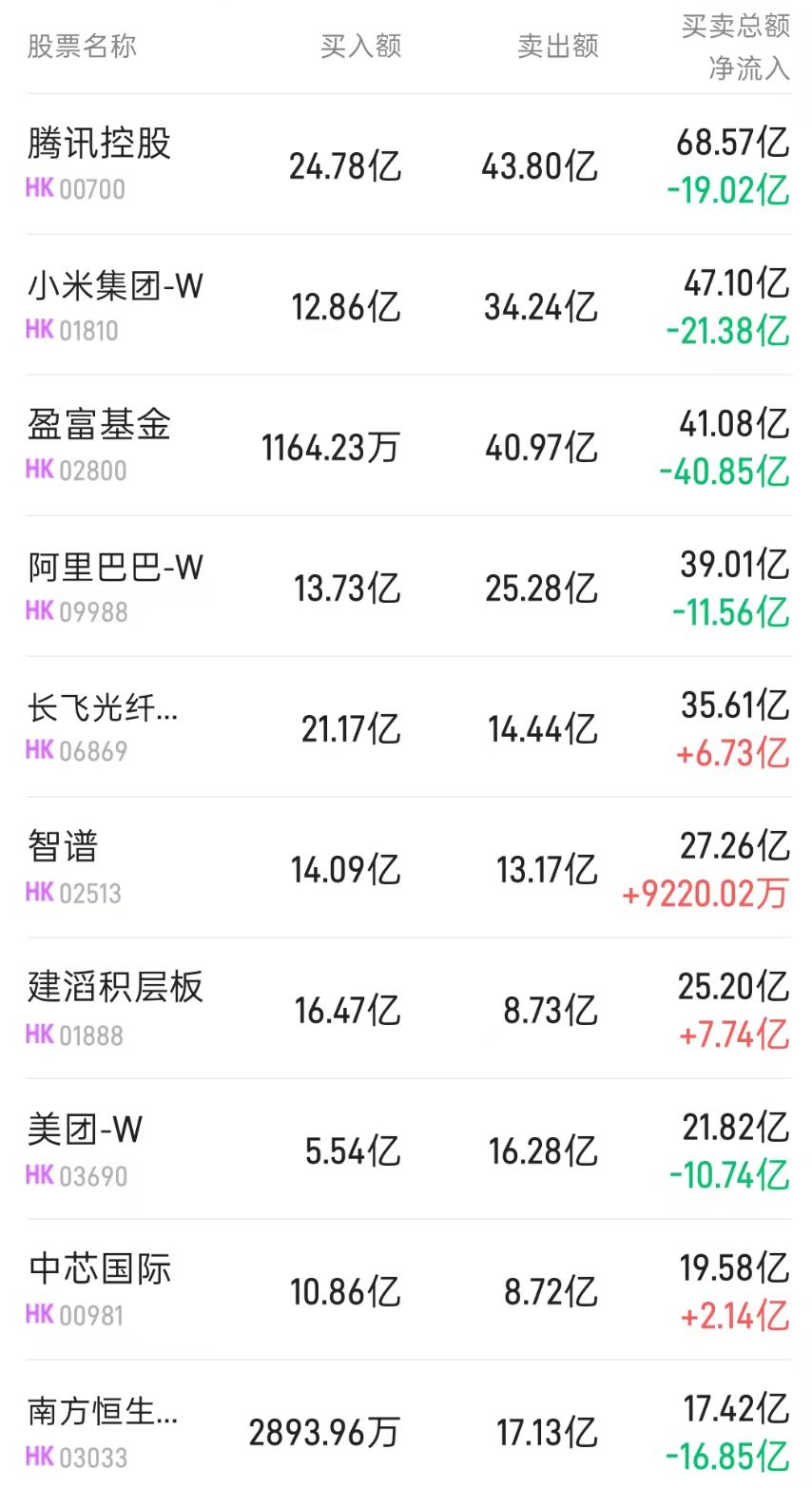

Hong Kong Stock Connect (Shanghai) active trading stocks
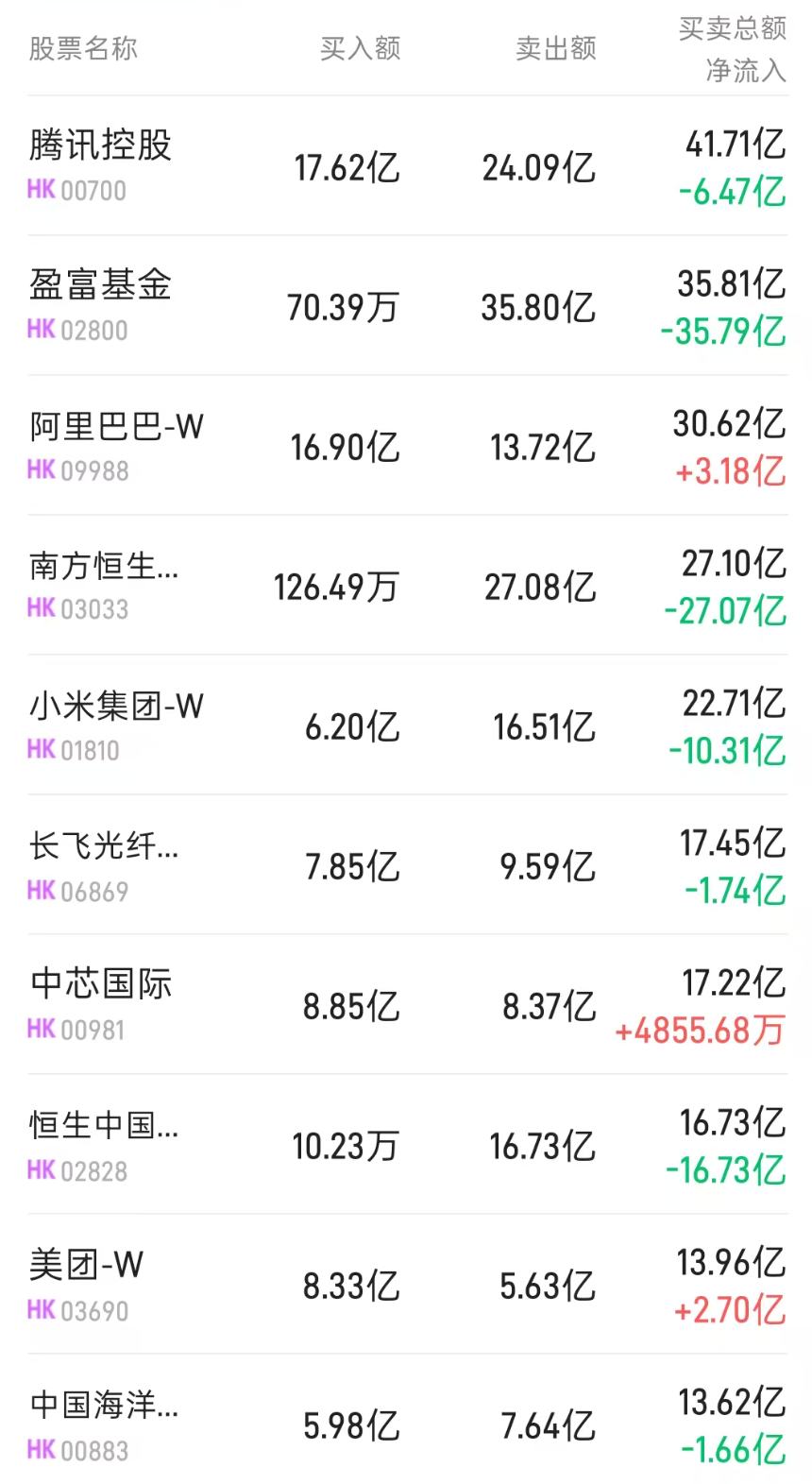
Hong Kong Stock Connect (Shenzhen) active trading stocks
AI hardware stocks plummeted today, and Beishui's capital bottomed out at a low point. Jiantao Laminate (01888), Changfei Optical Fiber Cable (06869), and SMIC (00981) received net purchases of HK$773 million, 499 million and HK$262 million respectively. The Democratic Party took control of the House of Representatives and the Senate. J.P. Morgan believes that the probability that the suspension will eventually evolve into a permanent ban is limited, but the pace of industry expansion has been substantially affected. Huatai Securities pointed out that the real impact will first be reflected in delays in power transmission to the park and delays in equipment procurement, inspection and repayment.
Smart Spectrum (02513) received a net purchase of HK$92.2 million. Komo released a research report saying that demand for AI models in China is between the two stages of demand for programming and more extensive white-collar work. Demand for AI other than programming appeared later than the bank's original expectations, but the bank believes that the market is too pessimistic, remains optimistic about the sector, and uses intelligent spectrum AI as the first choice.
CNOOC (00883) had a net sale of HK$166 million. On Wednesday, Brent crude oil plummeted by more than 10% in a single day; WTI crude oil fell more than 9%. HSBC released a research report saying that CNOOC's third-quarter results were affected by depreciation and a slowdown in production growth. Despite strong oil prices, net profit only increased 3% year-on-year to 33 billion yuan, and fell 29% quarterly. Oil prices rose 32% year-on-year and natural gas prices rose 8% during the period, but most of the benefits of rising commodity prices were offset by depreciation of overseas assets and rising costs and taxes.
Technology Network stocks soared sharply, and Beishui's capital was sold at a high price. Alibaba-W (09988) and Tencent (00700) had net sales of HK$837 million and HK$2,549 million respectively. Morningstar recently released a research report saying that Chinese chipmakers are currently benefiting from the increase in AI capital expenditure, but in the long run, Internet companies are the ultimate beneficiaries, ranking Tencent and Alibaba as the first choice, pointing out that Tencent and Ali's existing business can provide profits. If the progress of AI adoption or monetization is not as expected, the business situation can still maintain great resilience. At the same time, AI can also help the development of the Internet, advertising and game business.
Yingfu Fund (02800), Southern Hang Seng Technology (03033), and Hang Seng China Enterprise (02828) received net sales of HK$7.664 billion, $4.391 billion, and HK$1,672 billion respectively. SPDB International pointed out that the Chinese market is still mainly affected by the domestic policy cycle and liquidity environment. US tariffs and technology restrictions on China mainly rely on executive authorization, and it is difficult to change the direction of policy towards China when congressional control changes hands. Hong Kong stocks are highly linked to US stocks, and historically gradually strengthened after the midterm elections. However, it is important to note that Hong Kong stocks are highly sensitive to US bond interest rates and US dollar liquidity.