
Energy Transfer (ET) Following Earnings And Distribution Hike Still Looks Undervalued
Energy Transfer (TXSE:ET) just reported third quarter 2026 revenue of US$37.1b and net income of US$1.2b, giving investors new data to reassess the partnership.
The latest earnings and distribution increase arrive after a softer patch for the Energy Transfer unit price, with the share price down 6.8% over the past week and 6.2% over the past month. This comes alongside a 17.3% year to date share price return and a 5 year total shareholder return above 200%, which indicates that longer term momentum remains intact even as shorter term sentiment cools around the recent news flow.
Scan how Energy Transfer compares to other high yielding pipeline and infrastructure plays by reviewing our hand picked 5 dividend fortresses in one place.
Energy Transfer now trades well below both its estimated intrinsic value and the average analyst target after this pullback. That sort of discount can signal opportunity or it can reflect justified caution about the risks investors are weighing.
Most Popular Narrative: 21% Undervalued
Energy Transfer is framed as undervalued in the most widely followed narrative, with a fair value of $24.58 against the last close at $19.46. That gap is being tied directly to long term contracts, export capacity and a larger capital program that analysts expect to feed future cash flow.
The company's NGL export capacity expansions at the Nederland terminal, including the newly sanctioned ethane export project of about 240,000 bpd that is fully committed into the 2040s and additional LPG and dock capacity, position Energy Transfer to capture rising international demand and support future revenue and earnings from long dated export fees.
See why 198 investors see Energy Transfer as 21% undervalued.
Result: Fair Value of $24.58 (UNDERVALUED)
Still, Energy Transfer’s thesis leans heavily on a record US$5.6b to US$5.9b capital plan and data center driven projects, where delays, higher costs or permitting setbacks could quickly challenge that undervaluation story.
Find out about the key risks to this Energy Transfer narrative.
Another View On Energy Transfer's Valuation
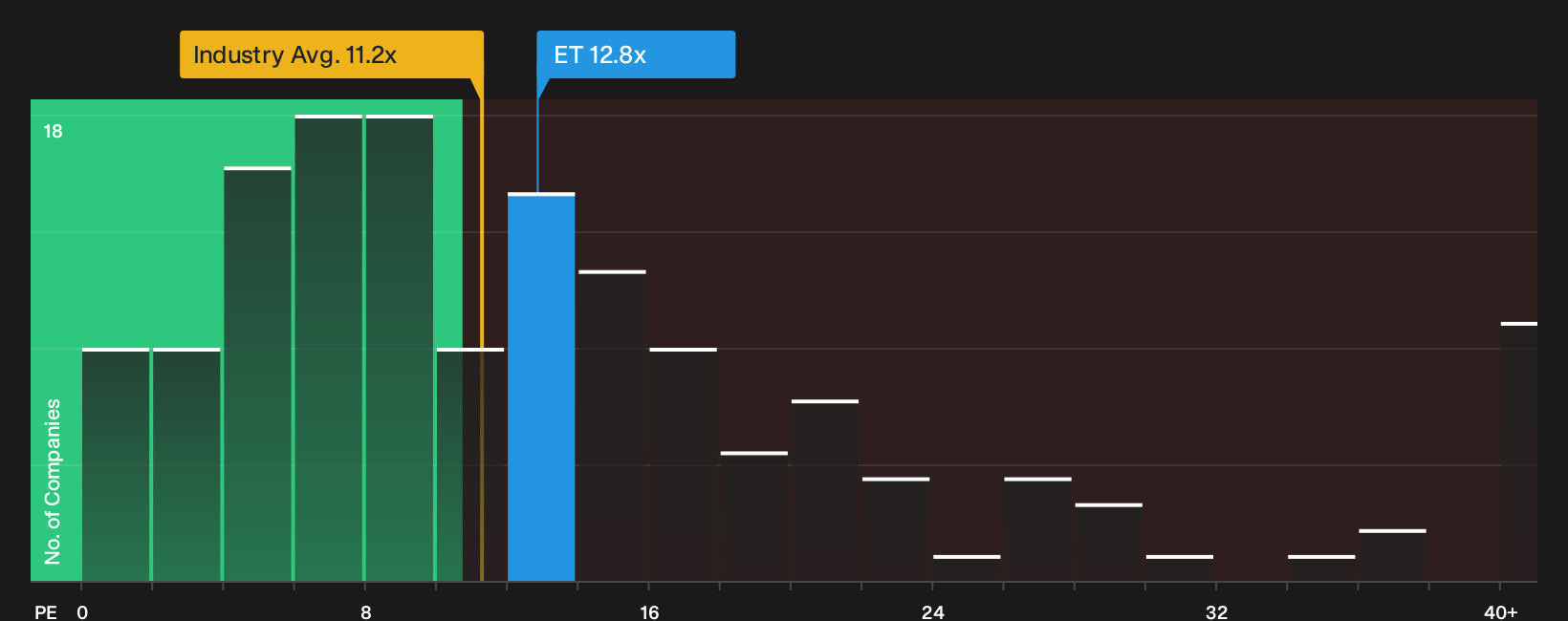
While the narrative leans on a large gap to fair value, the picture shifts when looking at Energy Transfer through its P/E. The units trade at 12.8x earnings compared with 12.3x for the US Oil and Gas industry and 19.6x for close peers, while the fair ratio is 22.6x. That mix of slightly richer pricing than the sector but a wide gap to the fair ratio points to either a valuation cushion if earnings hold up or less room for error if industry sentiment cools further. Which side of that trade off feels more realistic to you right now?
For a fuller view of how this earnings multiple stacks up against sector norms and the fair ratio that the market could move towards, See what the numbers say about this price — find out in our valuation breakdown.
Next Steps
With sentiment clearly split between opportunity and risk around Energy Transfer, take a close look at the full data set and decide where you land. To see both sides laid out clearly in one place, walk through the 4 key rewards and 2 important warning signs.
Looking for more investment ideas beyond Energy Transfer?
If Energy Transfer has you thinking more broadly about income and value, use the Simply Wall St screener to uncover other opportunities that match your style.
- Target resilient potential by checking companies with steadier risk profiles through our 31 resilient stocks with low risk scores.
- Pursue mispriced opportunities by scanning for quality businesses trading below their estimated worth using the 35 high quality undervalued stocks.
- Strengthen your income playbook by reviewing dependable payers in the 5 dividend fortresses.
Have feedback on this article? Concerned about the content? Get in touch with us directly. Alternatively, email editorial-team@simplywallst.com