
What Investors Overlooked Before Sunrun Fell 57%
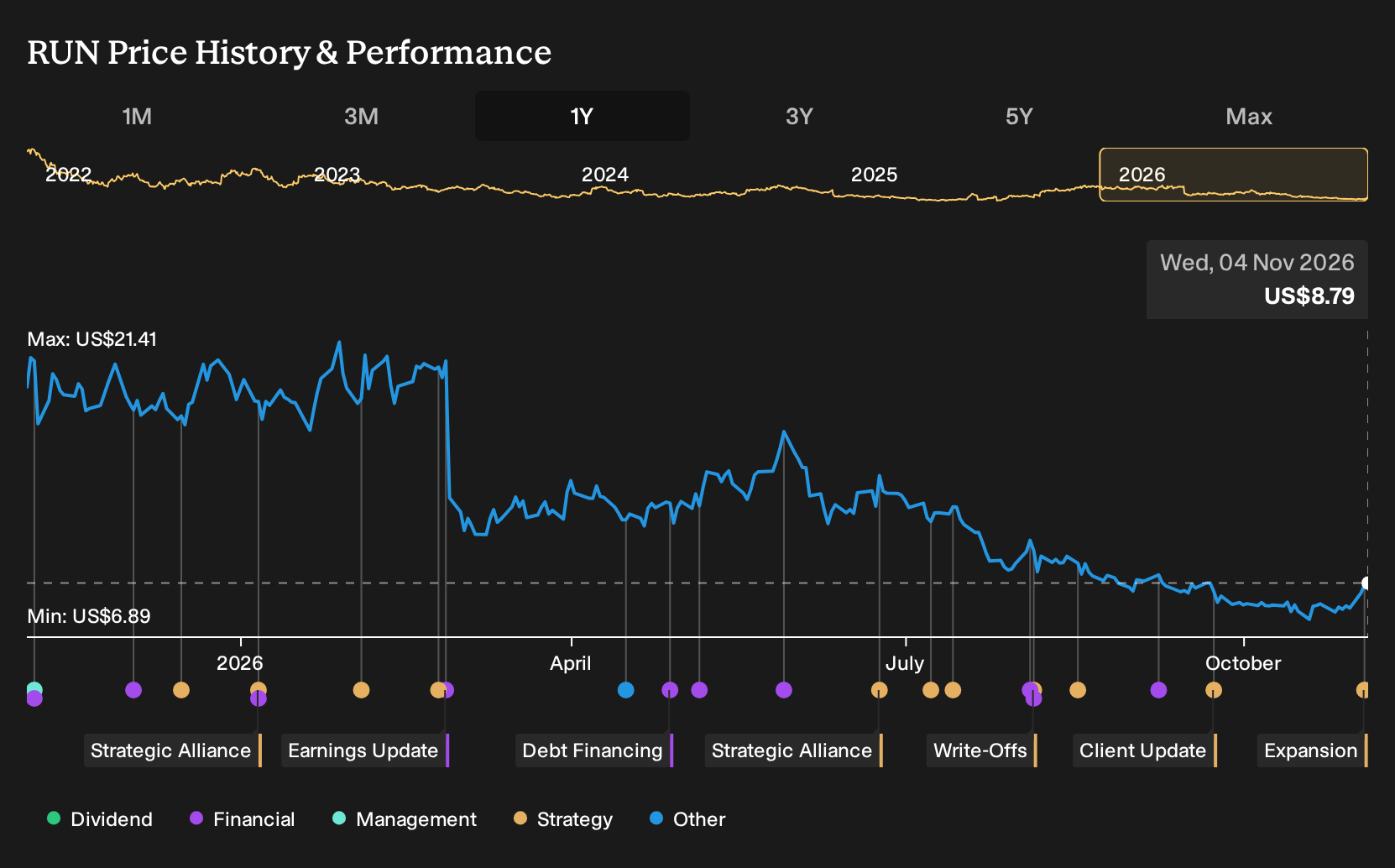
If you had looked at Sunrun in late 2025, the story on paper was all about fast-expanding solar plus storage and a bullish view that margins could swing sharply into profit within just a few years. For Sunrun shareholders, the loss over the past year was 57.3%, including dividends. If those original forecasts assumed 20.9% annual revenue growth, a 43.8% profit margin and a 5.1x P/E by 2028, what exactly did that thesis fail to build in?
On Simply Wall St, a Narrative is an investor's thesis written down: the reasoning, plus the numbers it rests on. Run those numbers and you get an estimated Fair Value.
This theme extends beyond Sunrun. See which of 41 power grid technology and infrastructure stocks may still merit a closer look.
The Two Sunrun Stories Investors Had To Weigh
The shares cost US$19.06 at the start of the period, and anyone looking at Sunrun then was really choosing between two sharply different stories about how home energy would evolve.
The bullish Narrative put Fair Value at US$23.58 and focused on a scenario with revenue growing 20.9% a year and profit margins shifting from a loss to 43.8% over three years as solar plus storage and grid services scaled.
The more cautious Narrative set Fair Value at US$15.92 and described a case with 10.4% annual revenue growth and margins reaching 16.2%, while highlighting that tax credit expiries could reduce the size of the residential solar market.
What The Sunrun Evidence Actually Showed
Sunrun’s Q2 2026 report gave the bullish story some backing on growth, with revenue at US$869.988m versus US$569.336m a year earlier. Profit told a different story. Net income fell from US$279.773m to US$115.152m and net margin moved from 49.1% to 13.2%. The data cut both ways for the original Narratives.
The key assumption investors needed to pin down was margin expansion. Future-focused stories leaned on rapidly rising profitability. The simple check for the next company is clear: track net margin alongside revenue in each report and see whether profitability is actually keeping pace with the growth story.
What Sunrun’s Lower Price Now Asks You To Believe
Sunrun trades today at US$8.79 after a 57.3% loss over the past year. The selected Narrative still places Fair Value above that price and frames the case around recurring cash flows from storage, grid services and other capital light uses of Sunrun’s installed base.
That view leans on one core testable assumption. A buyer today would be counting on Sunrun successfully shifting to higher margin direct origination while keeping financing channels and customer service strong enough to support those recurring revenues.
"The main factor that has to go right is execution on the shift to higher margin direct origination, along with maintaining strong financing access and customer service after recent guidance cuts and legal costs. The current valuation implies the market is discounting Sunrun's contracted subscriber value, its growing storage fleet, and its new recurring revenue streams, which aligns with a view that the stock may be undervalued."
That disagreement has a full argument behind it. → Uncover the higher Fair Value this Narrative argues for
Sunrun And Another Power Question
Looking at Sunrun naturally pulls your attention to rooftop panels and storage. One step away, a different kind of on site power quietly tackles another need.
Instead of drawing from the wider grid, this business installs fuel based systems that generate electricity on location. Customers get electricity without relying on combustion in a traditional engine.
The same urge you see with Sunrun, to gain more control over energy, appears here in another form. Large facilities use this kit to keep critical operations running.
Because these units can be deployed quickly, officials and corporates use them to address grid overload worries.
That speed and independence keep opening doors that rooftop solar does not automatically reach.
It is written up in full, assumptions and all. → Explore the Narrative that puts this company 93% above its price
Have feedback on this article? Concerned about the content? Get in touch with us directly. Alternatively, email editorial-team@simplywallst.com