
Is the year-end rebound in US stocks coming? Wall Street trading institutions bet on a rise after the midterm elections, and pre-election positions cleared up the core bullish argument
The Zhitong Finance App learned that some of Wall Street's largest trading institutions are urging customers to increase their exposure to US stocks and bet on the slump in investor positions before the midterm elections, creating room for a year-end rebound.
Big tech stocks led the general rise in the market on Wednesday. Earlier, the Democratic Party won control of both houses of the US Congress, and President Donald Trump said he would accept the election results. Investors were prepared for the opposite outcome — they expected AI infrastructure construction to face stricter regulatory scrutiny under the Democrat-controlled Congress.
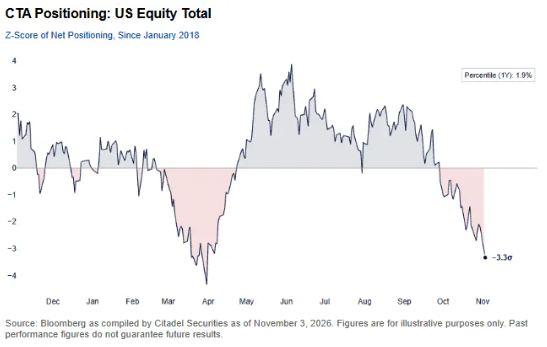
Prior to the November vote, hedge funds cut their exposure to US stocks and re-increased their bearish positions, bringing short positions in the stock market close to a five-year high, and systemic investors also reduced their exposure. The resulting position reset is now becoming one of Wall Street's main arguments for a bullish market rebound.
“This is not just a reversal of the October market,” said Max Kettner, chief multi-asset strategist at HSBC. “Basically, this is buying up all assets.”
This round of gains followed a bleak October for stock investors — a month where they had to deal not only with disappointing tech earnings, but also with the uncertainty surrounding the election. These concerns drove the tech-focused Nasdaq 100 index into its third sharp correction of the year earlier this week, and triggered a sharp contraction in risk appetite among institutional investors.
At J.P. Morgan, traders said that the deleveraging of hedge funds and the liquidation of artificial intelligence positions in October had created a more favorable environment for the stock market. The bank's US market intelligence team remains tactically bullish, believing that the recent sell-off in tech stocks may present opportunities for short-term recovery — even as investors are becoming more picky about the winners and losers in the AI sector.
“We're not abandoning tech deals and will lay the groundwork for a tactical rally,” the team, led by Andrew Tyler, wrote in a Wednesday report. These strategists favor dumbbell strategies that combine technology stocks with cyclical stocks, which place more emphasis on cyclical stocks.
According to preliminary performance data from research firm PivotalPath, technology, media and telecommunications (TMT) equity funds and multi-strategy hedge funds were at the center of deleveraging and technology holdings being forced to be liquidated in October. J.P. Morgan strategist Nikolaos Panigirtzoglou said that after the painful October sell-off, hedge funds may need weeks of market stability before re-establishing AI exposure.
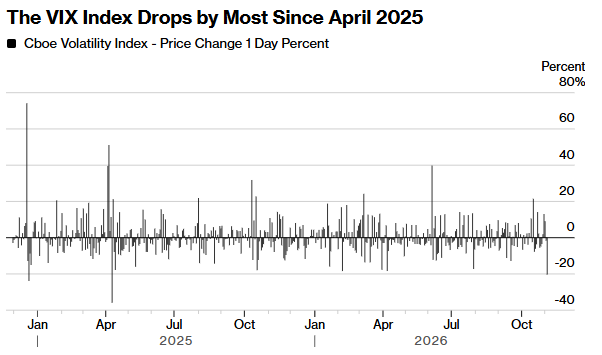
In Nomura, cross-asset strategist Charlie McEligott said that Wednesday's rebound partly reflected investors being unhedged after the election landed smoothly and did not cause a major market shock. He said that the sharp decline in VIX Index futures and VVIX, which measures the volatility of the options market, indicates that demand for protective positions accumulated in previous weeks due to election uncertainty and AI concerns is cooling down. The VIX Index — also known as Wall Street's “Panic Indicator” — recorded its biggest one-day decline since April 2025 on Wednesday.
McEligott wrote that the market believes the election results will bring “a forced slowdown in US data center construction, thereby easing concerns surrounding the 'infinite race prisoner plague' of hyperscale cloud vendor capital expenditure.” This has allayed some of the concerns surrounding the large-scale credit and stock offerings needed to finance the AI boom.
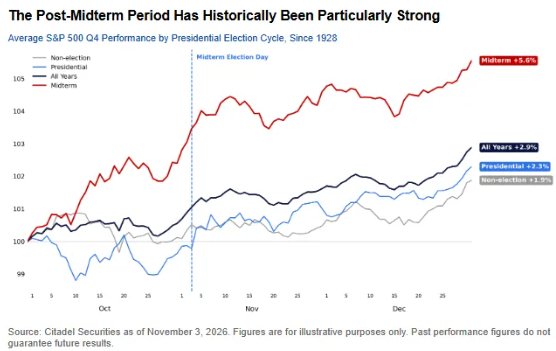
Scott Rubner of Castle Securities also believes that there is room for a year-end rebound. The reason is that corporate profits remain resilient, investor positions are sluggish, and election uncertainty has been eliminated. “As the election comes to an end and volatility is expected to normalize, investors have plenty of room to rebuild their risk exposure,” Rubner wrote in a report to clients on Wednesday. “We believe that the direction of least resistance in the US stock market towards the end of the year is to rise.”
According to Castle Securities data, retail investors have been net buying US stocks for 22 consecutive trading days since October 5, with a cumulative total of nearly 33 billion US dollars. Meanwhile, systemic fund positions have fallen to their lowest level since March 31, leaving room for more buying if the stock market continues to recover.
Investors are also awaiting the next major test for tech and AI-related assets: the highly anticipated Anthropic PBC initial public offering (IPO). The deal is expected to rank among the largest IPOs in history; for some, it may clear the barriers to a more decisive return to tech stocks, especially after the sharp fluctuations in October.
“For me, the real clean-up event was Anthropic's IPO,” HSBC's Kettner said. “Once Anthropic's IPO is announced and successfully completed, I think we will do our best to long tech stocks and short everything that surged in October.”