
PTC (NASDAQ:PTC) exceeds Q3 CY2026 expectations
Product design software company PTC (NASDAQ:PTC) reported calendar Q3 2026 (fiscal Q4 2026) results beating Wall Street’s revenue expectations, but revenue fell by 24.7% year on year to $673.3 million. Its non-GAAP profit of $2.03 per share was 3.4% above analysts’ consensus estimates.
For more on PTC, read our full research report for free.
PTC (PTC) Q3 CY2026 highlights:
- Revenue $673.3 million vs S&P analysts’ consensus estimates of $661.8 million (24.7% year-on-year decline, 1.7% beat)
- Adjusted EPS $2.03 vs S&P analysts’ consensus estimates of $1.96 (3.4% beat)
- Adjusted operating income $307.3 million vs analysts’ consensus estimates of $300.9 million (45.6% margin, 2.1% beat)
- Operating margin 31.6%, down from 48.5% in the same quarter last year
- Free cash flow margin 5.6%, down from 41.6% in the previous quarter
- Annual recurring revenue $2.51 billion vs analysts’ consensus estimates of $2.54 billion (1.2% year-on-year growth, miss)
- Billings $782.7 million at quarter end, down 17.4% year on year
- Market capitalization $21.06 billion
Revenue growth
A company’s long-term performance is an indicator of its overall quality. Any business can deliver a good quarter or two, but many enduring ones grow for years. Over the last five years, PTC grew its revenue at a sluggish 8.6% compounded annual growth rate. This was an underwhelming result compared to the rest of the software sector, but there are still things to like about PTC.
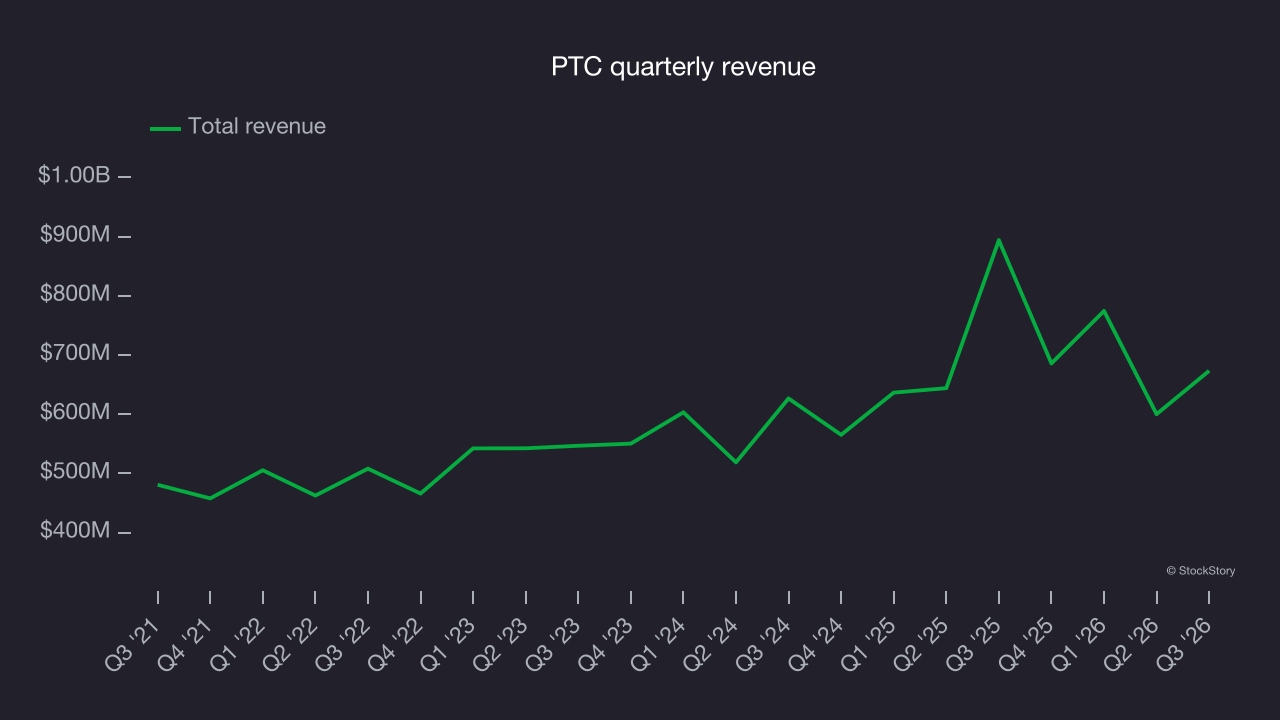
Long-term growth is the most important, but within software, a half-decade historical view may miss new innovations or demand cycles. PTC’s annualized revenue growth of 9.1% over the last two years aligns with its five-year trend, suggesting its demand was consistently weak. 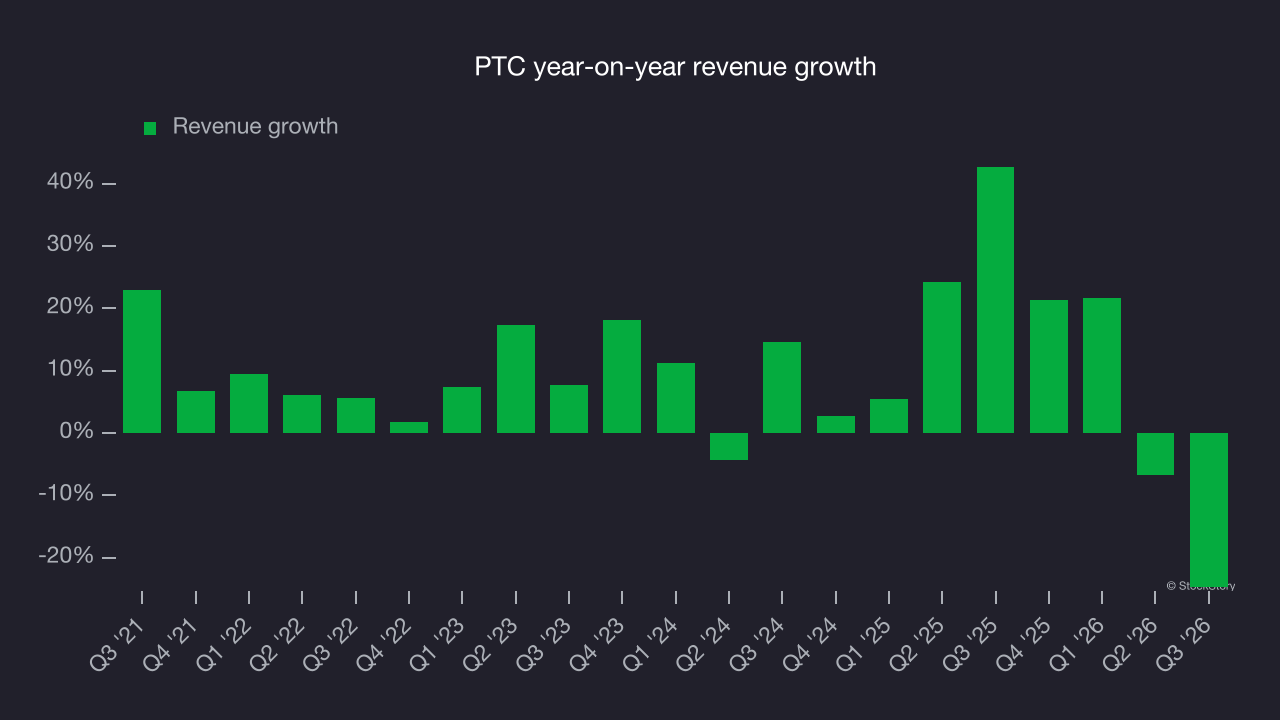
This quarter, PTC’s revenue fell by 24.7% year on year to $673.3 million but beat Wall Street’s consensus estimates by 1.7%.
Looking ahead, sell-side analysts expect revenue to grow 5.8% over the next 12 months, according to S&P, a deceleration versus the last two years. This underwhelming projection suggests its products and services will see some demand headwinds. Still, the company is performing well on other measures of financial health.
Annual recurring revenue
While reported revenue for a software company can include low-margin items like implementation fees, annual recurring revenue, or ARR, is the sum of the next 12 months of contracted revenue purely from software subscriptions, or the high-margin, predictable revenue streams that make software-as-a-service businesses valuable.
PTC’s ARR came in at $2.51 billion in Q3, and over the last four quarters, its growth was underwhelming as it averaged 4.4% year-on-year increases. However, this alternative revenue metric grew faster than total revenue, which likely means that the recurring portions of the business are growing faster than less predictable, more volatile ones such as implementation fees. That could be a good sign for future revenue growth. 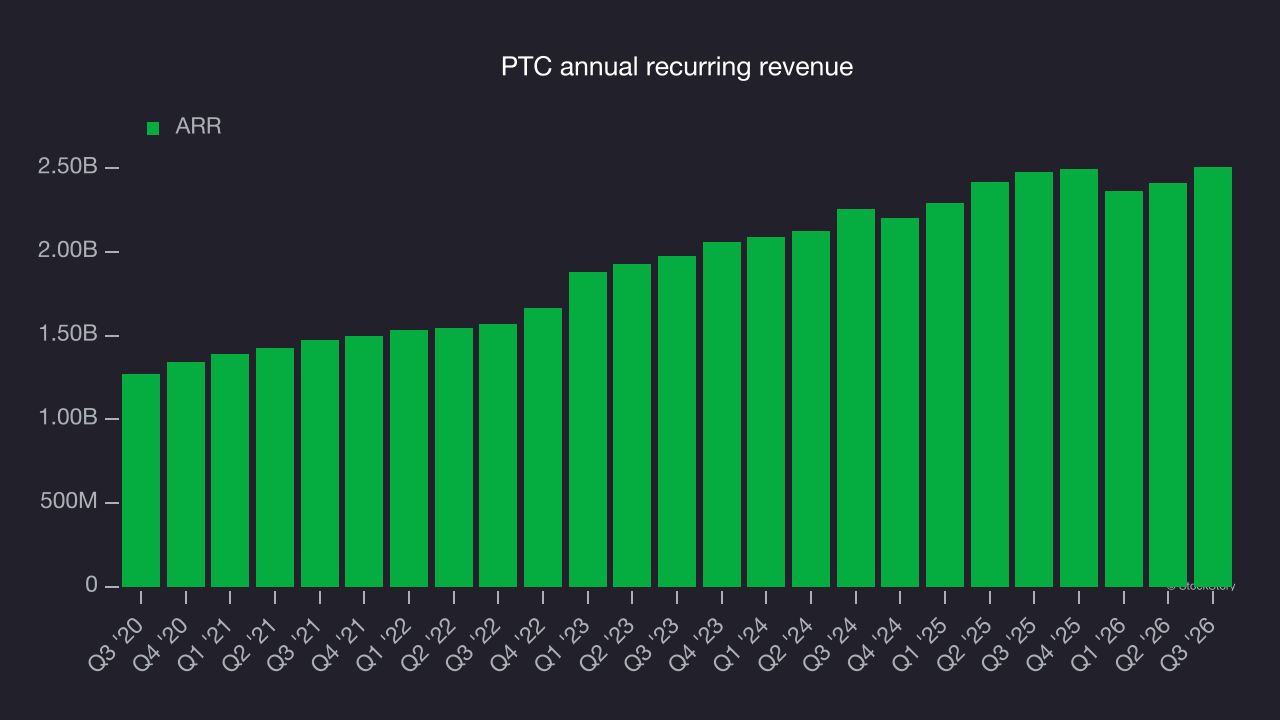
Customer acquisition efficiency
The customer acquisition cost, or CAC, payback period represents the months required to recover the cost of acquiring a new customer. Essentially, it’s the break-even point for sales and marketing investments. A shorter CAC payback period is ideal, as it implies better returns on investment and business scalability.
PTC is highly efficient at acquiring new customers, and its CAC payback period was 1.7 months this quarter. The company’s rapid recovery of its customer acquisition costs means it can attempt to spur growth by increasing its sales and marketing investments.
Key takeaways from PTC’s Q3 results
PTC’s billings beat analysts’ consensus estimates by a wide margin, and adjusted operating income also topped Wall Street’s consensus, giving the quarter some key positives. However, annual recurring revenue came in slightly below expectations. Shares remained flat at $194.92 immediately after the results.
PTC’s latest quarter matters when deciding whether to buy the stock, but longer-term fundamentals and valuation matter more. Read the full research report here (it’s free).