
What Has Changed For NIO Since Its 55% Fall
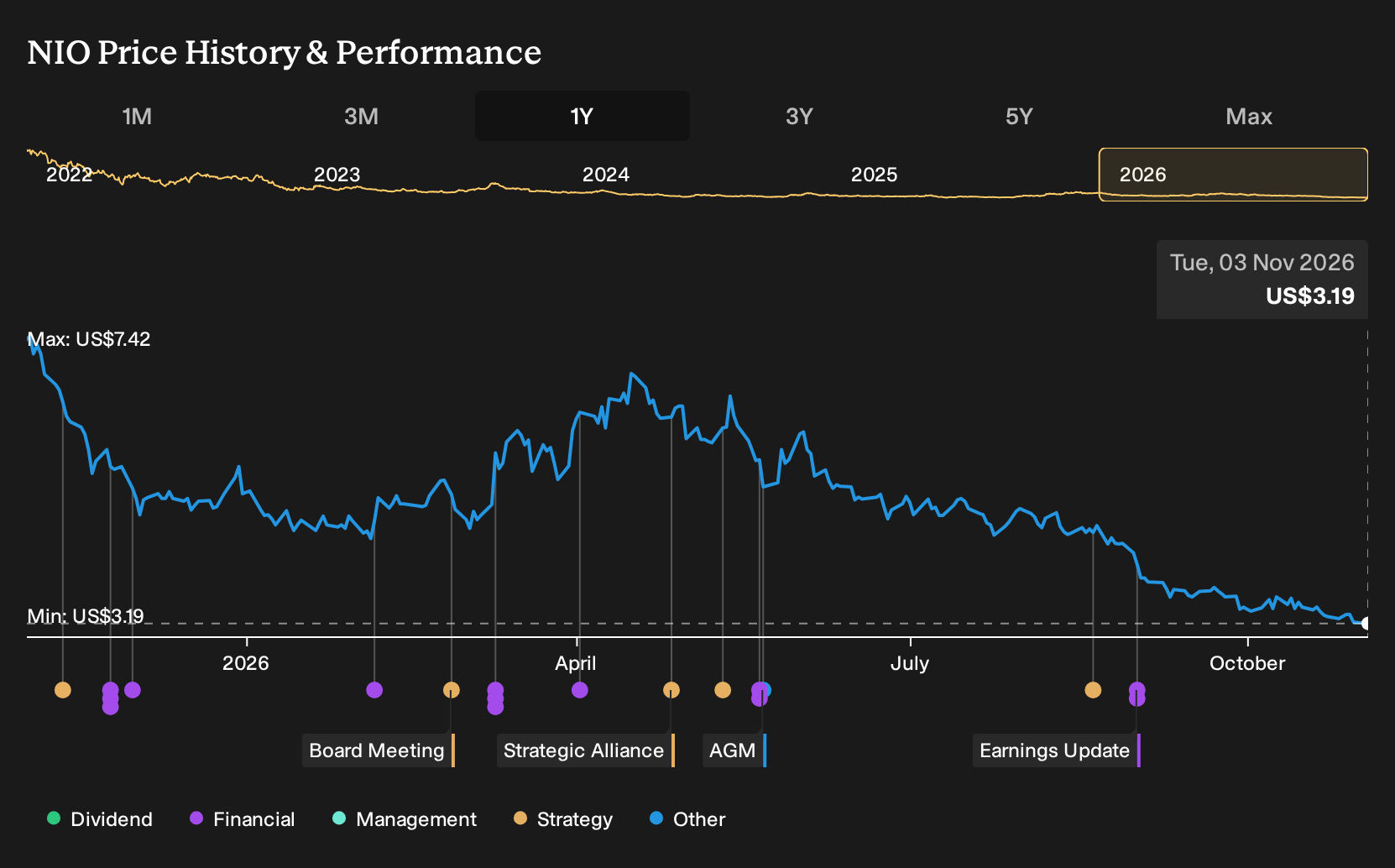
NIO just reported its first ever quarterly profit on record deliveries and improving margins in Q4 2025, a milestone that grabbed headlines and briefly lifted sentiment. For NIO shareholders, the loss over the past year was 55.4%, including dividends. If you had bought in a year ago on optimism around battery swaps, digital services and faster EV adoption, how should this new profitability milestone change your view of what really matters next?
The useful thing about a Narrative is that the reasoning is checkable: the assumptions sit beside the argument, and together they imply an estimated Fair Value you can disagree with.
This theme extends beyond NIO. See which of 41 power grid technology and infrastructure stocks may still merit a closer look.
The Argument NIO Investors Were Really Having
The shares cost US$7.42 at the start of the period, and the split in opinion on NIO was clear even then.
The bullish narrative put fair value at US$8.10, built on the idea that battery swaps, digital services and a growing network could support faster deliveries and margin improvement. Supporters focused on in-house tech and a battery swap footprint that was expected to strengthen customer loyalty and recurring service income.
The more cautious case anchored fair value at US$6.58 and accepted delivery growth but worried about sustained net losses. This view highlighted ongoing high costs, intense competition in China and the possibility that NIO might struggle to convert new models and infrastructure spending into durable profitability.
What The NIO Results Actually Tested
NIO’s Q2 2026 figures did the heavy lifting. Revenue was reported at CN¥32,136.861m with a net loss of CN¥721.591m, and net margin moved from -27.0% to -2.2%. That shift backed the bullish focus on improving efficiency and scale. Profit was still negative though, so the claim that rapid growth would quickly deliver durable profitability remained unproven. Overall, the evidence cut both ways.
The lesson to carry across is simple. When a story leans on “profitability around the corner,” track the net margin line and its trend, not just delivery headlines or revenue growth.
What NIO’s Price Fall Is Really Asking You
NIO now trades at US$3.19, with the Narrative’s Fair Value sitting above that level based on its own assessment rather than a statement of fact. The argument leans on multi brand EV volume, a wider battery swap network, and in house smart driving chips feeding into margins and cash discipline.
The question is what must hold for a drop of about 55% over the past year to be seen as an opportunity rather than a warning. A buyer today would need to believe NIO can turn that product pipeline and cost framework into sustained orders, repeat power usage, and durable profitability across its brands.
"The main requirement is that NIO continues to convert its investment in large premium SUVs, battery swapping, and smart driving into steady vehicle orders and repeat usage across the NIO, ONVO, and FIREFLY brands despite cost pressures and competition."
The price and this Narrative do not agree. → Uncover what this Narrative says NIO is actually worth
Looking One Step Beyond NIO
NIO leans on faster charging through swaps. That solves time, not every driver worry.
Plenty of buyers still care about fuel flexibility and extreme range on long trips. You see a different answer to that problem nearby.
One large manufacturer is pushing plug in hybrids that can run far on electricity, then fall back on petrol when needed.
Its software keeps squeezing more distance from the same hardware, which quietly reshapes what “range anxiety” even means.
If anxious drivers shift toward that formula, NIO’s challenge is not only making profits. It is staying central to how drivers actually refuel.
That argument has a Narrative and a number behind it. → See the company one Narrative values 111% above its price
Have feedback on this article? Concerned about the content? Get in touch with us directly. Alternatively, email editorial-team@simplywallst.com