
Why indie Semiconductor Bears Were Right Before A 69% Drop
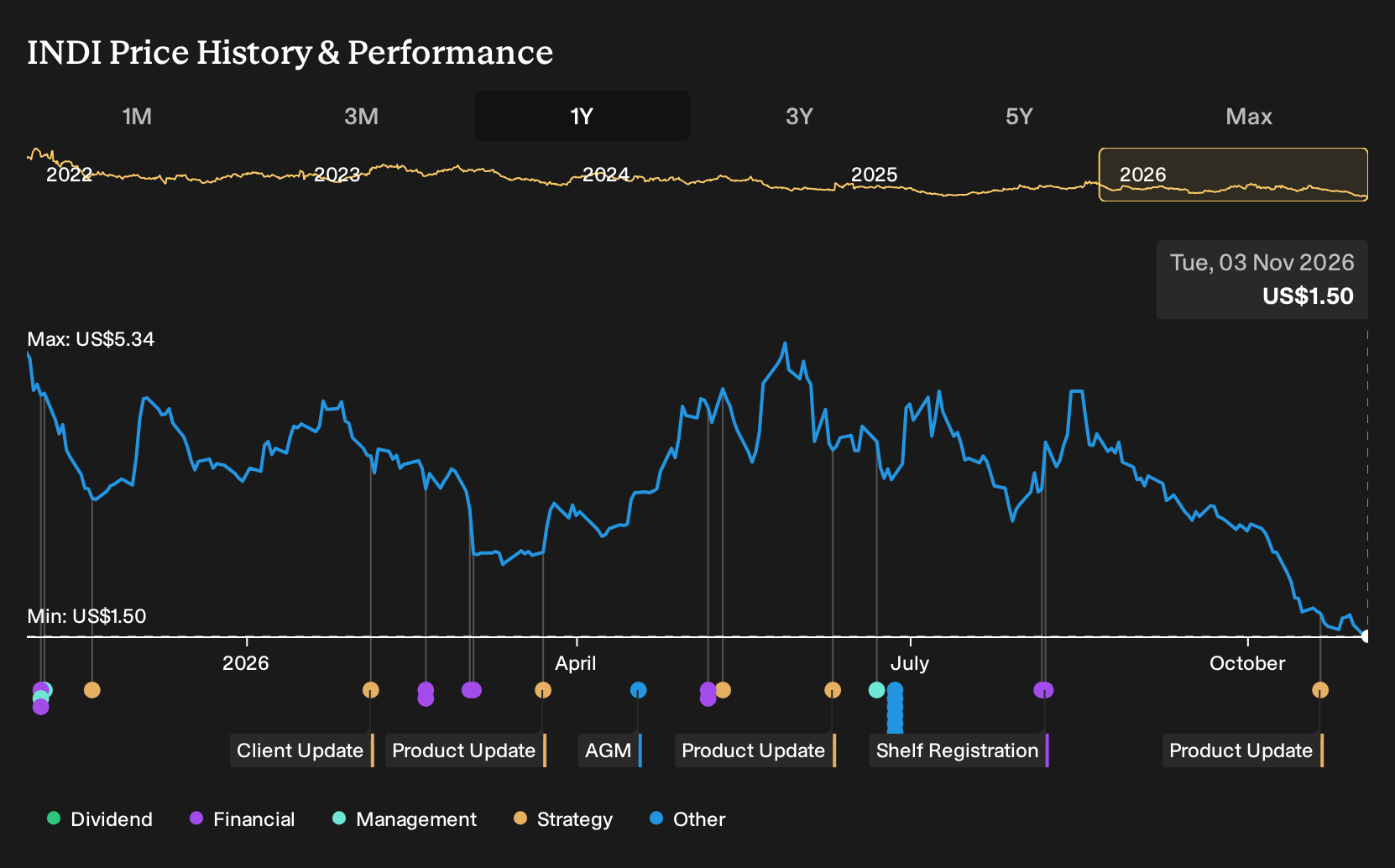
If you only glanced at indie Semiconductor’s headlines this year, steady revenue progress and fresh design wins might have sounded encouraging. Holding indie Semiconductor over the past year would have meant a 68.8% loss, including dividends. If you had been weighing a position back in early November 2025, the split between bullish expansion hopes and bearish concern over unprofitability was already clear. Which parts of that record really foreshadowed what followed?
Narratives are how investors here put a case on the record, with explicit assumptions about revenue, margins and the multiple. Those assumptions imply an estimated Fair Value.
indie Semiconductor is not the only name tied to this theme. Zero in on 53 AI infrastructure stocks and compare how each one is priced.
The Two indie Semiconductor Stories Investors Had To Choose Between
The shares cost US$5.14 at the start of the period, and anyone looking at indie Semiconductor had to decide which future seemed more realistic.
The optimistic argument pointed to a Fair Value of US$6.17. That view leaned on revenue rising 24.6% a year and profit margin moving to 14.1%, supported by radar and vision design wins and higher margin software from emotion3D.
The cautious script put Fair Value closer to US$4. It still assumed revenue climbing 20.2% a year and margin reaching 14.4%, but treated heavy automotive reliance and geopolitical risks around the supply chain as key threats.
What The Results Changed For indie Semiconductor
indie Semiconductor’s Q2 2026 report showed revenue of US$64.0 million compared with US$51.6 million a year earlier, and the loss excluding extra items narrowed to US$37.1 million. Net margin was still negative at 57.9%, even after improving from 75.6%. That mix of growth and ongoing losses, alongside rising debt and insider selling, cut both ways for the two original cases.
The whole episode turned on when profitability might realistically arrive. For any other stock built on margin improvement claims, you would watch net margin and net income together, and test whether each year’s results move consistently toward the level the original thesis assumes.
What indie Semiconductor’s Drop Asks You To Believe Now
indie Semiconductor now trades at US$1.5, after the share price fell 68.8% over the past year. The selected Narrative sees Fair Value above that level and leans on radar, vision and photonics exposure, plus software, as the core of its argument.
To treat the fall as an opportunity rather than a warning, a buyer would need to believe those photonics and software bets offset ongoing losses, concentrated automotive exposure and execution risks in new markets.
"Multiple new design wins in radar and vision products are set to enter production in late 2025 and 2026, targeting ADAS and user experience applications, which should drive significant increases in revenue as both product categories benefit from rising automotive semiconductor content per vehicle. The recent acquisition of emotion3D enables indie to add high-margin software licensing revenue streams to its established hardware model, with faster monetization potential and greater gross margin expansion as royalty revenues ramp in 2026 and beyond."
One Narrative has put a figure on that disagreement. → See the Narrative with its higher Fair Value, assumptions and all
Find Your Own Contrarian Opportunity
This company's disappointment is already part of the story. Your next idea could come from looking where the price and the possibilities still seem far apart. Here are three companies priced below our estimates.
- Company 1 - 25% below our estimate - supplies high performance photonics and packaging for rising AI data center workloads.
- Company 2 - 16% below our estimate - converts regulated-sector manufacturing wins into recurring design, production and logistics programs.
- Company 3 - 45% below our estimate - expands an aviation aftermarket platform through engine services, OEM ties and acquisition integration.
That is three of the list. See the full list of 35 companies trading below our fair value estimates →
Have feedback on this article? Concerned about the content? Get in touch with us directly. Alternatively, email editorial-team@simplywallst.com