
The Oracle Selloff Deepens Despite Strong Long-Term Growth Outlook. How to Play ORCL Stock Here.
Deepening capital expenditure anxieties and high-valuation selloffs have recently put enterprise cloud infrastructure providers under severe market pressure. Yet, as investors weigh near-term financing dilution against multi-year top-line expansion, long-term operational targets offer a critical stabilizing anchor to calm broader Wall Street volatility.
Reaffirming its long-term guidance and revenue trajectory to reassure investors, Oracle Corporation (ORCL) jumped following its latest Investor Day presentation.
About Oracle
Oracle Corporation is a global technology company providing cloud computing, enterprise software, database management systems, and business applications. Its Oracle Cloud Infrastructure (OCI), AI-powered services, and enterprise database solutions support organizations worldwide. The company is increasingly positioning itself as a major player in AI infrastructure and cloud data center services.
ORCL Stock Slides Amid AI Spending Concerns
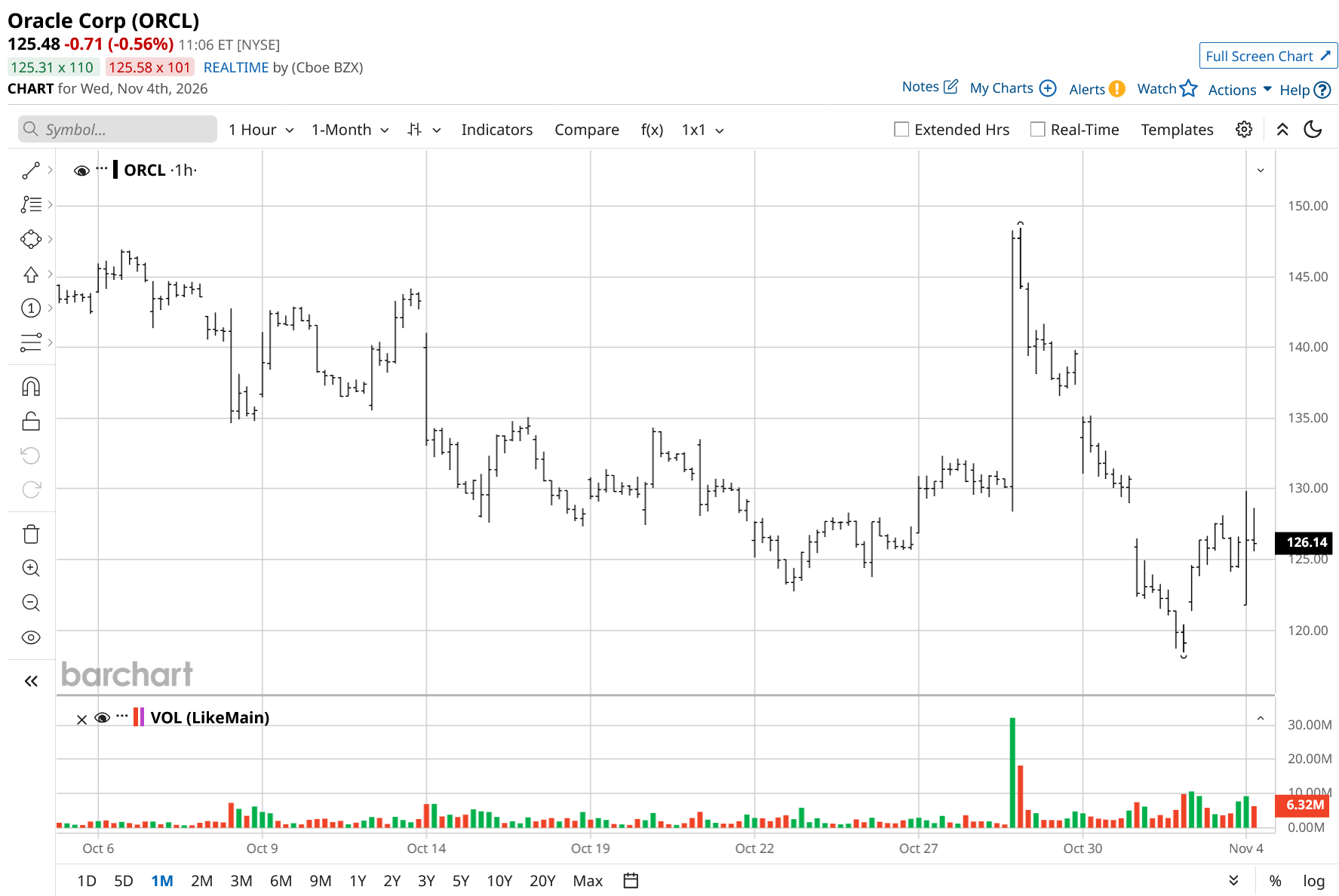
Oracle's stock has faced significant selling pressure in 2026 as investors reassess the company's aggressive AI infrastructure expansion, rising debt, and capital expenditure requirements. Shares closed at $130.67 on Oct. 30, down approximately 33% year-to-date (YTD) and nearly 50% over the past 12 months. Although ORCL rallied 10.73% on Oct. 28 following its financial analyst day, the gains proved short-lived as concerns over funding requirements returned.
ORCL stock has significantly underperformed the S&P 500 Information Technology Index ($SRIT) in 2026. ORCL shares recorded a YTD decline of approximately 35% through Oct. 29, while the technology sector index advanced around 19% through Oct. 30.
Strong Earnings Results and Ambitious Guidance
Oracle delivered strong first-quarter fiscal 2027 results while reinforcing investor confidence with ambitious long-term growth targets unveiled at its financial analyst day. The company reported $19.35 billion in revenue, up 30% year-over-year (YoY), while non-GAAP earnings per share rose 30% to $1.92, ahead of analyst expectations of approximately $1.90. The results were driven by accelerating demand for Oracle Cloud Infrastructure and AI computing services, helping the company post record quarterly revenue and strengthening its position in the rapidly expanding cloud market.
Oracle's financial performance highlighted the momentum in its AI business. Cloud revenue surged 62% to $11.6 billion, with OCI revenue soaring 121% to $7.4 billion, while cloud applications revenue increased 10% to $4.2 billion. Remaining performance obligations climbed to $664 billion, reflecting a substantial backlog of contracted future business. However, capital expenditure reached $28.5 billion, contributing to negative free cash flow as Oracle continues investing heavily in AI infrastructure and data center expansion.
During its financial analyst day, Oracle reaffirmed its fiscal 2027 guidance of $90 billion in revenue and $8.10 EPS while outlining an ambitious long-term roadmap. Management projects a 35% compound annual growth rate from fiscal 2026 through 2030, with revenue expected to exceed $225 billion by fiscal 2030. Oracle also expects capital spending to peak between fiscal years 2027 and 2028 before easing, targeting $30 billion in free cash flow by fiscal year 2029, as vendor financing, customer prepayments, and disciplined capital raising help support its AI-driven expansion strategy.
Should You Buy ORCL?
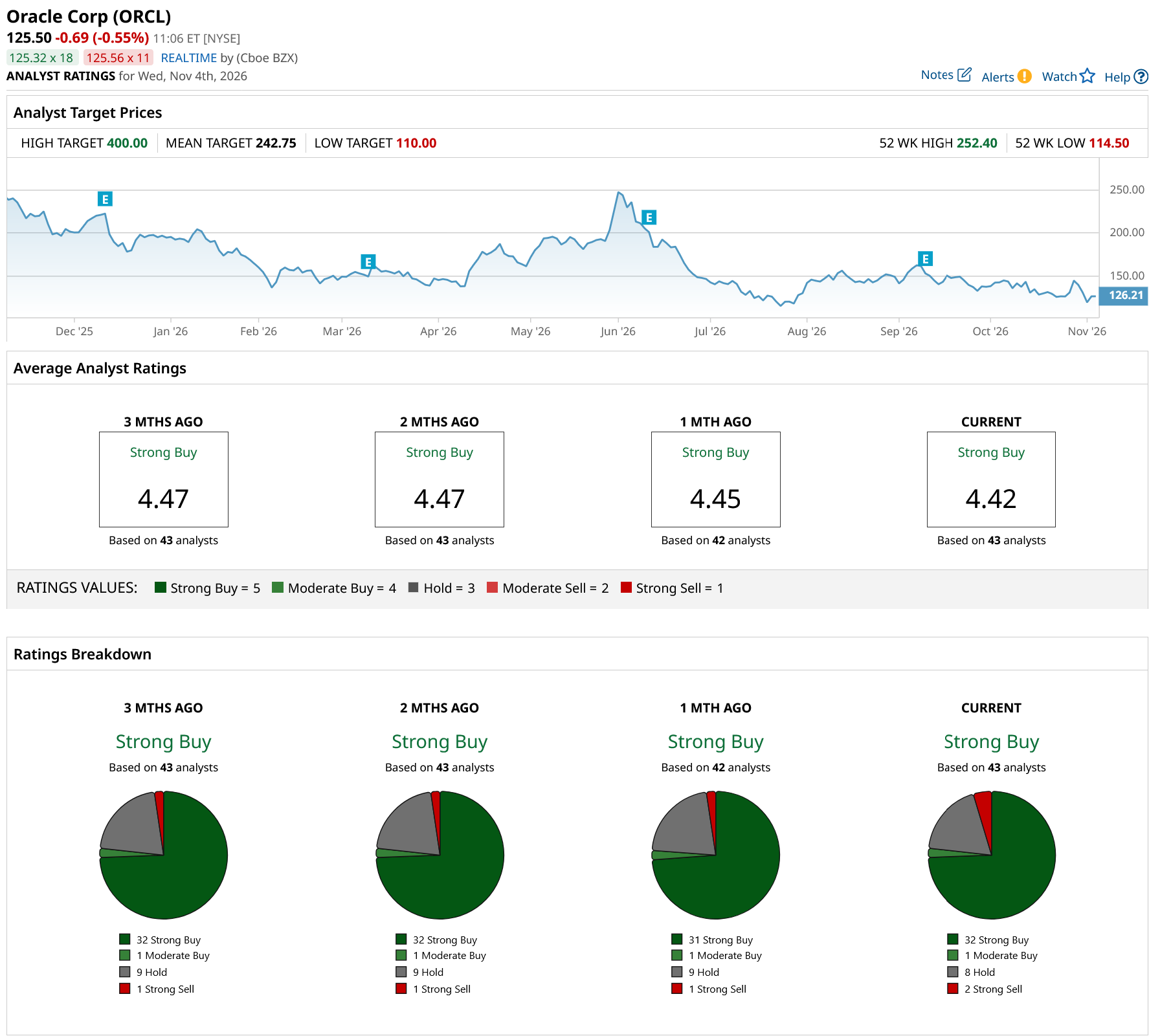
Oracle's reaffirmed fiscal 2027 guidance and ambitious target of reaching at least $225 billion in revenue by fiscal 2030 highlight its long-term AI cloud growth potential. Wall Street maintains a “Strong Buy” consensus rating on ORCL stock, with an average price target of $242.75, implying approximately 93% upside from the current market price. Of the 43 analyst ratings, 32 are “Strong Buy” ratings, one is a “Moderate Buy” rating, eight are “Hold” ratings, and two are “Strong Sell” ratings.
However, investors should consider Oracle's substantial capital expenditure, financing requirements, and ability to convert AI infrastructure demand into sustainable free cash flow.
On the date of publication, Ruchi Gupta did not directly have a position in any of the securities mentioned in this article. All information and data in this article is solely for informational purposes. For more information please view the Barchart Disclosure Policy here.