
ARM vs QCOM: Intel’s Crash Dragged Both Stocks Down. Why Arm Looks Better Placed Now.
Intel (INTC) recently reported its third-quarter results, and the stock crashed nearly 30% in a single day. As I covered in its earnings review, this was Intel's worst fall in 1 day since 1974. One of the reasons was that soaring memory prices are weighing on PC sales. Qualcomm (QCOM) and Arm (ARM) are among the companies most exposed to the same problem in smartphones. That helps explain why QCOM fell over 11%, and ARM fell nearly 10% the day after Intel's report. Both of these companies report on Nov. 4.
About Qualcomm and Arm Stocks
Qualcomm designs chips for Android phones, cars, connected devices, and now AI data centers. Founded in 1985, it's based in San Diego and led by CEO Cristiano Amon. Arm designs the blueprints most phone chips are built on, including Qualcomm's, and earns a royalty on each one. Founded in 1990, it's based in Cambridge, UK, and led by CEO Rene Haas.
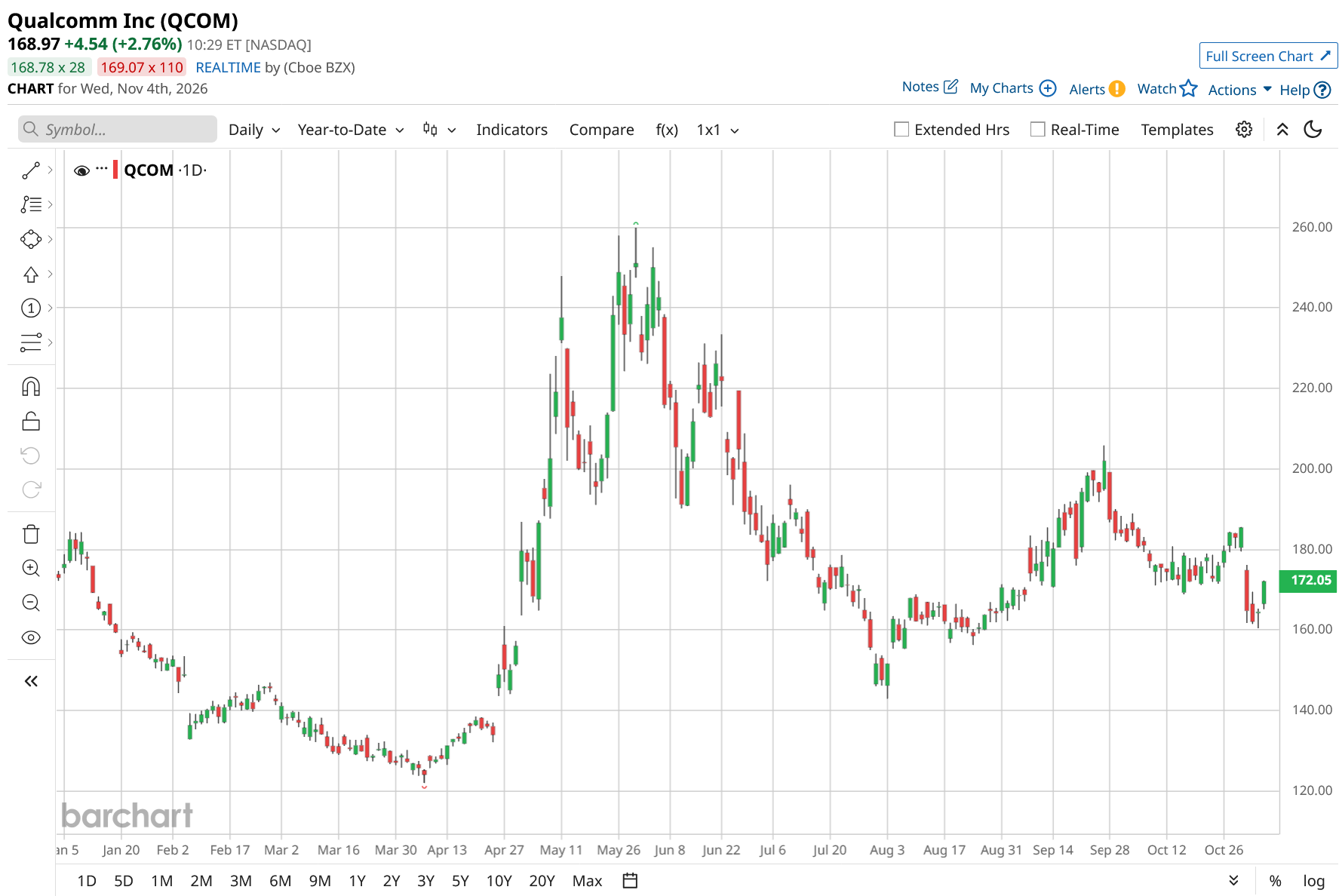
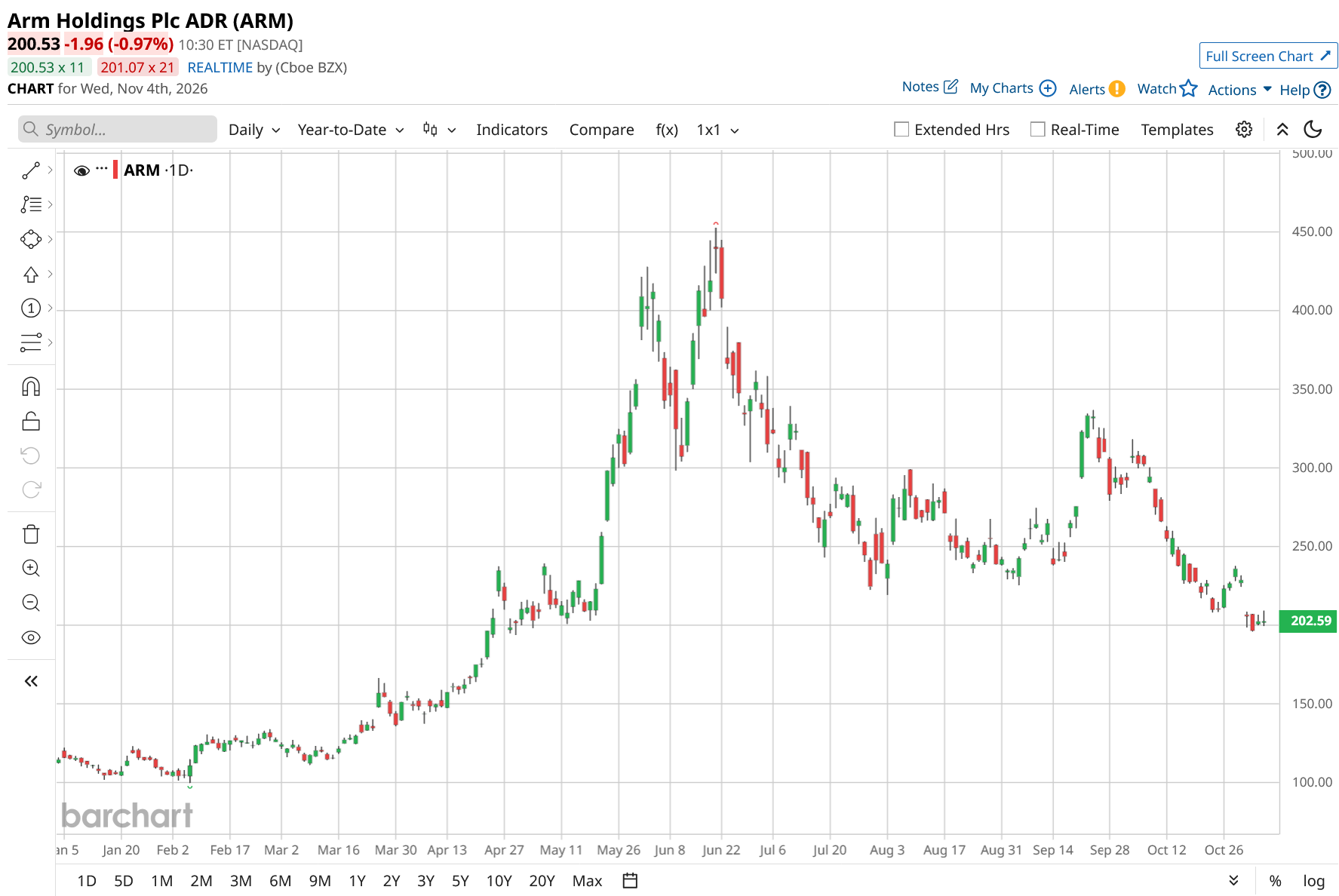
QCOM stock is down about 1% this year, while ARM stock is still up about 87%. What was similar for both companies is that QCOM reached its all-time high in late May and has since dropped 35%, while ARM also reached an all-time high in June and has dropped 55% from that peak. Both stocks were rewarded on AI excitement earlier in the year, and both have been hit hard by the recent chip selloff.
Same Problem, Different Escape Plans
For Qualcomm, phone chips are still most of its business, and Android phone chip revenue is expected to fall about 20% this fiscal year. Its Apple (AAPL) modem revenue is also shrinking faster than expected. It plans to counter this risk in two ways. The first is chips for cars, where revenue jumped 61% last quarter to a record $1.59 billion. The second is data centers, where it's targeting $5 billion in revenue in fiscal 2027 and $15 billion by fiscal 2029.
Arm earns a royalty on nearly every chip built on its designs, and smartphones are its single biggest source of royalties. Out of the $2.61 billion it earned in royalties last fiscal year, 43% came from smartphones, which amounts to roughly $1.1 billion. As I've covered before, that phone exposure is the real pressure on Arm right now, and soaring memory prices are only making it worse. Arm also plans to increase its focus on data centers, where its royalties more than doubled year-over-year (YoY) in its fiscal fourth quarter. It has more than $2 billion in committed demand for its own AGI CPU as well.
Overall, I think Arm might be better placed right now, since it earns a royalty regardless of who wins, including Qualcomm. I expect both will point to memory prices as the biggest drag on phones this week, while focusing more on data centers in their outlooks.
Cheap but Shrinking vs. Pricey but Growing
The two stocks are priced completely differently, and for good reason. QCOM trades at a forward price-to-earnings (P/E) of 15.40x, marginally above its 5-year average of 14.36x. Its forward price-to-sales (P/S) ratio of 4.04x is roughly in line with its 4.09x average. That's a low multiple, and the EPS outlook helps explain why. Analysts expect earnings to shrink 12.5% this fiscal year and another 3.5% next year before recovering. Arm trades at 88.10x forward earnings, about in line with its average, and the forward P/S ratio of 34.70x is steep. But its earnings are expected to grow 26% this fiscal year, over 30% in the two years after that, and over 50% in fiscal 2030. Arm also has a much cleaner balance sheet. It holds $3.89 billion in cash against just $485 million in debt, making it essentially debt-free. Qualcomm holds $8.30 billion in cash against $15.27 billion in debt. This doesn't look too concerning either, but it's not as strong as Arm's.
What Do Analysts Expect for QCOM and ARM Stocks?
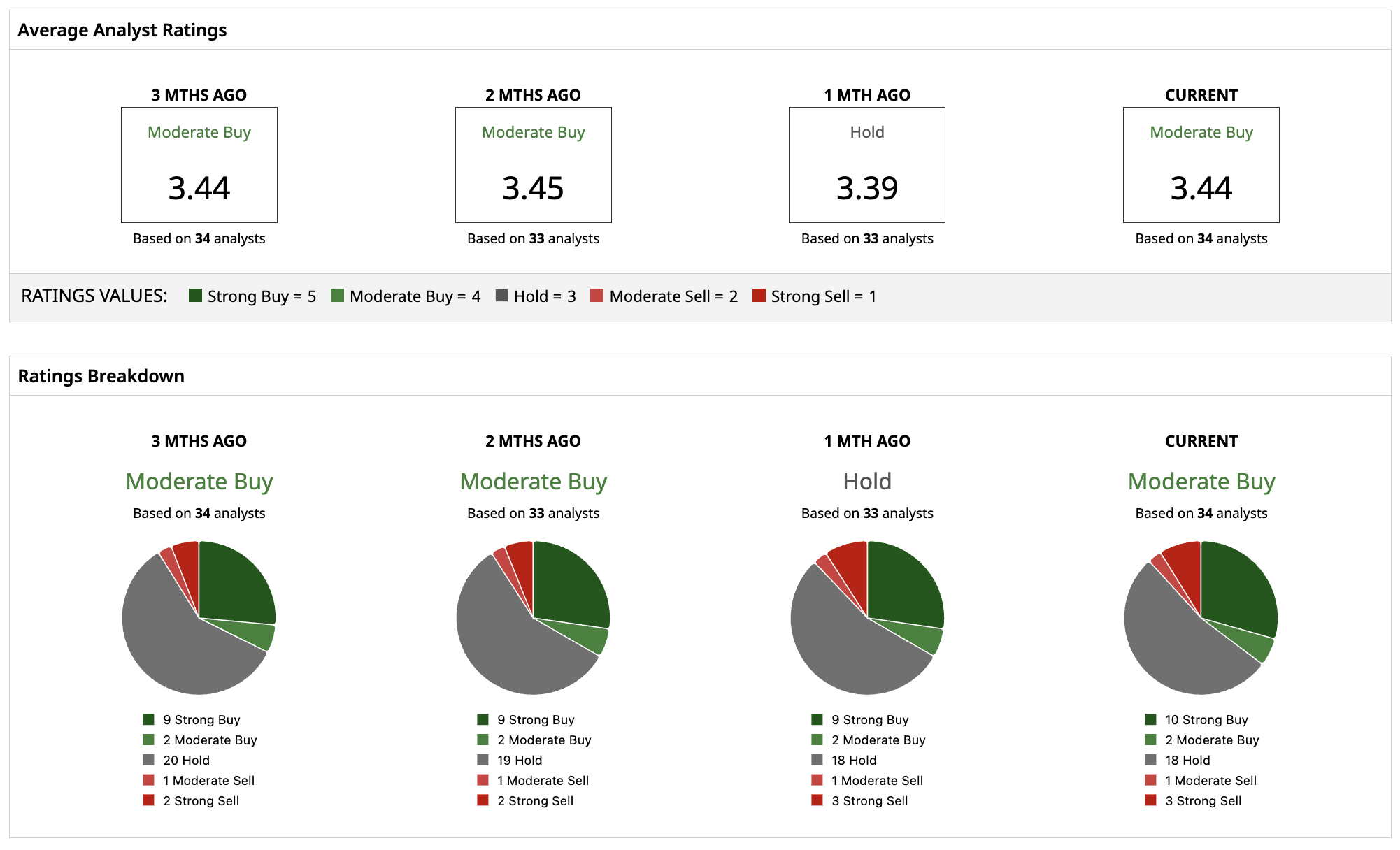
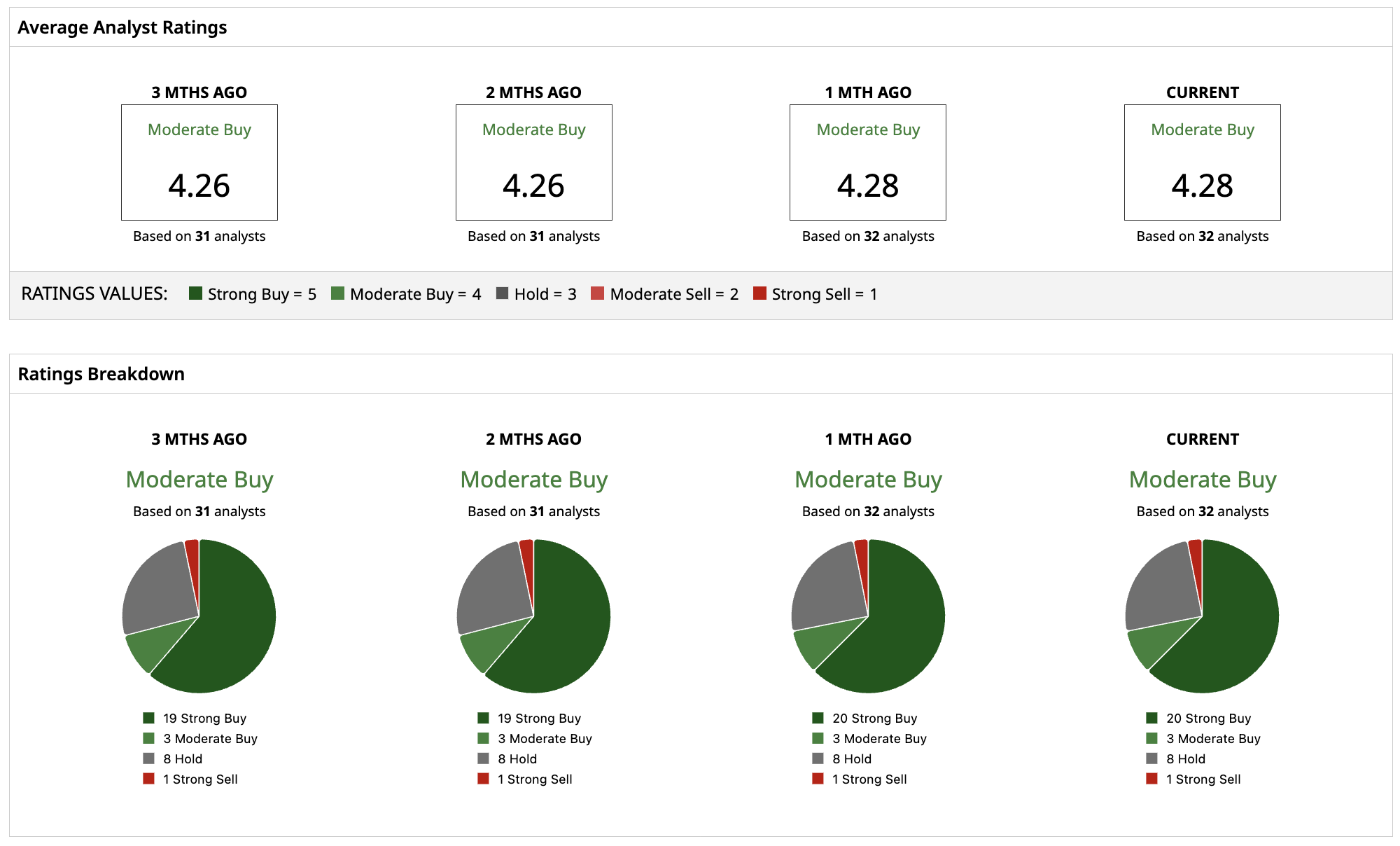
Based on 34 Wall Street analysts covering QCOM, the stock holds a “Moderate Buy” consensus rating with a mean price target of $199.03, indicating 18% upside. ARM stock also holds a “Moderate Buy” consensus rating from 32 analysts. Its mean price target of $289.14, though, indicates a healthier 47% upside. Furthermore, while both fall under the same average rating as per Barchart’s rating values, ARM holds a better score of 4.28 compared to Qualcomm’s 3.44.
On the date of publication, Jabran Kundi did not directly have a position in any of the securities mentioned in this article. All information and data in this article is solely for informational purposes. For more information please view the Barchart Disclosure Policy here.