
Rhythm Pharmaceuticals (RYTM) Stock Price Sinks As Q3 Results Expose Losses
Rhythm Pharmaceuticals just took a hard hit. The stock closed at US$93.44 before the release and is now trading around US$86.44, a drop of about 7.5% as investors react to fresh Q3 2026 numbers. On the surface, the headline is simple. The biotech posted another quarterly loss of US$0.61 per share while global net product sales reached US$92.1m.
The tension sits between that red ink and a revenue line that continues to grow with the launch of IMCIVREE in rare obesity disorders. Short term traders are focused on the loss, while long term holders are studying whether this margin squeeze reflects the cost of building a multi indication franchise.
Love Rhythm Pharmaceuticals' growing IMCIVREE sales but concerned about recurring quarterly losses? Check out the 40 profitable AI stocks that aren't just burning cash to see businesses pairing advanced tech exposure with profits instead of persistent red ink.
Q3 2026 Earnings Summary
- Total Revenue (Q3 2026 vs. Q3 2025): US$92.1m vs. US$51.3m (strong year on year top line increase)
- Net Loss, Excl. Extra Items (Q3 2026 vs. Q3 2025): US$42.4m loss vs. US$54.3m loss (loss narrowed)
- Basic EPS (Q3 2026 vs. Q3 2025): US$0.61 loss per share vs. US$0.82 loss per share (per share loss improved)
- Global Net Product Sales (Q3 2026 vs. Q2 2026): US$92.1m vs. US$71.3m (up 29% quarter on quarter, driven by IMCIVREE)
Prefer clean visuals instead of another dense slab of earnings text? Get a full picture of Rhythm Pharmaceuticals with a simple, chart based view of its financials in the latest company report for Rhythm Pharmaceuticals.
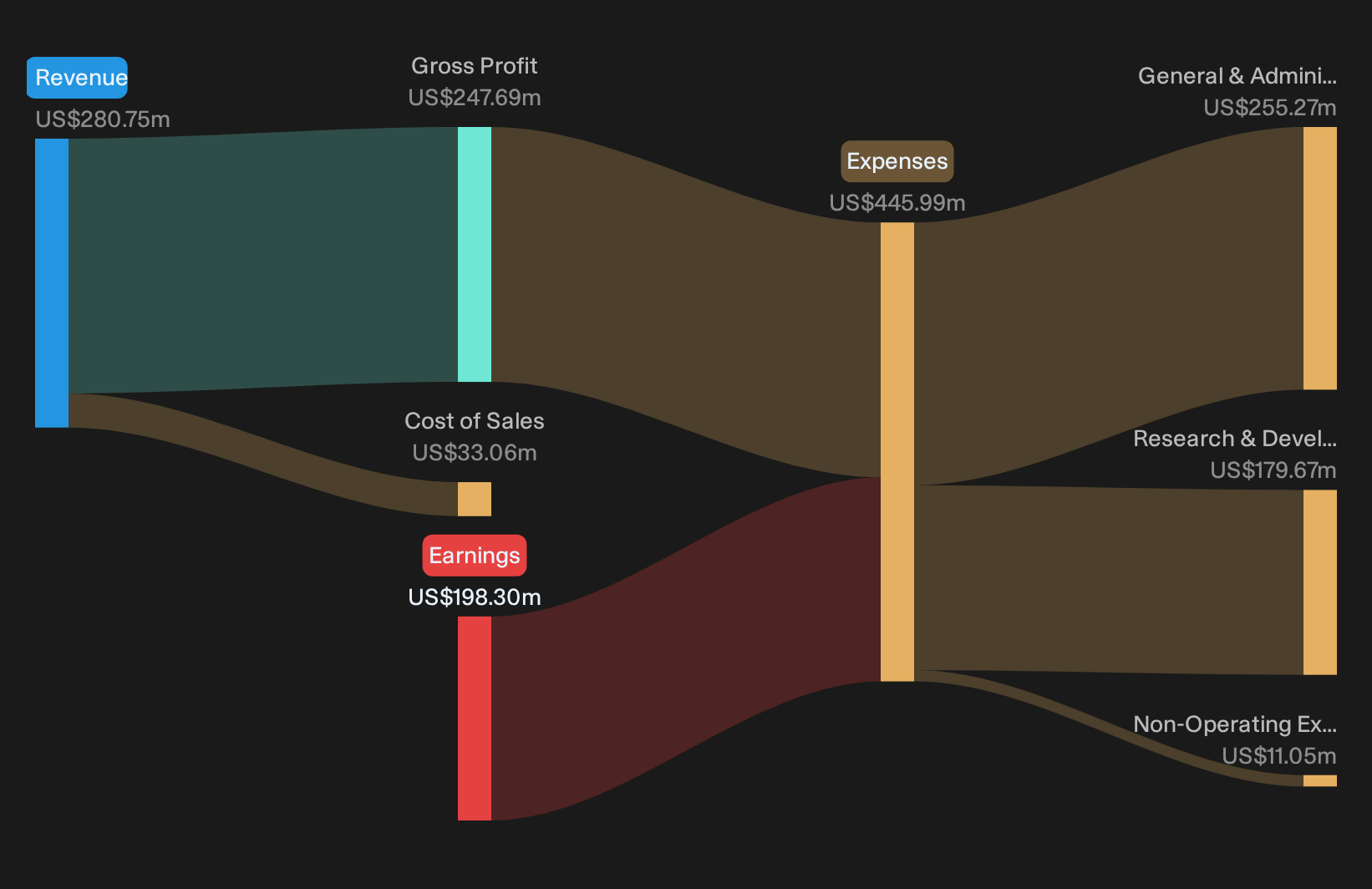
Rhythm bullish story: multi-indication MC4R plan on trial
Optimists argue Rhythm Pharmaceuticals can turn IMCIVREE and the broader MC4R franchise into a true rare obesity platform rather than a single product story.
"Having expanded from one disorder to multiple approved indications, the company has additional opportunities ahead to expand its portfolio."
Q3 shows that argument is partly holding up. Global net product sales reached US$92.1m, helped by acquired hypothalamic obesity launch, and reimbursed patients grew 20% quarter on quarter. Japan approval is now live with a built out local team. Management is also pushing bivamelagon and RM‑718 forward, supported by the LG Chem royalty reset, which ties economics to a larger MC4R portfolio.
Rhythm bear case: concentration, costs and leverage worries
Skeptics focus on whether Rhythm Pharmaceuticals is stretching its balance sheet and product concentration to chase that same obesity franchise build out.
"These transactions suggest strategic and financial buyers are willing to pay substantial premiums for de-risked rare endocrine/obesity assets, a dynamic that could support multiples above our SOTP assumptions if RYTM itself became a takeout candidate."
The latest quarter does not resolve that concern. The stock dropped 7.5% on the release, the business still reported a quarterly loss of US$42.4m, and Rhythm has taken on a US$500m term loan plus US$350m LG Chem commitments. Rare obesity remains a concentrated bet while leverage and fixed obligations increase.
The price and this Narrative do not agree. → Uncover what this Narrative says Rhythm Pharmaceuticals is actually worth.
Hunt Quiet Disconnects In Growth
Rhythm Pharmaceuticals shows how a build out phase can disrupt quarterly numbers. The real opportunity lies in finding stocks that could be undervalued before sentiment adjusts.
- Company 1 - 18% below our estimate - targets demand for AI and cloud storage as newer NAND nodes reduce costs and lift enterprise SSD mix.
- Company 2 - 45% below our estimate - expands cross border payment infrastructure as large digital merchants route more transactions through higher margin local solutions.
- Company 3 - 33% below our estimate - supplies GPUs and software that AI data centers standardize on as workloads migrate away from general purpose servers.
That is three of the list. See all 35 potentially undervalued companies →
Have feedback on this article? Concerned about the content? Get in touch with us directly. Alternatively, email editorial-team@simplywallst.com