
Expectations of the Democratic Party sweeping Congress are heating up and stirring up financial markets! US stock futures, US dollar, bitcoin, and copper prices are simultaneously under pressure, but US bonds are sought after
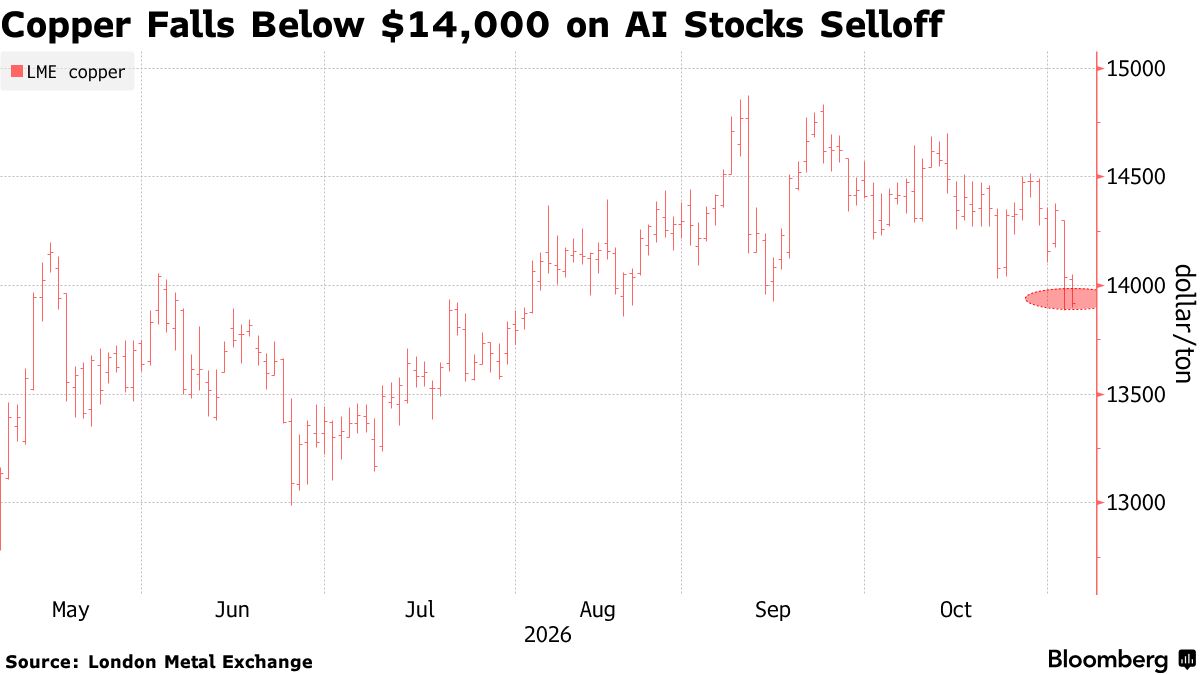
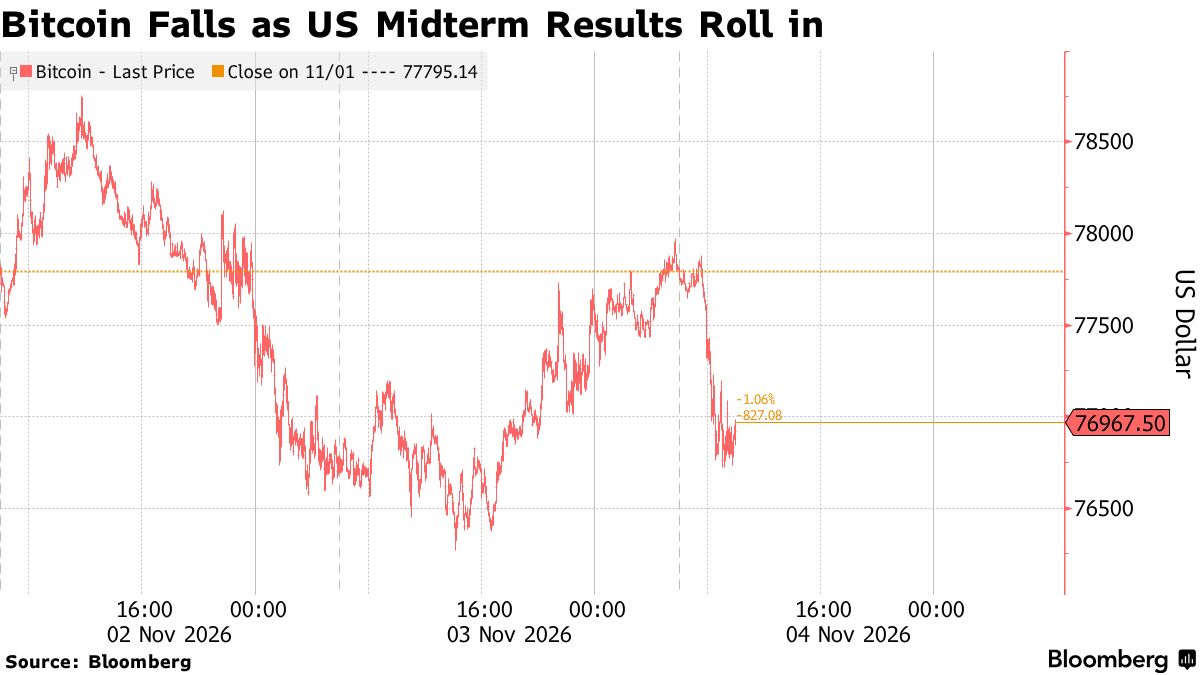
The Zhitong Finance App learned that the preliminary results of the US midterm elections show that the possibility of the Democratic Party winning a majority of seats in both houses of Congress is rising. And this risk is spreading to financial markets. The three major US stock index futures fell sharply — as of press release, Dow futures were down 0.83%, S&P 500 futures were down 1.23%, and NASDAQ futures were down 2.14%. The US dollar fell at the same time, falling 0.47% to 101.39. US bonds rose — 10-year US Treasury yields fell 5 basis points to 4.899%; 30-year US Treasury yields fell 3.4 basis points to 5.290%. Bitcoin fell slightly and traded at $76,000. Copper prices declined for the second consecutive trading day.

Predictive market Kalshi currently believes that the probability of the Democratic Party winning control of the House of Representatives is 99%, and the probability of winning control of the Senate is also at a similar level, which means that the Democratic Party is expected to control both houses of the National Assembly at the same time.
On the evening of November 3, the US media predicted that the Democratic Party will take back several seats in the House of Representatives from the Republican Party in this midterm election and regain control of the House of Representatives. Several news agencies predict that the Democratic Party will win a majority in the House of Representatives. The Democratic Party is gaining momentum in this election, mainly driven by voters' dissatisfaction, and the cost of living issue and an unpopular war in Iran have further exacerbated this discontent.
According to reports, on November 3, local time, former Democratic Governor Roy Cooper of North Carolina defeated Republican candidate Michael Wortley, supported by US President Trump, in the US Senate election to win a key Senate seat for the Democratic Party. Cooper's victory broke the Republican Party's 18-year winning streak in the North Carolina US Senate election, making him the first Democrat to win the US Senate election in 18 years.
Investors believe that an overwhelming victory for the Democratic Party would be a potential blow to the stock market and the US dollar, as this means that regulatory scrutiny may become stricter, especially for high-growth technology companies and artificial intelligence companies.
Dilin Wu, strategist at Pepperstone Group Ltd., Melbourne, Australia, said, “The Democratic Party's performance is stronger, increasing market uncertainty. In particular, the market is concerned that corporate regulations may become stricter and AI spending will be subject to more scrutiny. However, tech stock valuations are already under pressure, so this election is more about amplifying the market's original concerns rather than triggering this round of sell-off alone.”
David Forrester, senior strategist at Crédit Agricole in Singapore, said that “the Achilles' heel of the dollar is being revealed,” and the fate of the dollar is closely linked to the AI boom. He said, “If the Democratic Party sets off a 'blue wave' to hinder data center construction and weaken the AI boom, it will put pressure on the dollar.”
Meanwhile, US Treasury bonds are expected to benefit if the political impasse limits further tax cuts and government spending, as this will ease market concerns about the size of federal government borrowing. If the Democrats take over the House of Representatives, the Trump administration will be less likely to introduce legislation to further widen the fiscal deficit. As the size of US debt reached about 40 trillion US dollars, bond investors have been uneasy about the US fiscal outlook. The political impasse may reduce the risk that the government will further increase spending or cut taxes, as these measures will require the US Treasury to issue more treasury bonds to finance them.
Brij Khurana, portfolio manager at Wellington Management, said: “The government split means fiscal spending will be lower than in previous years. Historically, whenever there is a split government, it is usually quite beneficial to US Treasury bonds.”
As far as the cryptocurrency market is concerned, the immediate concern is that the Democratic Party's takeover of Congress may cause industry-supported legislation to stall and subject digital asset companies to more stringent regulatory scrutiny.
BTC Markets analyst Rachael Lucas said, “Market sentiment is more cautious, but this is not about capitulation. The options market shows that investors are hedging positions they already hold and anticipate that any fluctuations brought about by the election will be short-lived.” He added: “With the Clarity Act already stalled in the Senate, a change in committee control would most likely mean renegotiation rather than a quick resumption of the legislative process. The market has largely absorbed this expectation.”
Currently, Bitcoin transactions have limited reference value as an indicator to measure overall market sentiment. The cryptocurrency market is struggling to absorb the impact of the $6.3 billion hacking incident that Binance experienced last week. Meanwhile, in the context of the AI boom, retail investors' enthusiasm has also waned. These pressures make it more difficult to differentiate the market from macro-driven market fluctuations from industry-specific issues that are already putting pressure on digital assets.
Damien Loh, chief investment officer at Ericsenz Capital, said: “Overall, the short-term sentiment in the cryptocurrency market is mild and panic, while the long-term outlook is uncertain. The short-term panic is because cryptocurrencies are still following the overall risk asset trend, and the sell-off in technology stocks and the possible restart of the Middle East war are putting some downward pressure on them.”
Copper prices have been under pressure in recent weeks as the market is uneasy about spending prospects in the field of artificial intelligence (AI). Copper is widely used in data centers and power transmission. On Tuesday, the price of copper fell below $14,000 per ton for the first time since September, facing the risk of falling out of the trading range that has generally been maintained over the past two months.
In response, an analyst at Shuohe Asset Management Co. said, “Traders are slightly inclined to avoid risk when the midterm election results revealed in the past. Copper prices have been making up for the fall in recent weeks, and future trends will largely depend on the performance of the US stock market.”