
Lower Lithium Forecasts Might Change The Case For Investing In Pilbara Minerals Stock
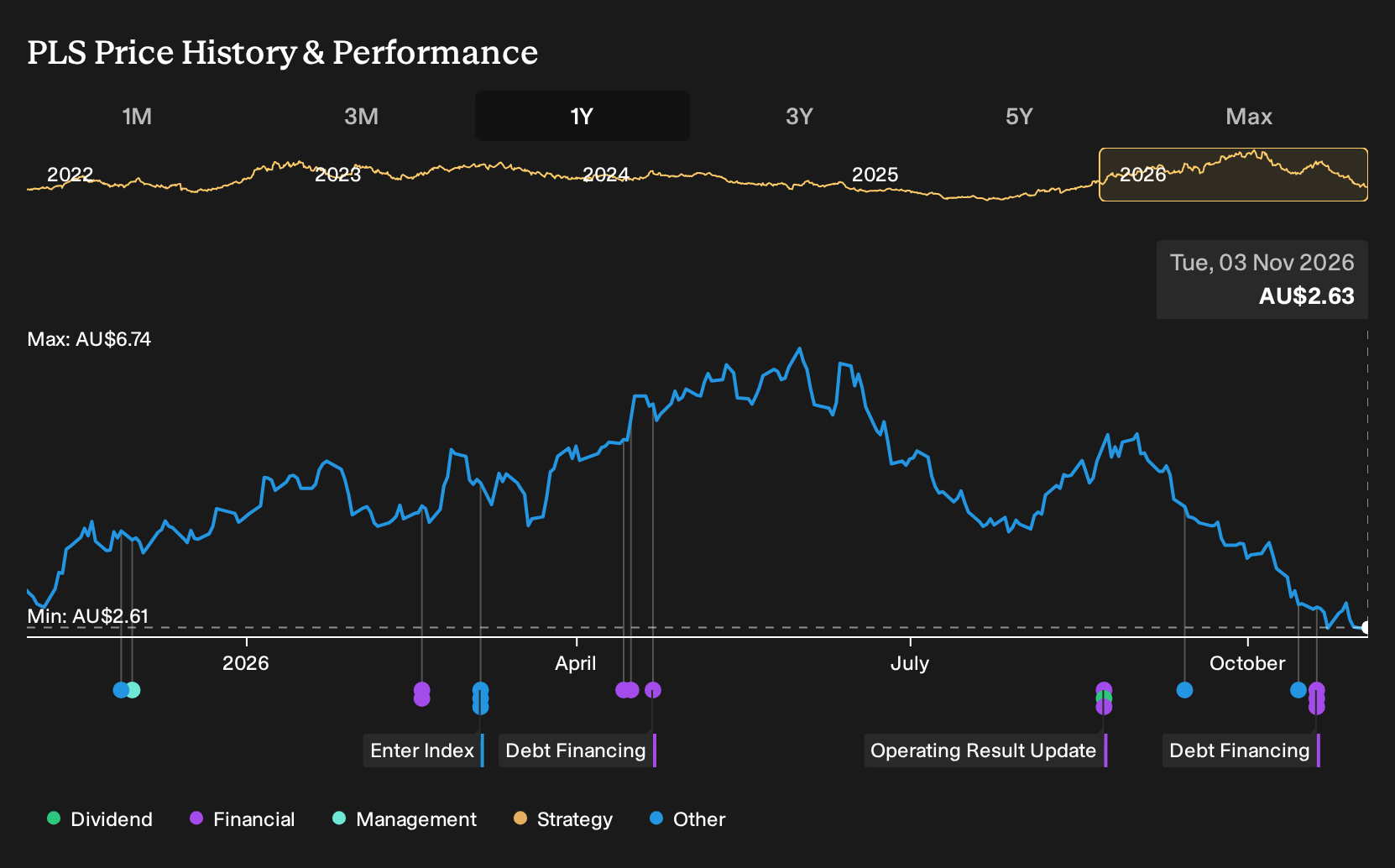
- PLS Group priced US$700 million of 8.00% senior unsecured notes due 2032 in October 2026, with semi annual interest payments and guarantees from certain wholly owned subsidiaries, to fund general corporate purposes including capital expenditure and growth opportunities.
- Citigroup’s reduced lithium price forecasts, tied to weaker battery demand and improving supply, highlight sector wide pressure on PLS Group’s future pricing power and investment decisions even as it raises long dated debt capital.
- We will now look at how PLS Group’s investment narrative could be affected by softer lithium price forecasts and this new funding.
Compare how PLS Group’s new notes stack up against other balance sheet focused opportunities by scanning our curated list of solid balance sheet and fundamentals (12 results).
PLS Group Investment Narrative Recap
To own PLS Group, you need to believe that large scale, low cost lithium production at Pilgangoora and value added projects like the midstream phosphate plant will still create attractive cash generation through cycles. Softer lithium price forecasts from Citigroup challenge that belief at the margin but do not change the core operational focus on volumes, recoveries and cost control.
The near term swing factor is how lithium pricing interacts with PLS Group’s unit costs and higher guided FY27 capex, which could pressure free cash flow if prices stay weak. The biggest risk right now is that prolonged pricing pressure hits margins at the same time as large projects like P2000 demand significant capital.
The most relevant announcement for this backdrop is the US$700 million 8.00% senior unsecured notes due 2032. This funding adds another layer of higher risk external borrowing, but it also extends the debt maturity profile and gives management flexibility to keep Pilgangoora growth, P2000 pre FID spend and the midstream lithium phosphate plant moving.
For you, the key question is execution. PLS Group now has sizeable liquidity, multi year offtake contracts that include a US$1,000 per tonne spodumene floor, and higher production guidance. The combination of new long dated notes and weaker lithium forecasts puts the spotlight on whether upcoming capex translates into sustainable volumes and resilient margins rather than stretched returns.
PLS Group's current analyst narrative points to A$2.3 billion in revenue and A$731.2 million in earnings by 2029, based on forecast annual revenue growth of 6.6% and an earnings increase of about A$205 million from A$525.8 million today.
Uncover how PLS Group's fair value indicates a 73% potential upside to its current price before the discount gap closes.
Exploring Other Perspectives
The sharpest contrast comes from how much weight you put on PLS Group’s higher capex burden. The most bearish analysts already saw revenue sliding toward about A$1.5b and earnings easing to roughly A$369.9 million by 2029, even before this US$700 million bond and Citi’s softer lithium view. That is a very different story from consensus and it shows how wide the opinion gap can be. Use that spread as a prompt to explore both the cautious and optimistic cases for yourself, then decide where you sit.
Explore 6 other PLS Group fair value estimates, including one that suggests it could be worth just A$2.90.
The Verdict Is Yours
Don't just follow the ticker; dig into the data and build a conviction that's truly your own.
- A great starting point for your PLS Group research is our analysis highlighting 3 key rewards that could impact your investment decision.
- See our latest analysis for PLS Group. The report includes a comprehensive fundamental analysis summarized in a single visual, the Snowflake, making it easy to evaluate PLS Group's overall financial health at a glance.
Looking for more PLS Group sized investment ideas?
If PLS Group is only one piece of the portfolio you have in mind, it can help to line it up against other stocks with different risk and income profiles using the Simply Wall St Screener.
- For potential mispriced opportunities with strong fundamentals, scan a carefully filtered set of 2 high quality undervalued stocks that might warrant a place on your watchlist.
- If capital preservation matters most to you, focus on stability and downside protection by reviewing a 6 resilient stocks with low risk scores that scores well on resilience.
- When you want to back quality businesses still flying under the radar, broaden your horizon with a 14 high quality undiscovered gems that may not yet be widely followed.
Have feedback on this article? Concerned about the content? Get in touch with us directly. Alternatively, email editorial-team@simplywallst.com