
Is Earnings Beat Altering The Investment Case For P&G Stock?
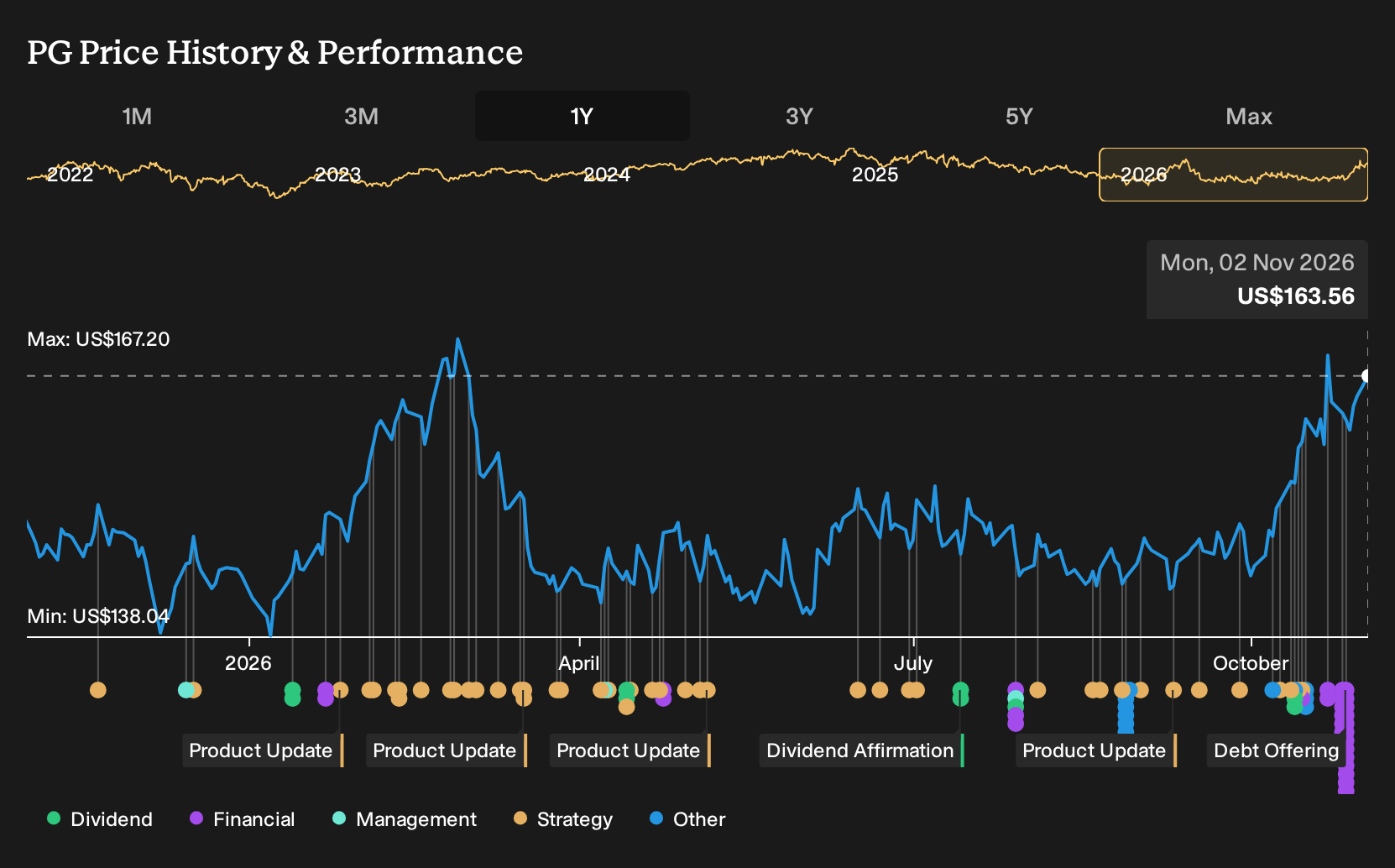
- Procter & Gamble recently completed multiple fixed-rate note offerings in euros and US dollars alongside first quarter 2027 results that showed US$23,276 million in sales, US$4,731 million in net income and steady earnings per share.
- The mix of fresh bond issuance, ongoing organic sales growth across all segments and a long track record of covered dividends illustrates how P&G is funding its plans while still prioritizing consistent cash returns.
- This article examines how Procter & Gamble's investment narrative is shaped by resilient organic sales growth together with continued dividend safety.
Scan how Procter & Gamble’s bond funded dividend story compares with other cash generative giants by reviewing our hand picked 29 resilient stocks with low risk scores in the market right now.
Procter & Gamble Investment Narrative Recap
To own Procter & Gamble, you need to believe that steady category demand, its broad brand portfolio and ongoing productivity work can offset cost and FX headwinds. The near term swing factor is execution on pricing, mix and cost savings, while input costs and a guided US$1.4b drag on fiscal 2027 earnings remain a clear pressure point.
The biggest risk right now is that retailer inventory behavior and softer organic trends in markets like North America continue to distort volumes, just as the business leans into new categories like Thorne. The recent bond issuance does not materially change those operating catalysts; it mainly affects how the balance sheet is funded.
The most relevant announcement alongside the bond sales is management’s updated fiscal 2027 outlook, which calls for 2% to 4% all in sales growth and 1% to 5% diluted EPS growth versus fiscal 2026. That guidance frames what execution needs to look like for Procter & Gamble, while the new fixed rate debt layers into interest expense.
When you line up that outlook against the large euro and US dollar note offerings, the picture is a company committing to fund investments and cash returns while carrying higher coupons and already facing an input cost headwind. For you as a shareholder, the key question is whether productivity programs and product launches are enough to keep earnings tracking that range.
What The Current Forecasts Assume For Procter & Gamble
Analysts sketch a clear earnings path for Procter & Gamble. The current view is that profit today of US$15.7b could reach US$18.5b by 2029, with revenue expected to move at a 3.1% annual growth rate over the next three years and margins stepping up from 17.9% to 19.2% if productivity programs deliver.
The gap between earnings today and the 2029 consensus implies an increase of about US$2.8b in profit over that period. This would be a sizeable lift for a mature consumer products group. Forecast earnings per share of US$7.82 and a projected P/E of 28.1x on those 2029 earnings also assume investors are willing to pay a higher multiple than both the stock's current 23.8x and the wider US Household Products sector at 22.8x.
Procter & Gamble's narrative projects US$96.2b revenue and US$18.5b earnings by 2029, built on 3.1% yearly revenue growth and an earnings increase of about US$2.8b from current earnings of US$15.7b.
Uncover why Procter & Gamble's fair value indicates a 5% potential upside to its current price before that gap closes.
Exploring Other Perspectives
Fair value estimates from 17 members of the Simply Wall St Community span roughly US$108 to about US$205, so you are seeing Procter & Gamble judged as both heavily undervalued and stretched. Those views sit alongside fresh euro and dollar bond issues, which lift interest costs and could sharpen how you weigh slower EPS guidance. Opinions clearly diverge, so it is worth exploring several of these community viewpoints before forming your own stance.
Explore 16 other Procter & Gamble fair value estimates, including one that suggests up to 25% upside from the current price.
The Verdict Is Yours
Disagree with existing narratives? Extraordinary investment returns rarely come from following the herd, so trust your own analysis and judgment.
- A great starting point for your Procter & Gamble research is our analysis highlighting 3 key rewards and 2 important warning signs that could impact your investment decision.
- See our latest analysis for Procter & Gamble. The report includes a comprehensive fundamental analysis summarized in a single visual, the Snowflake, making it easy to evaluate Procter & Gamble's overall financial health at a glance.
Looking For More Investment Ideas Beyond Procter & Gamble?
After forming a view on Procter & Gamble, it helps to scan a wider field of opportunities so your portfolio is not anchored to a single story. The Simply Wall St Screener can surface stocks with very different risk, income and quality profiles, giving you a broader menu of potential ideas to research next.
- For investors who care most about resilient balance sheets and dependable fundamentals, review our list of solid balance sheet and fundamentals (24 results) to help you focus on businesses with financial strength at their core.
- If income is your priority and you want yields that work harder for your portfolio, assess opportunities in our 4 dividend fortresses to see higher yielding payers with supportive fundamentals.
- When you are hunting for mispriced quality and looking for potential upside, scan our 34 high quality undervalued stocks to find companies where fundamentals and current pricing appear out of sync.
Have feedback on this article? Concerned about the content? Get in touch with us directly. Alternatively, email editorial-team@simplywallst.com