
Apple’s (NASDAQ:AAPL) Q3 CY2026 sales beat estimates

iPhone and iPad maker Apple (NASDAQ:AAPL) beat Wall Street’s revenue expectations in calendar Q3 2026 (fiscal Q4 2026), with revenue up 11.7% year on year to $114.5 billion. Its GAAP profit of $2.10 per share was 5.6% above analysts’ consensus estimates.
For more on Apple, read our free full research report.
Apple (AAPL) Q3 CY2026 highlights:
- Revenue $114.5 billion vs S&P analysts’ consensus estimates of $113.6 billion (0.8% beat)
- EPS (GAAP) $2.10 vs analysts’ consensus estimates of $1.99 (5.6% beat)
- Gross margin 47.9%, in line with the same quarter last year
- Operating margin 31.1%, in line with the same quarter last year
- Free cash flow margin 22.6%, down from 25.8% in the same quarter last year
- Market capitalization $5.03 trillion
Revenue growth
Although Apple, with its installed base of more than 2 billion devices, grew rapidly in its early days, its scale has begun to weigh on its expansion. The company’s revenue has grown at a tepid 5.5% annualized rate over the last five years, reaching $478.8 billion in the last year. This performance shows its market is maturing and that it must find a new hit product or service to reaccelerate growth.
Apple’s growth over the same period also trailed its big tech peers, Amazon (11.7%), Alphabet (14.5%) and Microsoft (14.5%). This is an important consideration because investors often use the comparisons as a starting point for their valuations. Adjusted for these benchmarks, Apple looks expensive.
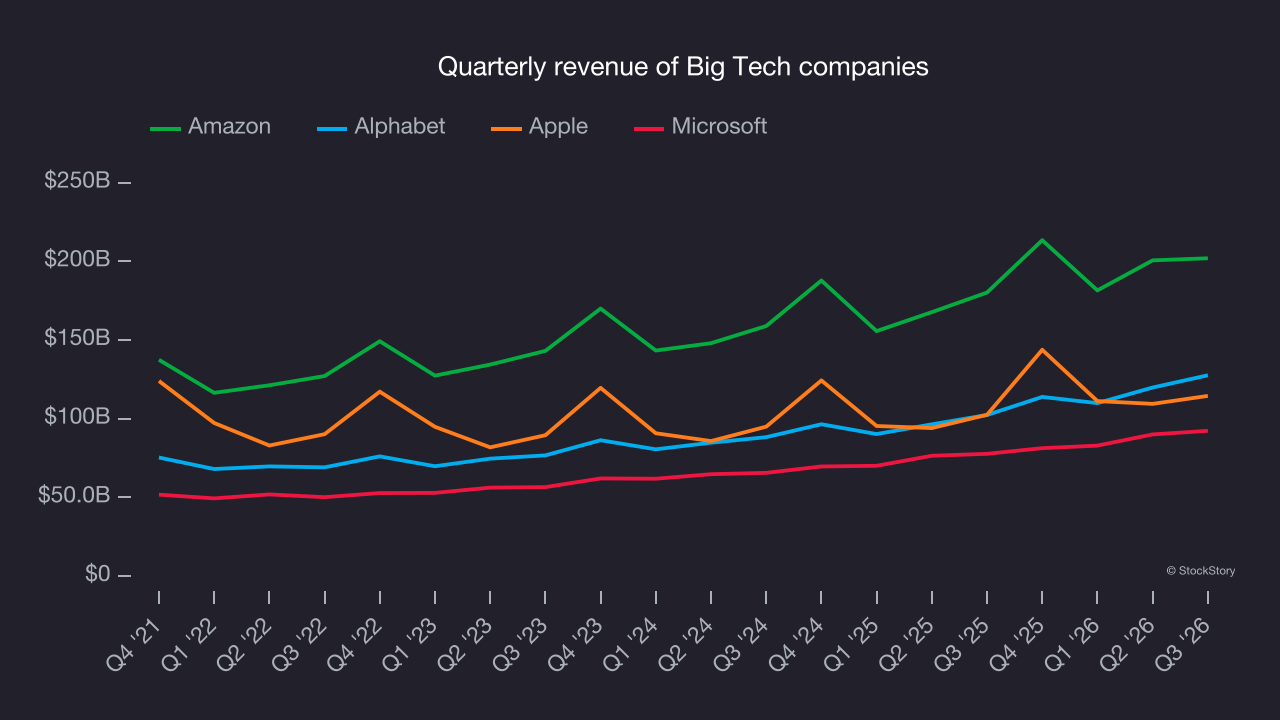
Long-term growth matters most in fundamental analysis, but for big tech companies, a half-decade historical view may miss emerging trends in artificial intelligence. Apple’s annualized revenue growth of 10.7% over the last two years is above its five-year trend, suggesting its demand recently accelerated.
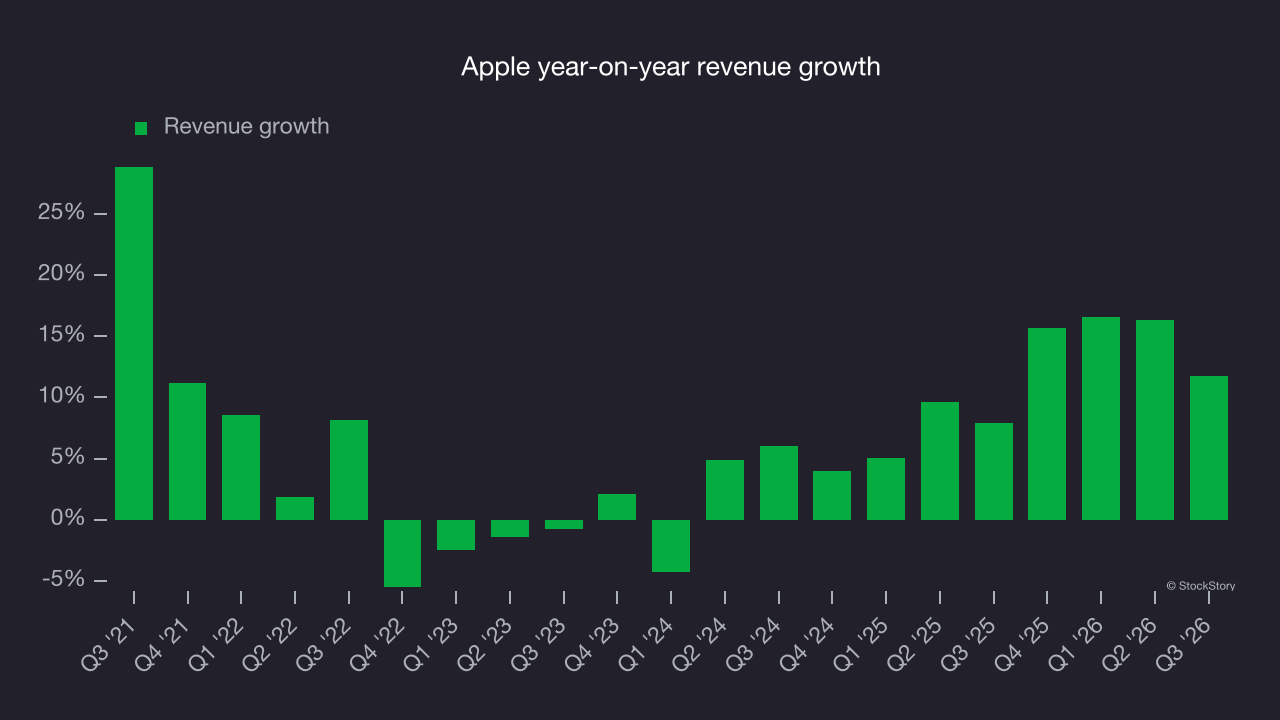
This quarter, Apple reported year-on-year revenue growth of 11.7%, and its $114.5 billion in revenue exceeded Wall Street’s consensus estimates by 0.8%. Looking ahead, this projection is still healthy and illustrates that the market sees some success for its newer products.
Products: Steve Jobs’s legacy
Apple’s Products segment includes everything from its flagship iPhone, iPad and MacBook computers to AirPods and Apple Watch. A key question is whether Apple Intelligence, which uses generative artificial intelligence and was released in September 2024 but has limited interoperability with older devices, can spur an upgrade cycle for the company.
Products revenue accounts for by far the largest share of Apple’s revenue at 74.2%, and it grew by 3.6% annually over the last five years, slower than total revenue. Recently, growth has accelerated to a respectable annual rate of 9.8% over the last two years.
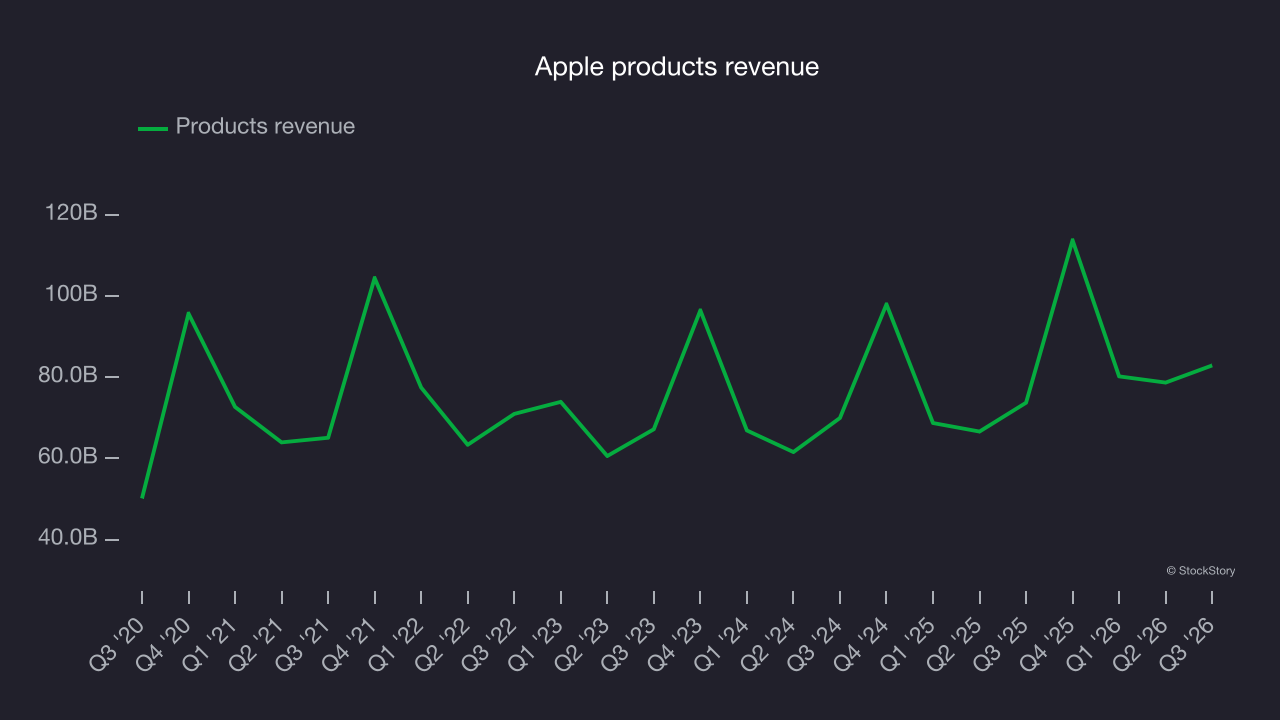
This quarter, Products revenue grew 12.5% year on year. Setting expectations aside, the recent acceleration shows that more customers are upgrading their devices than before. Whether Apple Intelligence and iOS 18 can accelerate this trend remains worth watching. Wall Street appears to expect a modest effect.
Key takeaways from Apple’s Q3 results
Apple’s Q3 results had some key positives: revenue narrowly beat analysts’ consensus estimates, and EPS also topped Wall Street’s expectations. Shares remained flat at $338.22 immediately after the release.
When deciding whether to buy the stock, consider the bigger picture of valuation, business quality and the latest earnings. For more, read our full research report here (it’s free).