
Beta Technologies Beat Archer and Joby to an FAA First. Here's Why I'd Still Rather Own Archer.
Key Points
Beta is the first eVTOL maker in the U.S. to get an airworthiness certificate for market surveys from the FAA.
Beta doesn't want to operate an air taxi service.
Archer wants to operate an air taxi service and sell aircraft, which could mean greater capitalization of the passenger transportation market.
Not Joby Aviation, not Archer Aviation (NYSE: ACHR), but Beta Technologies (NYSE: BETA) gets bragging rights as the first electric vertical takeoff and landing (eVTOL) developer to secure Federal Aviation Administration (FAA) authorization to conduct demonstration flights with potential customers onboard.
That's a huge accomplishment. So why would I rather own Archer stock?
Missed AI’s "Act 1"? Act 2 Could Be 15x Bigger. Most investors think they missed the AI boat because they didn't buy Nvidia in 2005. But according to our analysts, we’re only at the end of "Act 1"—the R&D phase. "Act 2" is the global rollout. Continue »
What Beta Technologies has accomplished
Beta Technologies is an aerospace company developing electric aircraft. Like Archer and Joby, Beta is building eVTOLs for commercial passenger services. Unlike the former two, however, which have electric air taxis at the heart of their ambitions, Beta is focusing on the nonpassenger transportation side of its business, like hauling cargo and medical supplies.
Beta is also building out a massive electric charging network across the U.S., which other eVTOL companies, like Archer, can use.
Admittedly, Beta hasn't received anywhere near as much attention as Archer and Joby, but that's been changing. On Oct. 21, the FAA announced it had granted Beta a first-of-its-kind airworthiness certificate for market surveys. With this certificate, Beta can now take prospective customers into the air -- that is, representatives from companies who might be interested in buying Beta's eVTOL.
This certificate doesn't allow Beta to take fare-paying passengers on air taxi rides (it still needs additional certificates to do that). But it does potentially open its business to buyers who might have hesitated to consider its aircraft without firsthand experience.
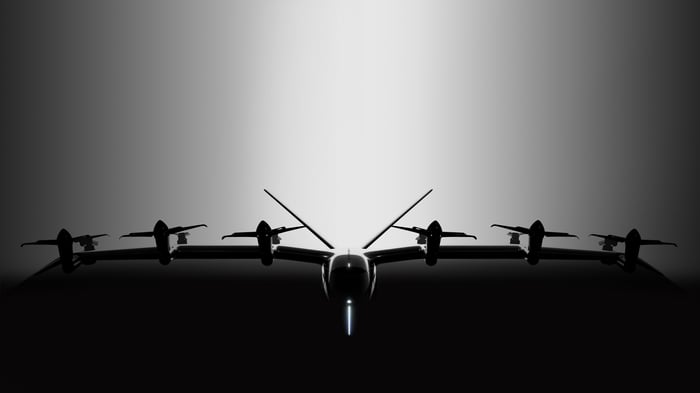
Image source: Archer Aviation.
Why I'd rather own Archer right now
First, I don't want to diminish Beta's accomplishment. Obtaining this certificate is an exciting development for this company, and it's an accomplishment of which Archer is probably very envious. Indeed, in November 2024, in a commercialization update on X, Archer plainly listed something like it as the second step of its strategy: "Fly piloted market survey trips with Midnight carrying passengers on our first air taxi routes."
Still, if I had to choose between Beta and Archer today, I would lean toward the latter, largely because I think Archer's business model gives it more ways to profit directly from the (eventual) growth of passenger air taxi services.
For one, Beta does not want to operate an air taxi business. Instead, it wants to make money selling aircraft, batteries, charging equipment, and propulsion systems. While Archer also wants to sell aircraft, its focus is establishing a passenger service. This could, over the long run, become a much bigger opportunity. Indeed, in a 2021 report, analysts at Morgan Stanley estimated that passenger transportation from eVTOLs could become a roughly $3.7 trillion market by 2050. That would be an enormous opportunity for Archer, even if it takes decades to arrive.
To be fair, Beta can also benefit from that multitrillion-dollar opportunity by selling aircraft designed for passenger services. Still, given that Archer intends to manufacture aircraft and operate its own air taxi services, I think it has more ways to capitalize on that growth of passenger transportation.
But there's no reason why investors have to choose just one. Both Beta and Archer could find success in this nascent industry. For investors willing to tolerate the risks, owning a little of both could be a sensible way to bet on the future of eVTOLs. I still prefer Archer, but I wouldn't count Beta out.
Steven Porrello has positions in Archer Aviation and Joby Aviation. The Motley Fool has no position in any of the stocks mentioned. The Motley Fool has a disclosure policy.