
Why Xiaomi Stock Is In Focus After Record October EV Deliveries
- Xiaomi Auto reported more than 50,000 vehicle deliveries in October 2026, its highest monthly total of the year and a break from two months of year on year declines.
- The ramp up in Sky Nomad shipments is now large enough to offset weaker SU7 and YU7 demand. This highlights how Xiaomi’s multi model EV line up can redistribute volume even when older products soften.
- We will look at how Xiaomi’s investment narrative is affected by the October rebound in Auto deliveries and renewed execution momentum.
Scan how Xiaomi's October rebound fits into the broader EV momentum and line up your next ideas with a curated list of 95 robotics and automation stocks
Xiaomi Investment Narrative Recap
For Xiaomi, the core belief is that heavy spending on smart EVs, AI and the broader ecosystem eventually supports healthier earnings rather than staying a drag. The October Auto rebound helps that story only at the margin, since the Smart EV, AI and new initiatives segment is still loss making despite RMB 24.9b of revenue and 19.2% gross margin in Q2 2026.
The key short term swing factor remains how quickly EV and AI investments convert into more efficient operations and clearer profitability. At the same time, smartphone margins sit under pressure from higher memory costs. The main risk is that elevated input prices and sustained EV and AI losses keep net margins and investor confidence under strain.
With no fresh company announcements tied directly to the October delivery data, the most relevant context is Xiaomi’s plan to spend more than RMB 40b on R&D in 2026 and RMB 60b on AI over three years. That commitment frames the recent EV delivery surge as one data point inside a much larger execution effort.
For you as a shareholder or potential shareholder, the question is whether that level of spending, combined with a growing Mobile × AIoT and smart Auto ecosystem, can support higher margin internet services and premium hardware over time. The October Auto print speaks to operational progress, while the R&D plan highlights ongoing cash demands and execution risk.
How October’s Rebound Sits Against Analyst Expectations
Analyst models sketch out an ambitious road map for Xiaomi that runs well beyond a single strong delivery month. Consensus assumptions point to revenue growing at 14.9% a year over the next three years, with profit margins moving from 7.5% today to 8.0% by around 2029. Earnings are projected to reach CN¥52.9b by that year, compared with CN¥33.0b today, which implies an increase of CN¥19.9b if those forecasts play out.
The same set of forecasts that underpin Xiaomi Auto’s longer term story also underpin the equity story. On those numbers, analysts are working with 2029 revenue of about CN¥663.9b and earnings of CN¥52.9b. That scenario lines up with a P/E of 18.1x on the 2029 profit figure, compared with 17.1x today, and below the 26.3x multiple quoted for the wider Hong Kong tech peer group in the report.
Xiaomi's narrative projects CN¥663.9b revenue and CN¥52.9b earnings by 2029. This assumes 14.9% yearly revenue growth and a CN¥19.9b earnings increase from CN¥33.0b today.
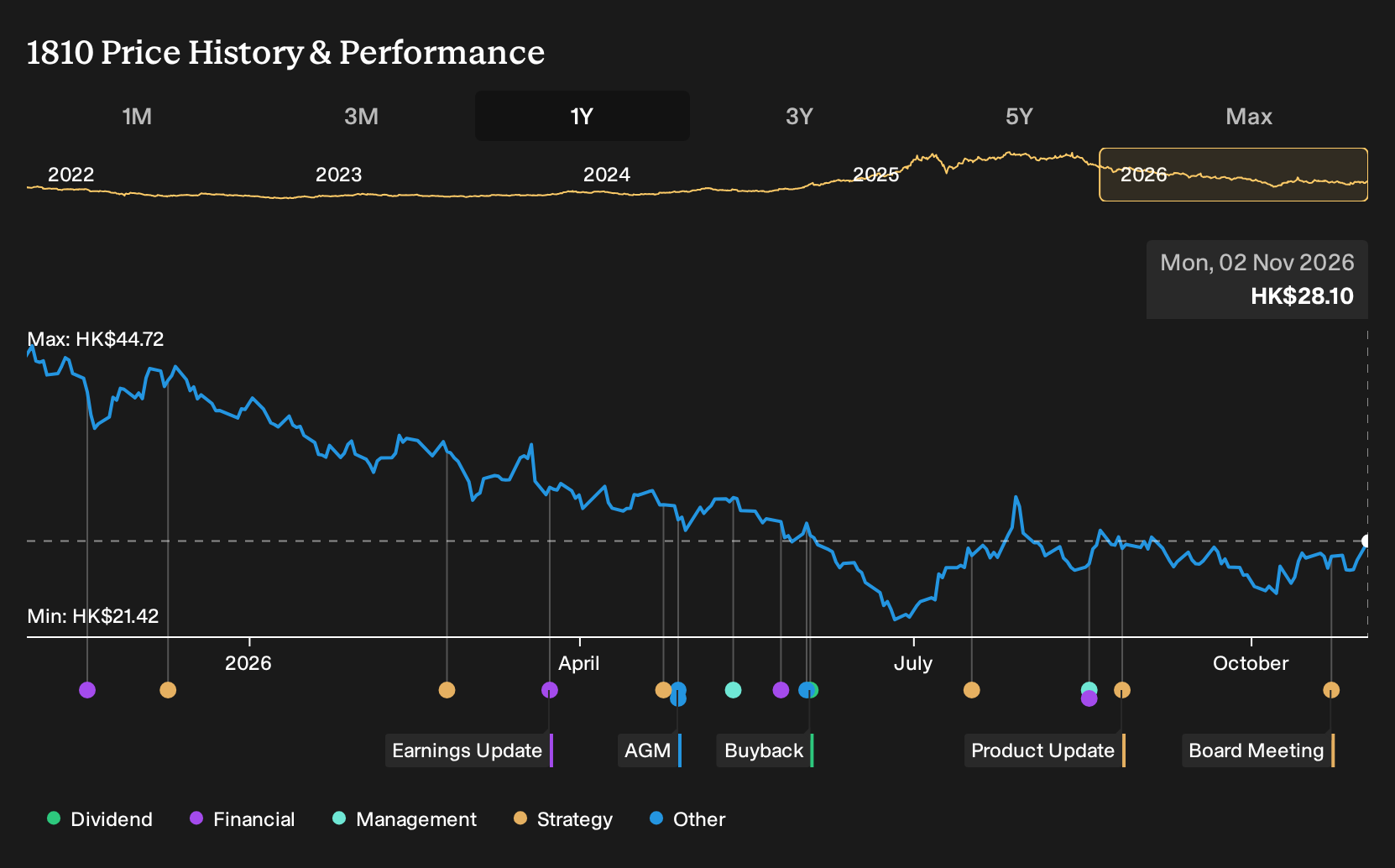
These headline figures sit behind the HK$34.76 consensus price target, which stands 25.8% above the HK$25.80 share price cited in the report. Forecasts are far from uniform though. Earnings projections for 2029 range from CN¥32.7b to CN¥72.6b, while price targets run from HK$20.59 to HK$58.31. That spread signals that analysts do not share a single view on how quickly EVs, AI and internet services might scale inside Xiaomi’s broader ecosystem.
For anyone weighing the October Auto rebound, the key question is how it fits inside these longer range forecasts. A month with more than 50,000 vehicle deliveries suggests Xiaomi can use a multi model line up to sustain volume even when older launches cool, at least in the short run. The debate is whether that kind of operational execution can become consistent enough to support the higher earnings level implied by the CN¥52.9b consensus without eroding margins through permanent discounting or heavy sales support.
Another piece investors often focus on is capital allocation. The forecast assumes Xiaomi can lift earnings while still funding more than RMB 40b of R&D in 2026 and a RMB 60b AI budget over three years. Those numbers sit alongside an expected 0.78% annual decline in shares outstanding, which suggests some scope for buybacks. The tension for shareholders is clear. Cash has to stretch across EV manufacturing, AI models, software platforms like HyperOS, and any capital returns to investors.
Momentum in Auto deliveries and the broader Mobile × AIoT footprint gives Xiaomi more levers to support the earnings journey analysts have mapped out. The same ecosystem also adds execution risk. Weak smartphone margins, losses in Smart EV and AI, and any slowdown in internet services could all push actual outcomes away from the CN¥663.9b revenue and CN¥52.9b earnings line sketched into current models.
Uncover why Xiaomi's fair value indicates a 24% potential upside to its current price, which could narrow quickly.
Exploring Other Perspectives
One alternate angle you might explore is the bullish focus on Xiaomi’s AI and EV monetisation. The most optimistic analysts were already pencilling in CN¥889.7b of revenue and CN¥72.3b of earnings by 2029, well above consensus, before this 50,000 unit October delivery print. Their upside story could strengthen further or face a rethink as new data lands.
Explore 9 other Xiaomi fair value estimates, including one that suggests there could be up to 76% upside from the current price.
Form Your Own Verdict
Disagree with existing narratives? Extraordinary investment returns rarely come from following the herd, so trust your own analysis.
- A great starting point for your Xiaomi research is our analysis highlighting 2 key rewards and 1 important warning sign that could impact your investment decision.
- See our latest analysis for Xiaomi. The report includes a comprehensive fundamental analysis summarized in a single visual, the Snowflake, making it easy to evaluate Xiaomi's overall financial health at a glance.
Looking For More Investment Ideas Beyond Xiaomi?
If the Xiaomi story has sharpened your thinking and you want to widen your watchlist, a curated screener can help you focus on specific qualities rather than chasing headlines.
- If you care most about companies that combine quality with what may be attractive pricing, start with a focused set of 200 high quality undervalued stocks that already clear basic fundamental checks.
- If capital preservation and balance sheet strength matter to you, filter for businesses in our list of solid balance sheet and fundamentals (199 results) and concentrate on those that look better equipped to handle shocks.
- If you prefer to hunt for less crowded opportunities, scan the 604 high quality undiscovered gems and see which smaller stories align with your thesis and risk profile.
Have feedback on this article? Concerned about the content? Get in touch with us directly. Alternatively, email editorial-team@simplywallst.com