
Is Earnings Beat Altering The Investment Case For Dominion Energy Stock (D)?
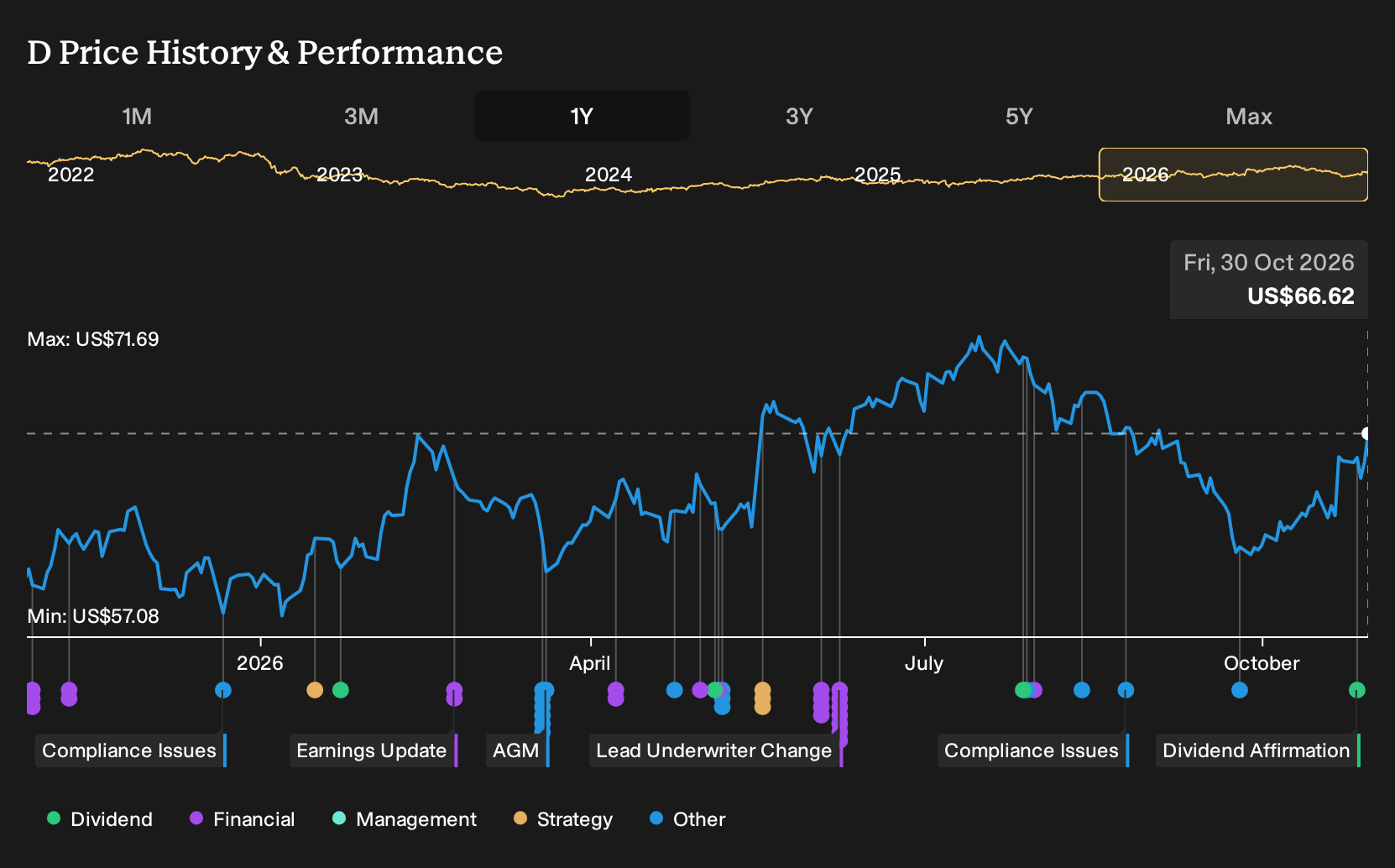
- Dominion Energy reported third quarter 2026 sales of US$5.62b and net income of US$1.16b, with diluted EPS of US$1.30 from continuing operations, and reaffirmed full year operating earnings guidance and dividend policy.
- Management coupled the earnings beat with confirmation of long term guidance and continued build out of regulated projects like Coastal Virginia Offshore Wind, signaling that current results and the capital plan are moving broadly in step.
- We will now look at how Dominion Energy's reaffirmed operating earnings guidance shapes the broader investment narrative around regulated growth.
Compare Dominion Energy's reaffirmed guidance and capital plan with a curated pool of regulated utilities by scanning the 39 power grid technology and infrastructure stocks that could benefit from long dated grid and transmission investment themes.
Dominion Energy Investment Narrative Recap
To own Dominion Energy, you need to believe that a heavily regulated utility can keep turning a very large capital plan into predictable, rate based earnings, even as rules for data centers and big projects keep tightening. The Q3 beat and reaffirmed operating guidance support that view, but do not fundamentally change it.
The key near term swing factor is execution on the nearly US$65b investment plan, especially Coastal Virginia Offshore Wind and new gas capacity, without unplanned cost exposure. The largest risk remains regulatory, from cost recovery decisions on major projects to scrutiny of the proposed all stock merger with NextEra.
The most relevant recent update is management’s guidance that 2026 operating earnings should land in the top half of the US$3.45 to US$3.69 per share range, along with reaffirmed credit, dividend and long term growth guidance. This ties directly to whether Dominion Energy can fund its grid, renewables and gas buildout at acceptable returns.
For you, that guidance frames execution risk. Delivery on the capital program, stable regulation in Virginia and the Carolinas, and progress on the NextEra combination are the main potential catalysts. Any weakness in cash coverage of the dividend or interest costs, already flagged as pressure points, would work the other way.
What The Dominion Energy Consensus Forecast Is Really Asking You To Believe
Dominion Energy's narrative projects US$21.5b revenue and US$4.0b earnings by 2029. This rests on analysts baking in 5.8% yearly revenue growth and an increase in earnings from US$2.5b today to US$4.0b in 2029, which is roughly a US$1.5b step up in profit over that period.
Uncover why Dominion Energy's fair value indicates a 5% potential upside to its current price before that discount window narrows.
Exploring Other Perspectives
Two fair value estimates from the Simply Wall St Community span a wide band, from US$70 up to about US$175, which shows how far apart individual views on Dominion Energy can be. Set that against the near US$65b capital plan, merger uncertainty with NextEra, and offshore wind execution risk. Then explore several contrasting viewpoints before deciding where you land.
Explore another Dominion Energy fair value estimate, including one that suggests it could be worth just $70.00.
Form Your Own Verdict
Don't just follow the ticker; dig into the data and build a conviction that's truly your own.
- A great starting point for your Dominion Energy research is our analysis highlighting 3 key rewards and 2 important warning signs that could impact your investment decision.
- See our latest analysis for Dominion Energy. The report includes a comprehensive fundamental analysis summarized in a single visual, the Snowflake, making it easy to evaluate Dominion Energy's overall financial health at a glance.
Looking For More Investment Ideas Beyond Dominion Energy?
Once you have a view on Dominion Energy, it can help to widen the lens and compare it with other businesses that fit different return and risk profiles using the Simply Wall St Screener.
- If you want companies that the market may be underpricing based on fundamentals, scan a curated list of 29 high quality undervalued stocks that could warrant a closer look.
- If income is a priority and you care about durable payouts, focus on 5 dividend fortresses that combine higher yields with resilient cash generation.
- If capital preservation matters most, start with 30 resilient stocks with low risk scores that pair sturdier balance sheets with lower overall risk scores.
Have feedback on this article? Concerned about the content? Get in touch with us directly. Alternatively, email editorial-team@simplywallst.com