
What Legal & General Group Doubters Missed
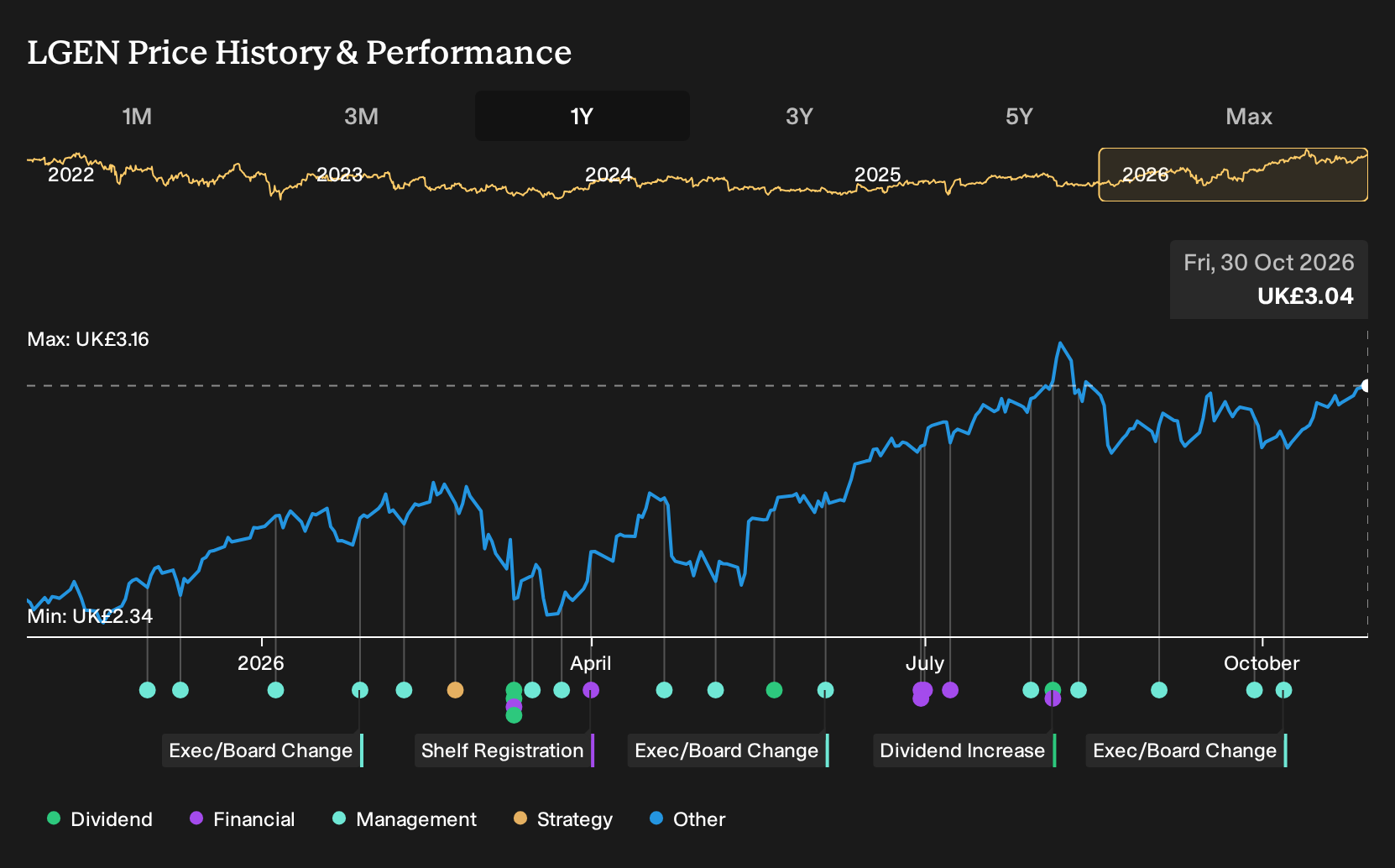
Legal & General Group opened its AGM season by outlining a concrete plan: more than £5b earmarked for shareholders through 2027 via dividends and a £1.2b buyback, alongside asset disposals and a leaner organisation strategy. Holding Legal & General Group over the past year would have returned 38.6%, including dividends. If you had been deciding in October 2025, what would you have needed to believe about those plans before any of this was on record?
The useful thing about a Narrative is that the reasoning is checkable: the assumptions sit beside the argument, and together they imply an estimated Fair Value you can disagree with.
If the move has made Legal & General Group harder to judge, start where the gap is still open and scan 12 high quality undervalued stocks.
The Argument You Would Have Been Weighing Up On Legal & General Group
The shares cost £2.40 at the start of the period, and you had to decide which story about Legal & General Group felt closer to reality.
The bullish narrative put fair value at £2.62, or 9% above the start price. It leaned on ageing populations and digital transformation, and assumed revenue would decline 5.0% a year while profit margin reached 13.3% with a future P/E of 12.7x.
The bearish view set fair value at £2.15, or 10% below the start price. It focused on slowing demographic growth, fintech rivalry, and regulatory pressure, and still assumed higher profit margins but a much lower future P/E of 7.9x.
What The Results Changed For Legal & General Group
The AGM pledge from Legal & General Group to return more than £5b through 2027, funded alongside £1.5b of disposals and the £1.8b U.S. protection sale, gave clear backing to the bullish focus on capital return and a simpler business. Rising revenue, higher net income, and a net margin moving from 4.8% to 7.1% supported improving profitability, although job cuts to around 1,000 roles kept the cautious case on execution risk alive. Overall, the evidence cut both ways.
The episode turned on whether leaner operations and portfolio trimming would show up in the numbers. For a different insurer, you would check whether promised simplification lines up with reported disposals, headcount changes, and a consistent move in net margin rather than just listening to cost saving headlines.
What Legal & General Group's Price Now Asks You To Believe
Legal & General Group now trades at £3.04 after a 38.6% gain over the past year. The selected Narrative’s Fair Value sits below that level, reflecting a view that today’s valuation already bakes in successful execution rather than assuming a wide margin of safety.
The Narrative’s core question is whether fee based, capital light areas and cost cuts can offset pressure on more capital intensive products. A buyer now effectively has to assume that scaling workplace pensions, sustaining asset optimisation profits, and delivering a cleaner balance sheet all land well enough to keep that story intact.
"The current valuation implies that Legal & General Group shares already price in successful delivery of higher fee related earnings, ongoing asset optimization profits of more than £400m per year and continued large capital returns to shareholders. Although Legal & General Group points to structural growth in UK defined contribution pensions and expects DC assets to reach about £1.5b by 2034, recent downgrades highlight the risk that intensifying competition for new schemes and fee pressure leave DC and workplace flows insufficient to deliver the implied uplift in long term fee revenue and earnings."
One Narrative has put a figure on that disagreement. → See the Narrative with its lower Fair Value, assumptions and all
Looking One Step Beyond Legal & General
Legal & General is leaning hard on fee based, capital light lines. You can also look sideways at insurers reshaping how those services are delivered.
One global rival is pushing digital tools and AI into everyday decisions. That effort aims to attract price sensitive customers who want quicker, simpler coverage.
The same push reaches into health and retirement products. Management there is trying to align ageing client needs with more flexible, less capital heavy contracts.
Expense control is the other piece. If that insurer keeps costs rising slower than revenue, its efficiency story could diverge from Legal & General's.
The case is on the record, with the assumptions it rests on. → See the Narrative that values this company 22% above its price
Have feedback on this article? Concerned about the content? Get in touch with us directly. Alternatively, email editorial-team@simplywallst.com