
Learn Why The Bull Case For Aflac (AFL) Could Change Following Earnings Report
- Aflac is heading into its September 2026 quarter earnings update with revenue expected to be down 11.3% year over year and net premiums having contracted 6.3% annually over the past five years, against a balance sheet that carries a debt to equity ratio of 10.9x.
- The firm’s profitability picture looks pressured, with consensus calling for a 7.5% decline in book value per share and a negative Earnings ESP even as EPS estimates have inched higher, which points to tighter room for error in the current operating setup.
- We will now see how Aflac's investment narrative could be influenced by the expected revenue decline and cautious earnings setup.
Look beyond Aflac's earnings risk and identify insurers with stronger balance sheets and steadier fundamentals using our curated list of solid balance sheet and fundamentals (23 results)
Aflac Investment Narrative Recap
To own Aflac, you need to believe it can offset weaker premium trends and a pressured book value with disciplined investing, product shifts and tight cost control. The near term hinge is how the September 2026 quarter handles an expected 11.3% revenue decline and softer net premiums without eroding earnings quality or capital flexibility.
The biggest operational risk right now is that Japan premium pressure, higher benefit ratios and a past cyber breach in that market all pull in the same direction and squeeze profitability. For a shareholder, the story only works if portfolio repositioning, U.S. group lines and internal reinsurance execution prevent that squeeze from becoming structural.
The recent expectation for Aflac to post US$1.80 in EPS on falling quarterly revenue brings those execution questions into sharper focus. Consensus estimates have moved slightly higher in the last month, yet a negative Earnings ESP and a projected 7.5% decline in book value per share underline how little slack investors are giving the business in the short run.
That tension links directly to the key catalysts already in motion, including higher net investment income on a reshaped portfolio and growth in U.S. group benefits. If earnings land close to the forecast while revenue is under pressure, attention is likely to stay on whether those levers can consistently offset weak premium volumes and elevated benefit ratios without adding further balance sheet strain.
Aflac's narrative projects US$17.4b revenue and US$3.6b earnings by 2029, based on an assumed 1.2% yearly revenue decline and a move from US$4.9b in earnings today to that 2029 forecast, which implies an earnings decrease of about US$1.3b over the period.
Uncover why Aflac's fair value indicates a 4% potential downside to its current price, leaving little room for error.
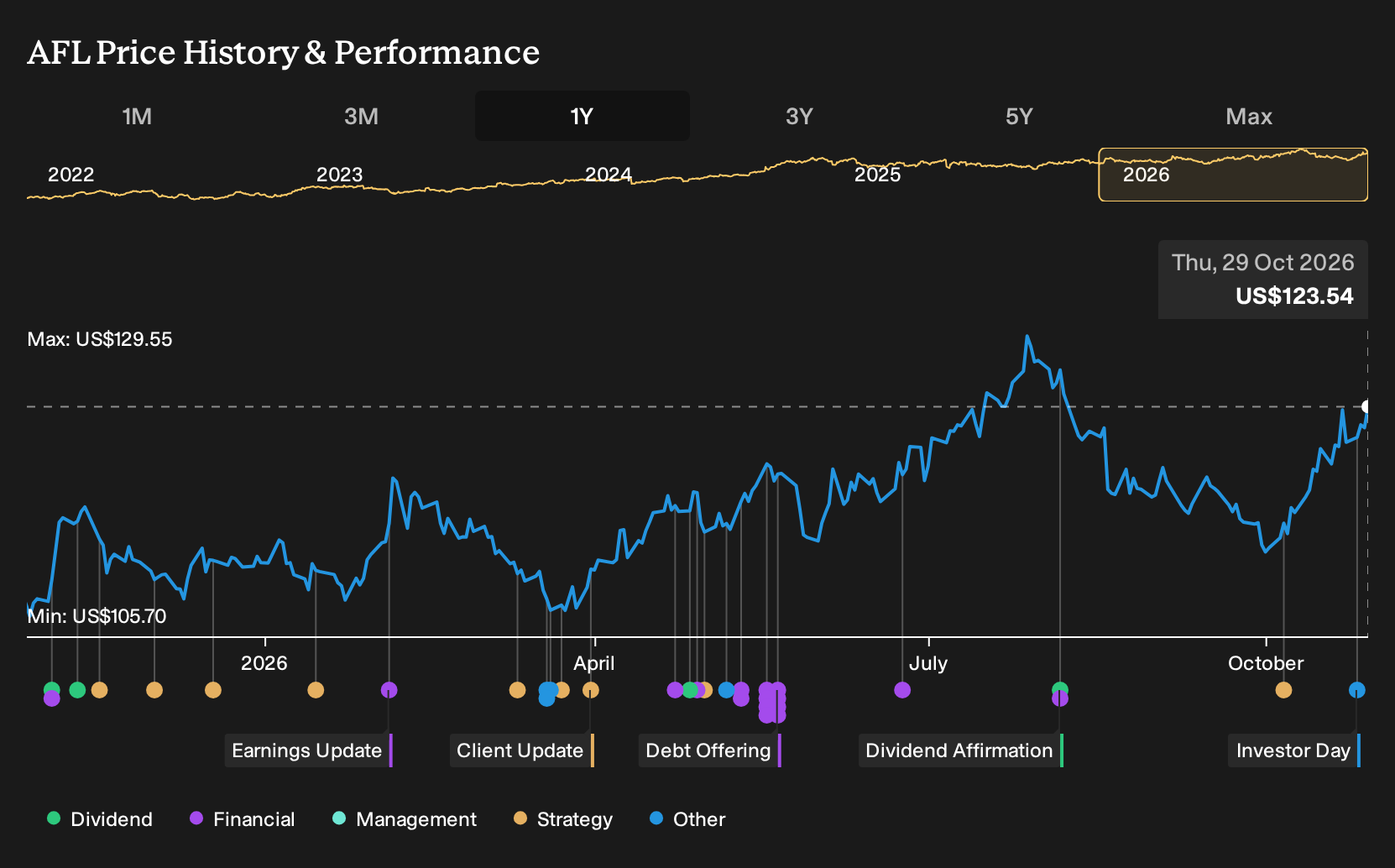
Exploring Other Perspectives
Two fair value estimates from the Simply Wall St Community span roughly US$118.5 to US$173 per share, which already shows how far opinions on Aflac can spread. Set that against ongoing Japan premium pressure, a higher benefit ratio and the recent cyber breach, and you get very different read throughs for future resilience. Use these contrasting angles to stress test your own view before acting.
Explore another Aflac fair value estimate, including one that suggests as much as 40% upside from the current price!
Reach Your Own Conclusion
Don't just follow the ticker; dig into the data and build a conviction that's truly your own.
- A great starting point for your Aflac research is our analysis highlighting 3 key rewards and 2 important warning signs that could impact your investment decision.
- See our latest analysis for Aflac. The report includes a comprehensive fundamental analysis summarized in a single visual, the Snowflake, making it easy to evaluate Aflac's overall financial health at a glance.
Looking For More Investment Ideas Beyond Aflac?
If Aflac has sharpened your thinking about risk and reward, use that same lens across the wider market. You can quickly surface other candidates that better fit your preferences for quality, income or resilience by using the Simply Wall St Screener with a few focused filters.
- If you want potential mispricing opportunities with solid fundamentals, start by scanning our curated list of 18 high quality undiscovered gems that might not yet be on most investors' radar.
- If capital preservation sits high on your priority list, filter for resilience first by running the screener over 30 resilient stocks with low risk scores and compare how those businesses stack up on balance sheet strength and volatility.
- If reliable income is your focus, zero in on cash return potential with the screener tuned to 7 dividend fortresses and assess which payouts align with your risk tolerance.
Have feedback on this article? Concerned about the content? Get in touch with us directly. Alternatively, email editorial-team@simplywallst.com