
General Dynamics (NYSE:GD) delivers strong Q3 2026 numbers

Aerospace and defense company General Dynamics (NYSE:GD) reported revenue ahead of Wall Street’s expectations in Q3 2026, with revenue rising 12.9% year on year to $14.57 billion. Its GAAP profit of $4.49 per share was 8.6% above analysts’ consensus estimates.
For more on General Dynamics, read our free full research report.
General Dynamics (GD) Q3 2026 highlights:
- Revenue $14.57 billion vs S&P analysts’ consensus estimates of $13.76 billion (12.9% year-on-year growth, 5.8% beat)
- EPS (GAAP) $4.49 vs analysts’ consensus estimates of $4.13 (8.6% beat)
- Operating margin 10.5%, in line with the same quarter last year
- Free cash flow margin 8.4%, down from 14.7% in the same quarter last year
- Backlog $220.3 billion at quarter end, up 101% year on year
- Market capitalization $100.2 billion
"Our business had exceptional third quarter results, with revenue growth across all four segments, robust bookings and solid operational performance," said Phebe Novakovic, chairman and chief executive officer. "With the consistent growth in our backlog and our significant investment in our businesses over the last decade, we are poised to drive continued performance in the years to come."
Revenue growth
A company’s long-term revenue performance is one signal of its overall quality. Any business can experience short-term success, but top-performing ones sustain growth for years. General Dynamics’s 7.9% annualized revenue growth over the last five years was decent. Its growth was slightly above the average industrials company and shows its offerings resonate with customers.
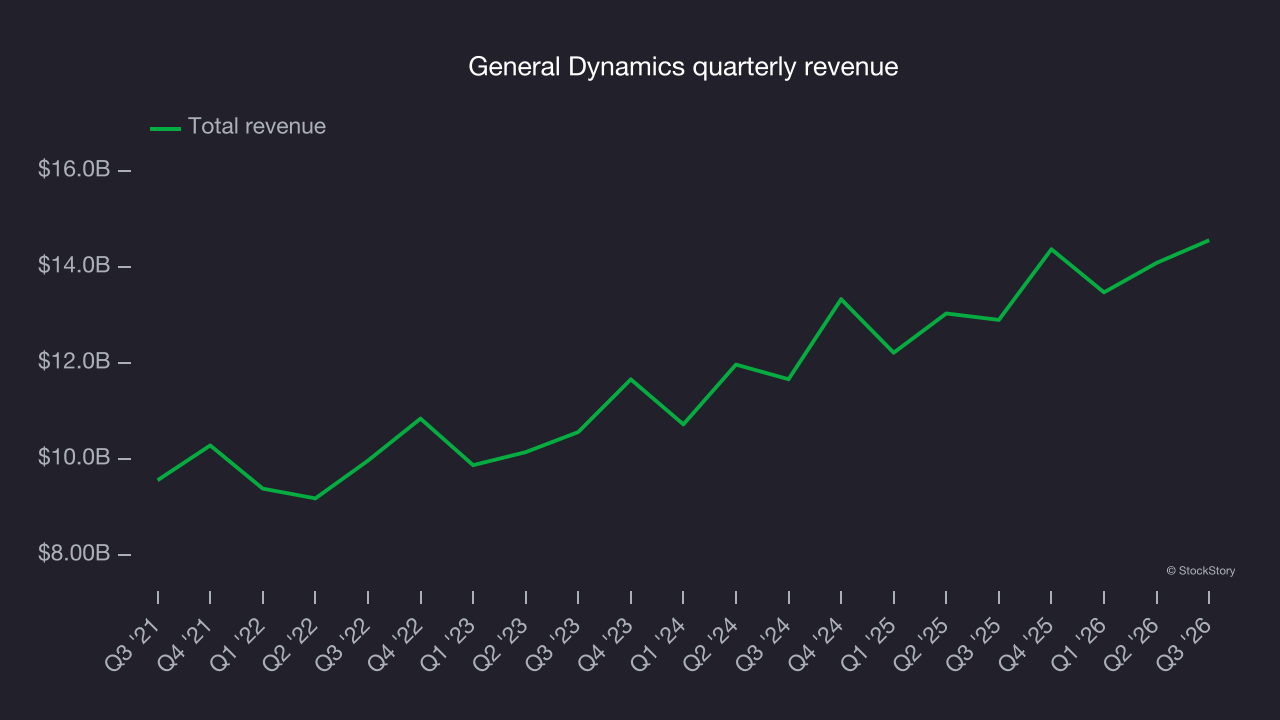
Long-term growth is the most important, but within industrials, a half-decade historical view may miss new industry trends or demand cycles. General Dynamics’s annualized revenue growth of 10.8% over the last two years is above its five-year trend, suggesting its demand recently accelerated. 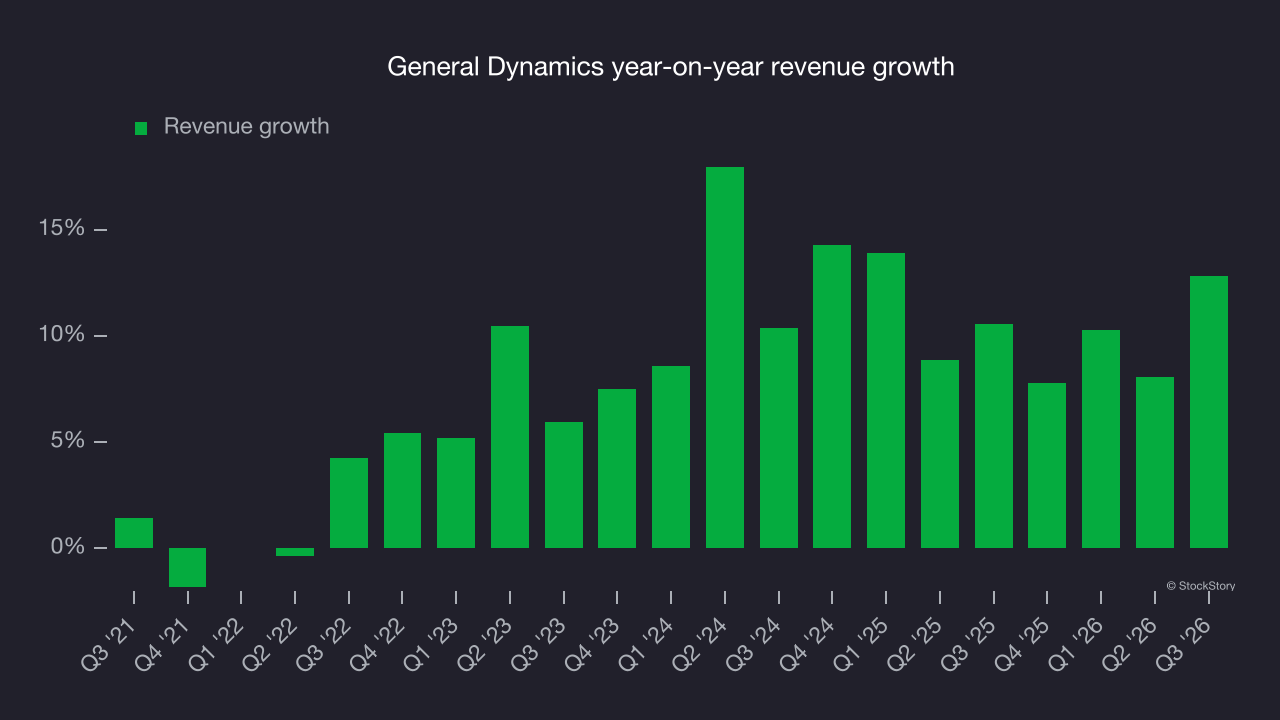
General Dynamics also reports its backlog, or the value of its outstanding orders that have not yet been executed or delivered. General Dynamics’s backlog reached $220.3 billion in the latest quarter and averaged 33.8% year-on-year growth over the last two years. Backlog growth outpaced revenue growth, indicating that the company accumulated more orders than it could fulfill and deferred revenue to the future. This could imply elevated demand for General Dynamics’s products and services but raises concerns about capacity constraints. 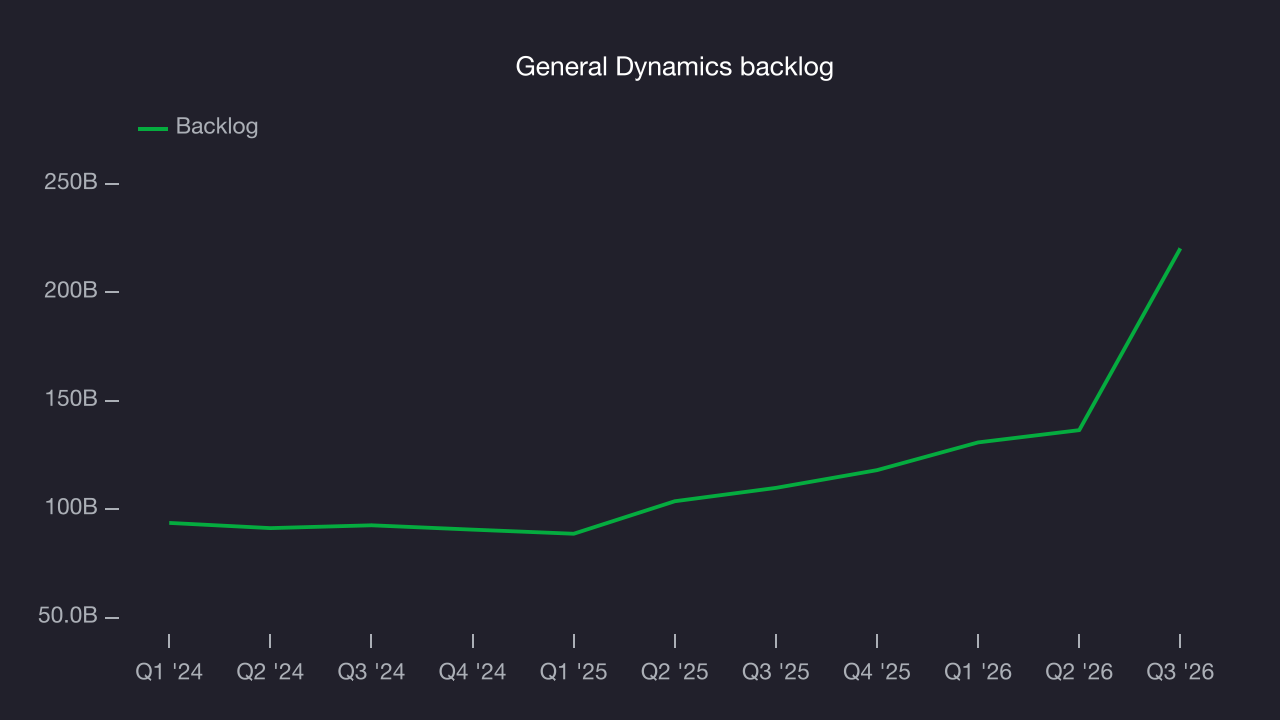
This quarter, General Dynamics reported year-on-year revenue growth of 12.9%, and its $14.57 billion of revenue exceeded Wall Street’s consensus estimates by 5.8%.
Looking ahead, sell-side analysts expect revenue to grow 2.3% over the next 12 months, according to S&P, a deceleration versus the last two years. This projection is underwhelming and suggests its products and services will face some demand challenges.
Operating margin
Operating margin is a key measure of profitability. Think of it as net income, the bottom line, excluding the impact of taxes and interest on debt, which are less connected to business fundamentals.
General Dynamics’s operating margin has generally stayed the same over the last 12 months, averaging 10.3% over the last five years. This profitability was solid for an industrials business and shows it’s an efficient company that manages its expenses well.
General Dynamics’s operating margin might have fluctuated slightly but has generally stayed the same over the last five years. This raises questions about the company’s expense base because its revenue growth should have given it leverage on its fixed costs, resulting in better economies of scale and profitability.
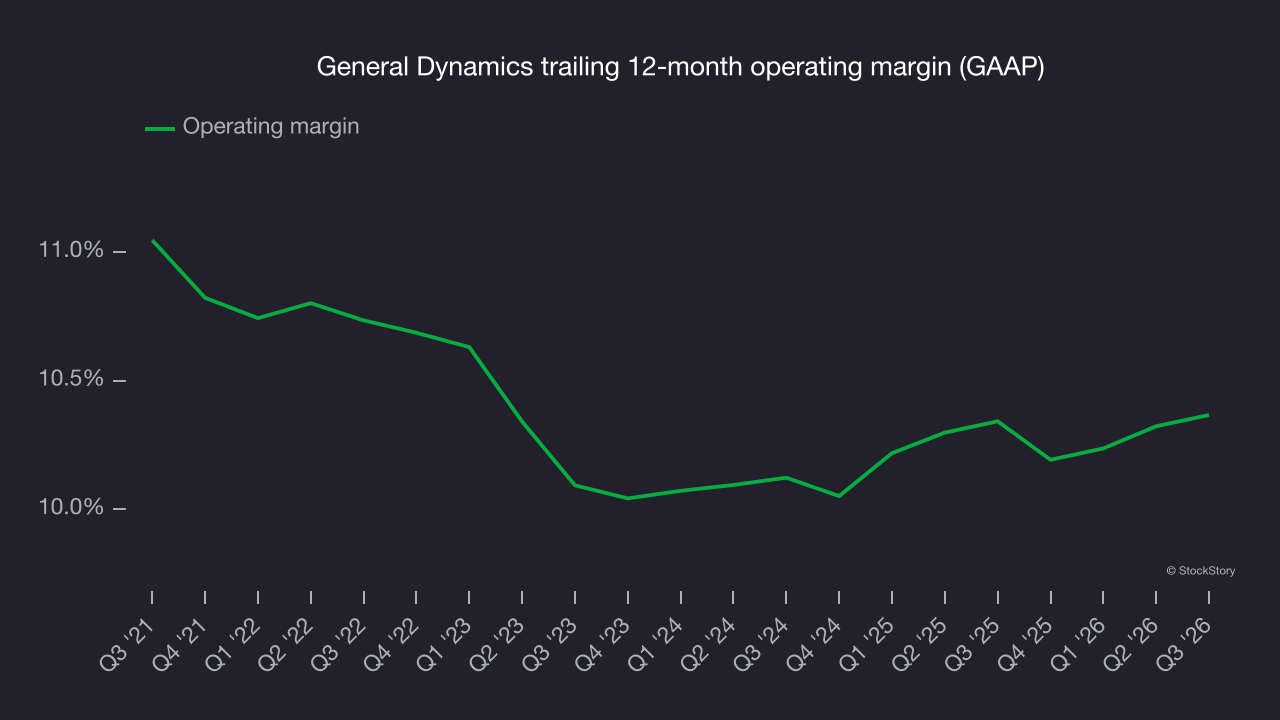
In Q3, General Dynamics generated an operating margin of 10.5%, in line with the same quarter last year. This indicates the company’s overall cost structure has been relatively stable.
Earnings per share
Revenue trends explain a company’s historical growth, but the long-term change in earnings per share (EPS) points to the profitability of that growth. For example, a company could inflate its revenue through excessive spending on advertising and promotions.
General Dynamics’s unimpressive 7.9% annual EPS growth over the last five years aligns with its revenue performance. This tells us it maintained its per-share profitability as it expanded.
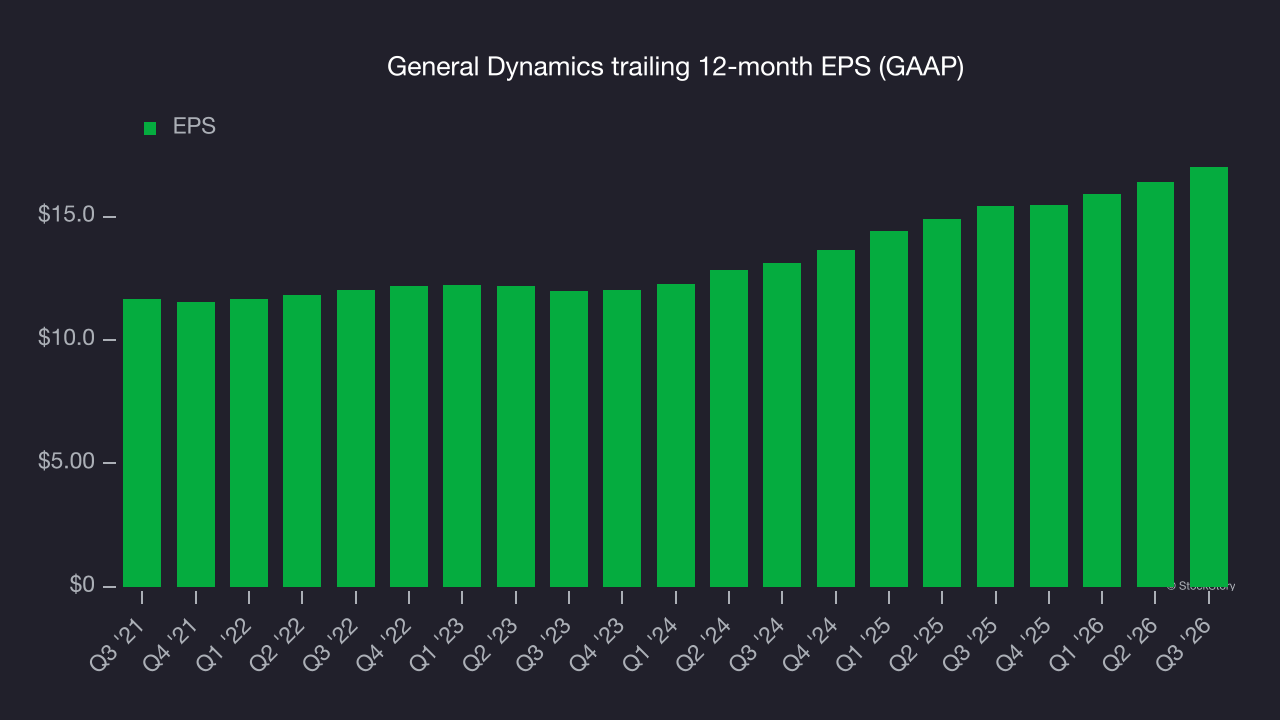
As with revenue, we analyze EPS over a shorter period to check for changes in the business.
General Dynamics’s two-year annual EPS growth of 13.8% was strong and topped its 10.8% two-year revenue growth.
We can take a deeper look into General Dynamics’s earnings quality to better understand the drivers of its performance. A two-year view shows that General Dynamics has repurchased its stock, shrinking its share count by 1.5%. This tells us its EPS outperformed its revenue not because of increased operational efficiency but financial engineering, as buybacks boost per share earnings. 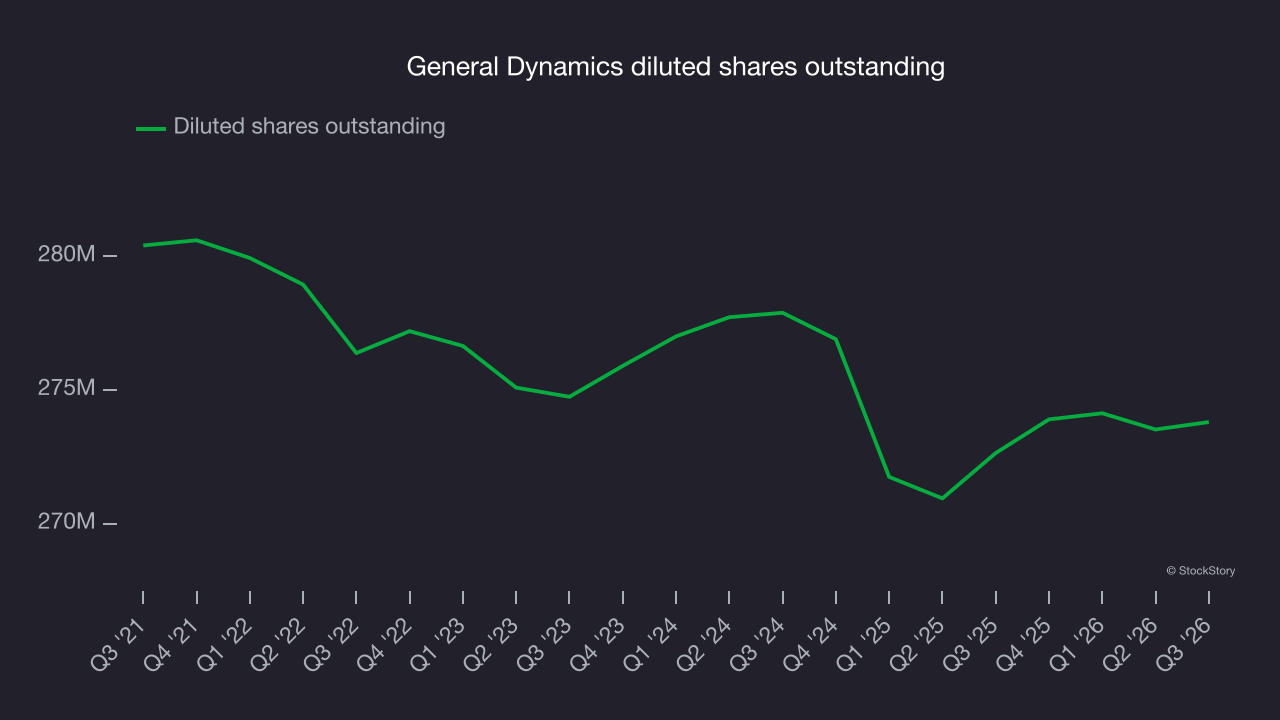
In Q3, General Dynamics reported EPS of $4.49, up from $3.88 in the same quarter last year. This result beat analysts’ consensus estimates by 8.6%. Over the next 12 months, Wall Street expects General Dynamics’s full-year EPS to grow 6.6% from $17.01 to $18.13, according to S&P.
Key takeaways from General Dynamics’s Q3 results
General Dynamics delivered a solid quarter, with revenue well above analysts’ consensus estimates and EPS also topping Wall Street’s estimates. Shares rose 2.2% to $378.80 immediately after the results.
General Dynamics had a solid quarter, but one earnings result doesn’t necessarily make the stock a buy. When making that decision, it’s important to consider its valuation, business quality and what happened in the latest quarter. For more on those factors, read the full research report here (it’s free).