
Why Constellation Energy Is Becoming a Bigger Part of the AI Trade
AI data centers consume substantial amounts of energy, with companies like Google, Amazon (AMZN), and Meta Platforms (META) tripping over one another to secure dependable electricity for years to come. That scramble is turning power generation into one of the most important and potentially lucrative pieces of the AI infrastructure buildout. That’s creating quite an opportunity for companies like Constellation Energy (CEG), which just received a conditional loan commitment of up to $5 billion to help finance upgrades across its nuclear fleet from the U.S. Department of Energy.
The projects could add roughly 1.1 gigawatts of generating capacity at eight existing nuclear plants. That's significant because Constellation doesn't necessarily need to build new nuclear plants to capitalize on soaring electricity demand. Better yet for investors, much of that additional electricity already has interested buyers. Google, Amazon, and Meta have struck long-term agreements tied to Constellation's nuclear facilities as they look for the around-the-clock electricity needed to support expanding data-center operations. That gives Constellation an attractive group of catalysts: rising demand, some of the world's deepest-pocketed customers, existing nuclear assets, and potentially cheaper government-backed financing to increase production.
More Power Without Building New Plants
Constellation plans to generate more electricity from its existing nuclear plants through upgrades known as “uprates.” These projects can involve improving turbines, generators, cooling systems, and other equipment so a plant can safely increase its output without building a new reactor. The company is considering upgrades at eight nuclear plants: six in Illinois, one in Maryland and one in Pennsylvania. Together, those projects could add nearly 1.1 gigawatts of generating capacity.
The problem facing the AI industry isn't simply how much electricity the U.S. can eventually produce. It's how quickly new dependable power can become available. All of which is a strong, positive catalyst for a company like Constellation.
Big Tech Is Already Buying
Customers are already lining up. Recent 20-year agreements with Google and Amazon have incentivized Constellation to invest more than $7 billion to add approximately 1,080 megawatts of nuclear capacity. Its separate agreement with Meta supports another 30-megawatt expansion at Clinton. Amazon has signed a 20-year power-purchase agreement associated with the Calvert Cliffs nuclear facility in Maryland. Meta has a long-term agreement connected to Constellation's Clinton nuclear facility in Illinois, including support for an additional 30 megawatts of capacity.
For Big Tech, securing dependable electricity is increasingly becoming a competitive necessity. For Constellation, it's becoming a business opportunity.
In addition, Constellation has already committed billions of dollars to increasing its nuclear output. If the government financing reduces the company's borrowing costs, the economics improve, too. That matters to shareholders. Lower financing costs can improve returns on invested capital and potentially increase the cash flow generated by projects over time. And when those investments are supported by long-term agreements with companies such as Google and Amazon, Constellation could have greater visibility into future demand. However, there are caveats.
The $5 billion commitment is conditional. It remains subject to due diligence, final financing agreements, and other requirements. Constellation has also said the commitment doesn't represent a final decision to proceed with every uprate being considered. But at the end of the day, Constellation owns what everyone else needs yesterday.
What Do Analysts Say About CEG Stock?
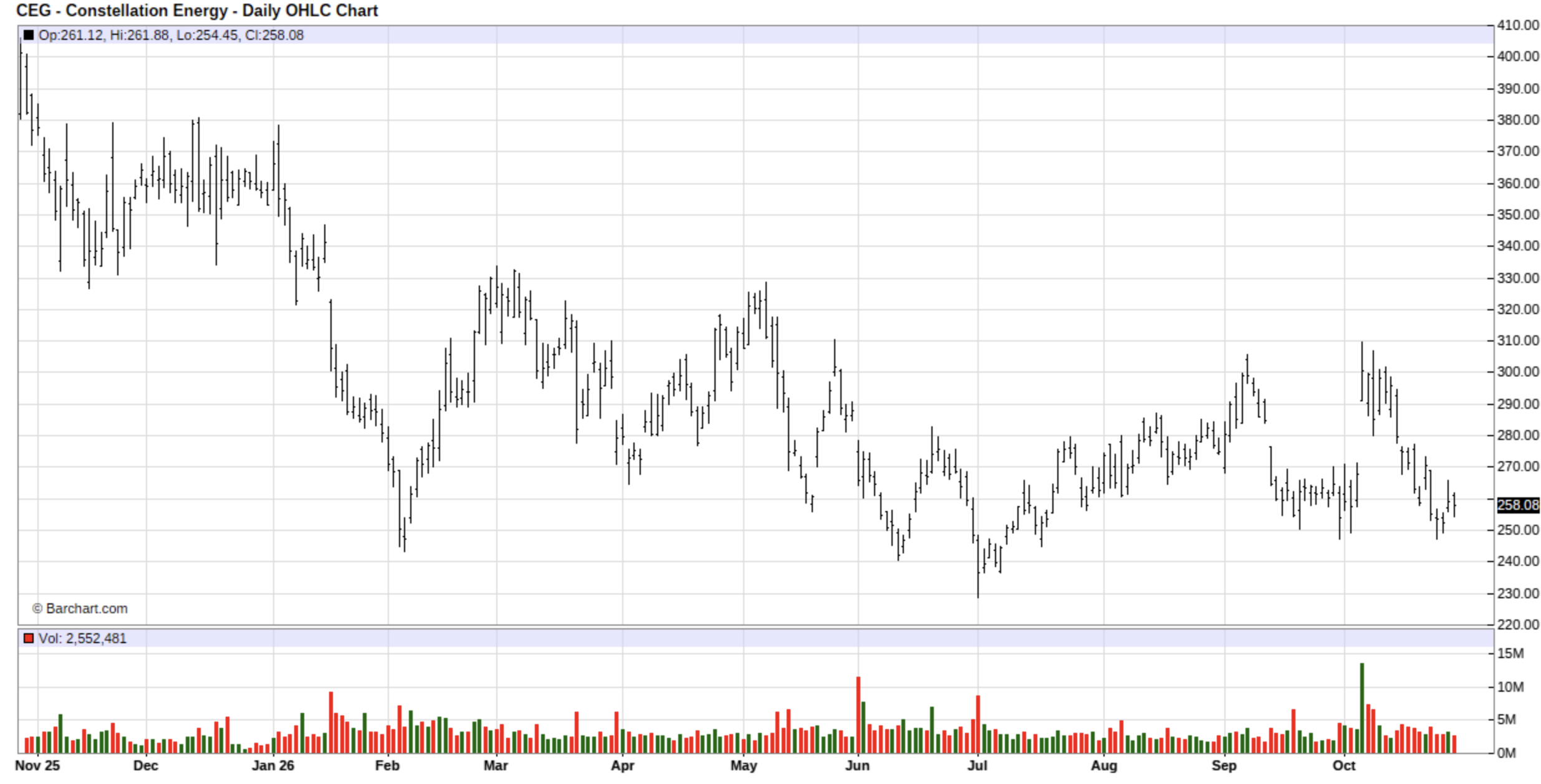
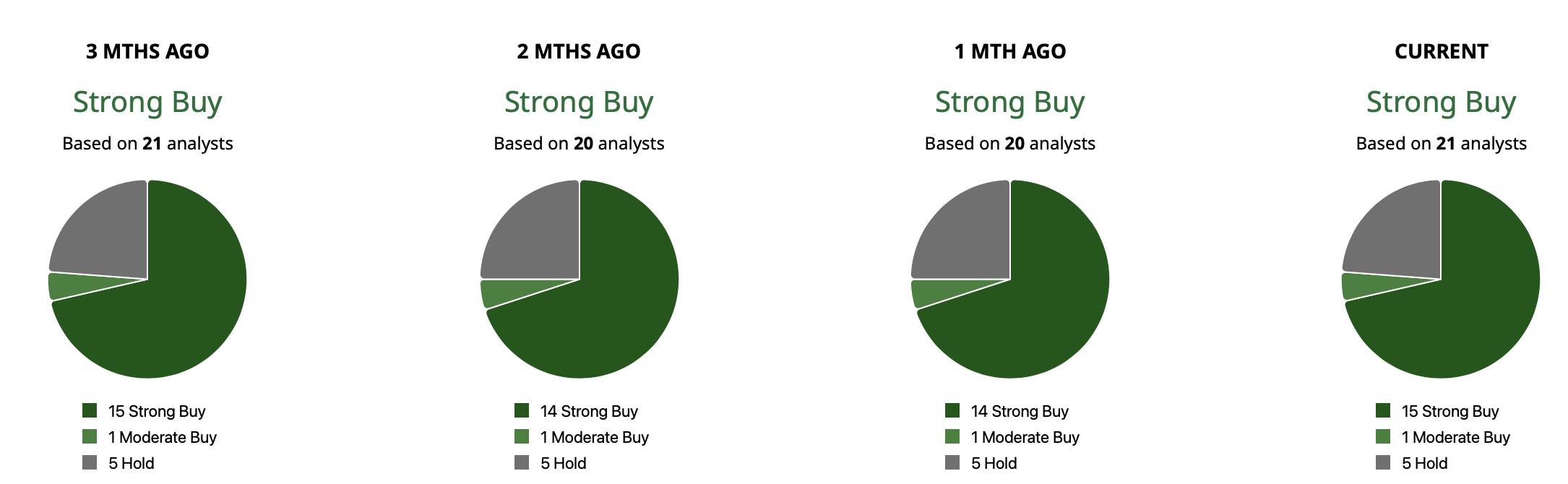
Overall, Constellation Energy has a consensus “Strong Buy” rating on Wall Street. Of the 21 analysts covering CEG stock, 15 have a “Strong Buy” rating, one has a “Moderate Buy” rating, and five have a “Hold” rating. The mean target price of $341.64 implies a potential upside of about 32% from current levels. Meanwhile, its high-end price target of $399 implies a potential upside of 55% from its current price of about $258.08.
Remember, electricity is quickly becoming one of AI's most valuable commodities. Constellation already has one of the largest portfolios of nuclear generating assets in the country, billions of dollars of investment planned, and long-term agreements with some of the world's biggest technology companies. Now, it could get access to as much as $5 billion in federal financing to help produce even more power from those assets. The AI trade started with chips. It expanded into servers, networking equipment, and data centers. Increasingly, the next bottleneck is electricity. And that could put Constellation Energy in the driver’s seat.
On the date of publication, Ian Cooper did not directly have a position in any of the securities mentioned in this article. All information and data in this article is solely for informational purposes. For more information please view the Barchart Disclosure Policy here.