
iBio (NASDAQ:IBIO) Is In A Good Position To Deliver On Growth Plans
Even when a business is losing money, it's possible for shareholders to make money if they buy a good business at the right price. For example, biotech and mining exploration companies often lose money for years before finding success with a new treatment or mineral discovery. But the harsh reality is that very many loss making companies burn through all their cash and go bankrupt.
So should iBio (NASDAQ:IBIO) shareholders be worried about its cash burn? In this article, we define cash burn as its annual (negative) free cash flow, which is the amount of money a company spends each year to fund its growth. The first step is to compare its cash burn with its cash reserves, to give us its 'cash runway'.
Does iBio Have A Long Cash Runway?
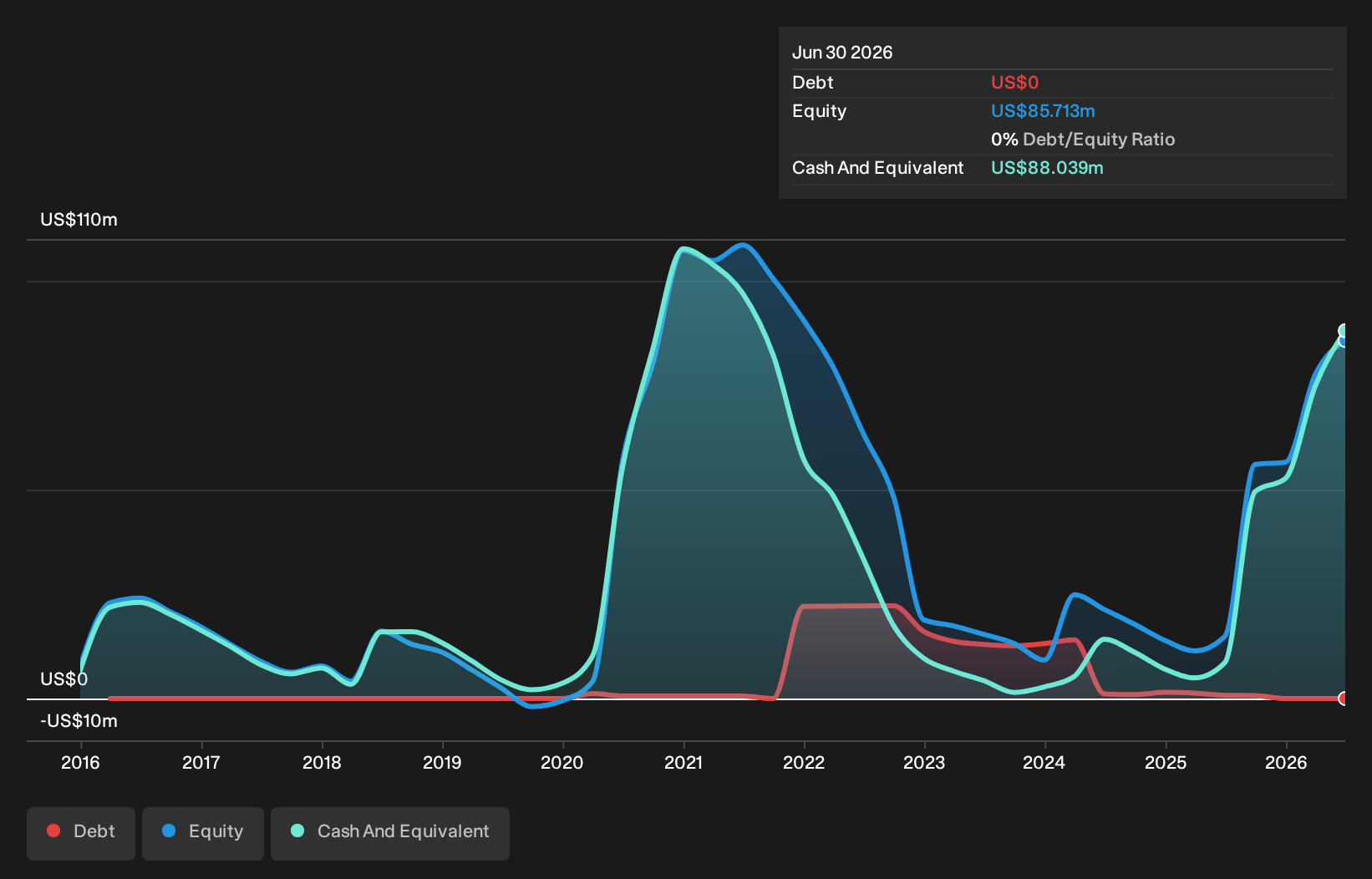
A cash runway is defined as the length of time it would take a company to run out of money if it kept spending at its current rate of cash burn. When iBio last reported its June 2026 balance sheet in August 2026, it had zero debt and cash worth US$88m. Importantly, its cash burn was US$24m over the trailing twelve months. So it had a cash runway of about 3.7 years from June 2026. A runway of this length affords the company the time and space it needs to develop the business. You can see how its cash balance has changed over time in the image below.
See our latest analysis for iBio
How Is iBio's Cash Burn Changing Over Time?
Whilst it's great to see that iBio has already begun generating revenue from operations, last year it only produced US$100k, so we don't think it is generating significant revenue, at this point. As a result, we think it's a bit early to focus on the revenue growth, so we'll limit ourselves to looking at how the cash burn is changing over time. Over the last year its cash burn actually increased by a very significant 55%. Oftentimes, increased cash burn simply means a company is accelerating its business development, but one should always be mindful that this causes the cash runway to shrink. While the past is always worth studying, it is the future that matters most of all. So you might want to take a peek at how much the company is expected to grow in the next few years.
How Easily Can iBio Raise Cash?
Given its cash burn trajectory, iBio shareholders may wish to consider how easily it could raise more cash, despite its solid cash runway. Companies can raise capital through either debt or equity. Many companies end up issuing new shares to fund future growth. We can compare a company's cash burn to its market capitalisation to get a sense for how many new shares a company would have to issue to fund one year's operations.
iBio's cash burn of US$24m is about 46% of its US$52m market capitalisation. From this perspective, it seems that the company spent a huge amount relative to its market value, and we'd be very wary of a painful capital raising.
Is iBio's Cash Burn A Worry?
Even though its cash burn relative to its market cap makes us a little nervous, we are compelled to mention that we thought iBio's cash runway was relatively promising. Cash burning companies are always on the riskier side of things, but after considering all of the factors discussed in this short piece, we're not too worried about its rate of cash burn. Taking a deeper dive, we've spotted 5 warning signs for iBio you should be aware of, and 3 of them are a bit concerning.
If you would prefer to check out another company with better fundamentals, then do not miss this free list of interesting companies, that have HIGH return on equity and low debt or this list of stocks which are all forecast to grow.
Have feedback on this article? Concerned about the content? Get in touch with us directly. Alternatively, email editorial-team (at) simplywallst.com.