
Kioxia's results are about to be released: the stock price performance has fallen from “the best in the world” to the “worst in the sector”, and market expectations are already full
The Zhitong Finance App learned that from the best-performing stocks in the world to the worst performing individual stocks in the memory chip sector, the rapid reversal in Kioxia Holdings' stock price has caused its upcoming results to face a high threshold.
Global chip stocks were violently sold off due to market concerns about whether large technology companies could continue to fund artificial intelligence infrastructure construction, and Kioxia's stock price was also affected. In addition to this, Kioxia also faces fierce competition: South Korean rivals have market advantages, and threats from Chinese manufacturers are increasing.
As of Thursday, Kioxia's Tokyo-listed stock had fallen 60% from its June high, making it the worst performing stock in the world's major memory chip stock portfolios tracked by CITIC CLSA (Citic CLSA) during the same period. Markets generally expect that the company's earnings report to be released later on Friday will show a third consecutive quarter of four-digit profit growth, making it difficult to surprise investors any more.
“The market is already expecting a strong quarter, so handing over a good report card may be difficult to change market sentiment,” said Charles Henry Monshaw, chief investment officer at Banque Syz. He's looking for signs that prices will continue to rise and signs of progress on long-term agreements with hyperscale cloud vendors.
The year-round increase is still 280%, but the aura is fading
Despite the recent sharp pullback, Kioxia's stock price has risen 280% since this year. During this period, it became the best-performing stock in the world, and briefly ranked among the companies with the highest market capitalization in Japan. Strong demand from large technology companies drove product prices to soar, driving storage-related stocks higher until a recent wave of questions about artificial intelligence hit.
The price of NAND flash memory continues to rise, and supply shortages caused by artificial intelligence have even boosted the price of mature chips used in products such as personal computers and smartphones. However, Meng Shaw said that this is already well known in the market, and sales of data centers and enterprise-grade solid-state drives (SSDs) are the more important points.
“The enterprise SSD sector has higher margins, and customer relationships tend to last longer,” he said. “Once it falls behind, Kioxia will be more exposed to the consumer market, where demand is weaker and pricing capacity is more limited.”
Kioxia's NAND market share lags behind Samsung Electronics and SK Hynix. The two Korean giants have an advantage in data center sales because they can bundle memory chips with high-bandwidth memory (HBM). Kioxia, on the other hand, does not have HBM products.
Another worrying factor is the growing strength of Chinese rivals, such as Changjiang Storage. According to Counterpoint Research's report, in the second quarter of 2026, Changjiang Storage surpassed Kioxia and Micron Technology in terms of NAND shipments, ranking third.
Valuation is close to a historically low level, can dividends be a turning point?
Kioxia's stock price has become cheaper. Currently, the forward price-earnings ratio is about 3.5 times, close to its lowest level in history, and lower than the average of 5.2 times the CITIC Lyon Securities tracking portfolio. Resona Holdings strategist Hiroki Takei said the company has indicated plans to begin paying dividends in the next fiscal year or earlier, which may help improve valuations.
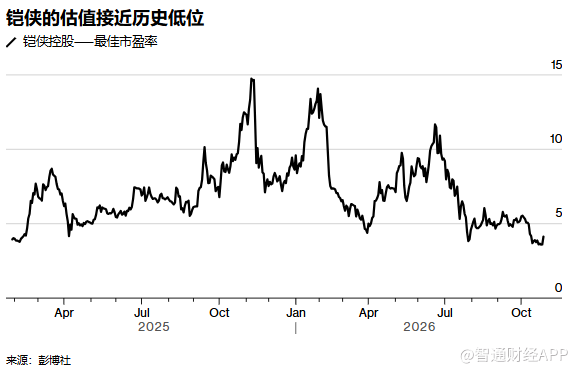
“Once dividends are introduced or raised, it's not easy for companies to cut back,” Takei said. “This will therefore send a signal to the market that management itself also expects strong profits to continue.”
On Friday, Kioxia shares fell 9.9% before earnings were released. Previously, the results and guidance announced by its peer and joint venture partner SanDisk were better than expected, but the stock price still fell, highlighting investors' deep doubts about the sustainability of the storage cycle and the boom in artificial intelligence.
Ashwin Binwani, founder of private investment firm Alpha Binwani Capital, said that this doubt made it critical for Kioxia to win long-term commitments from customers on favorable terms.
“We want to know how much demand has been locked in, how broad the customer base is, and whether profitability can be maintained as price increases slow,” he said. “To increase our holdings of Kioxia, we need to see evidence that its profits have not only exceeded expectations, but are becoming more sustainable.”