
The Call BSE Bulls Got Right
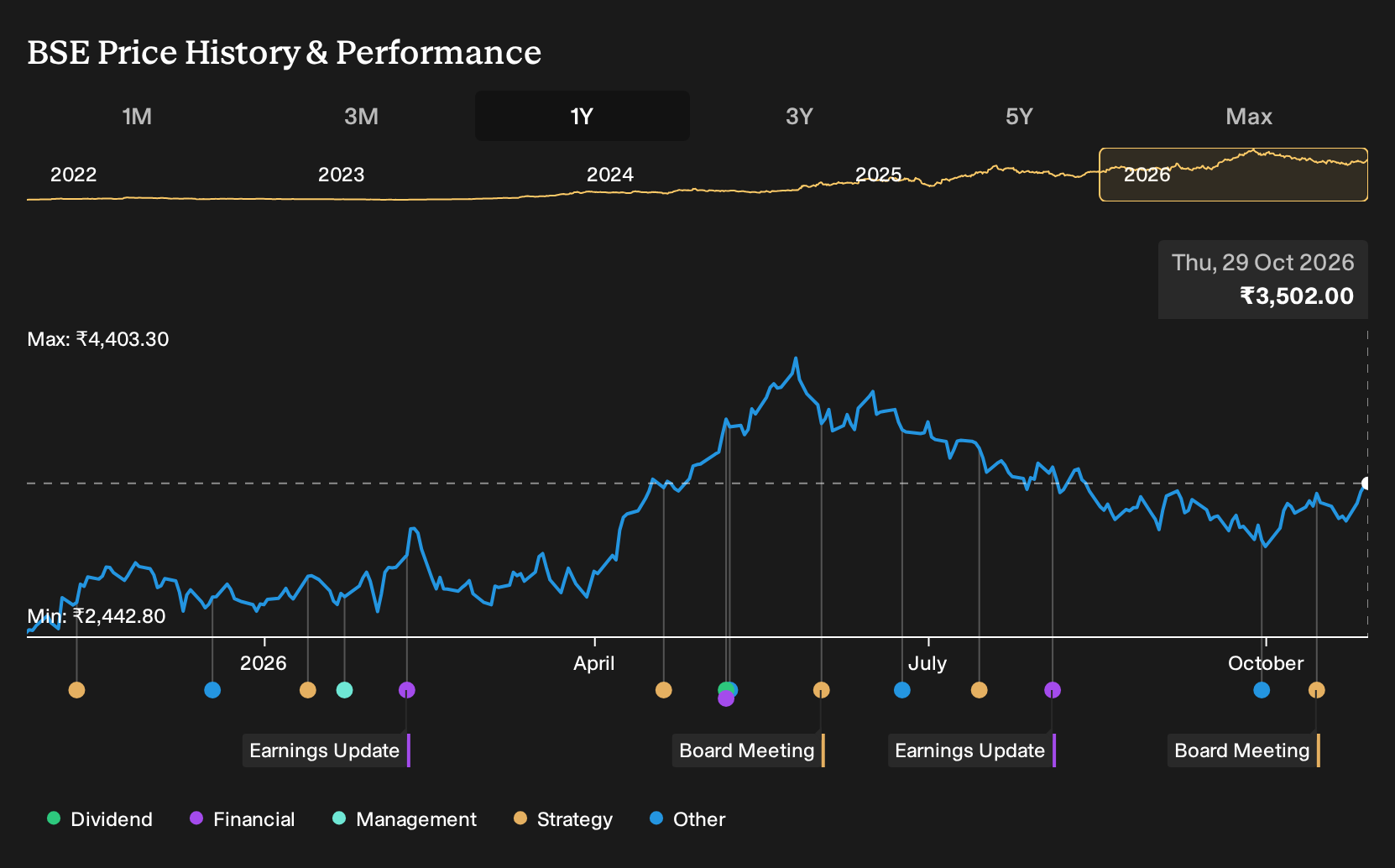
If you picked BSE on 29 October 2025, you were stepping into a live argument about whether digitization and rising derivatives activity could outweigh threats from passive investing and blockchain. Investors who held BSE over the past year are up 43.7%, including dividends. That result now sits beside fresh quarterly numbers showing higher revenue and profit. If that decision were in front of you again today, which data points would carry the most weight?
If the move has made BSE harder to judge, start where the gap is still open and scan 140 high quality undervalued stocks.
The Two BSE Narratives You Had To Weigh
The shares cost ₹2,447 at the start of the period, and you were choosing between two sharply different stories about where BSE might be heading.
The bullish narrative pointed to a Fair Value of ₹2,575, a notional price implied by assumptions that revenue could grow 17.9% a year with profit margins reaching 51.7%, helped by a stronger derivatives and SME platform.
The bearish script argued for a Fair Value of ₹1,328, based on expectations of 14.3% revenue growth, 51.5% margins, and a future P/E of 30x as passive investing and blockchain chipped away at transaction fees.
What The Results Changed For The BSE Debate
The cleanest datapoint arrived with the Q1 2027 release. BSE reported revenue of ₹17,012.0m and net income of ₹8,740.2m, up from ₹10,374.5m and ₹5,274.6m a year earlier, with net margin edging from 50.8% to 51.4%. That combination of higher turnover and slightly better profitability leaned toward the optimistic case without invalidating the cautious script.
The lesson here is simple. When a thesis hinges on whether a business can hold or lift profitability, treat net margin as the main checkpoint and track how each new result moves that line, rather than focusing only on revenue growth.
What BSE's Current Price Already Assumes
BSE now trades at ₹3,502, well above where this period started, and the selected Narrative places its Fair Value below that figure rather than above it.
The Narrative focuses on whether derivatives driven income and high margins can hold up as tax, collateral and data rule changes reshape how traders use the exchange.
"The combination of higher securities transaction tax on futures and the RBI bank guarantee circular that applies from July 1, 2026 is already affecting overall futures activity and may increasingly weigh on options as existing guarantees roll off. This can cap BSE’s derivatives transaction charges and pressure revenue and earnings if clients structurally scale back leverage."
The price and this Narrative do not agree. → Uncover what this Narrative says BSE is actually worth
One Step Beyond BSE
BSE puts trading directly in front of you. The harder question is what quietly supports that activity in the background.
On the other side of those orders, large institutions still need help raising capital and managing risk across markets.
One global finance specialist leans on fee income and interest spreads, using its balance sheet and deal teams instead of trading venues.
Its focus on financing, asset and wealth mandates, and transaction banking highlights a different way trading intensity can become long lived revenue.
For investors, the open question is how durable those behind the scenes cash flows might be.
The case is on the record, with the assumptions it rests on. → See the Narrative that values this company 35% above its price
Have feedback on this article? Concerned about the content? Get in touch with us directly. Alternatively, email editorial-team@simplywallst.com