
What NeoGenomics Holders Bought Into Before A 75% Run
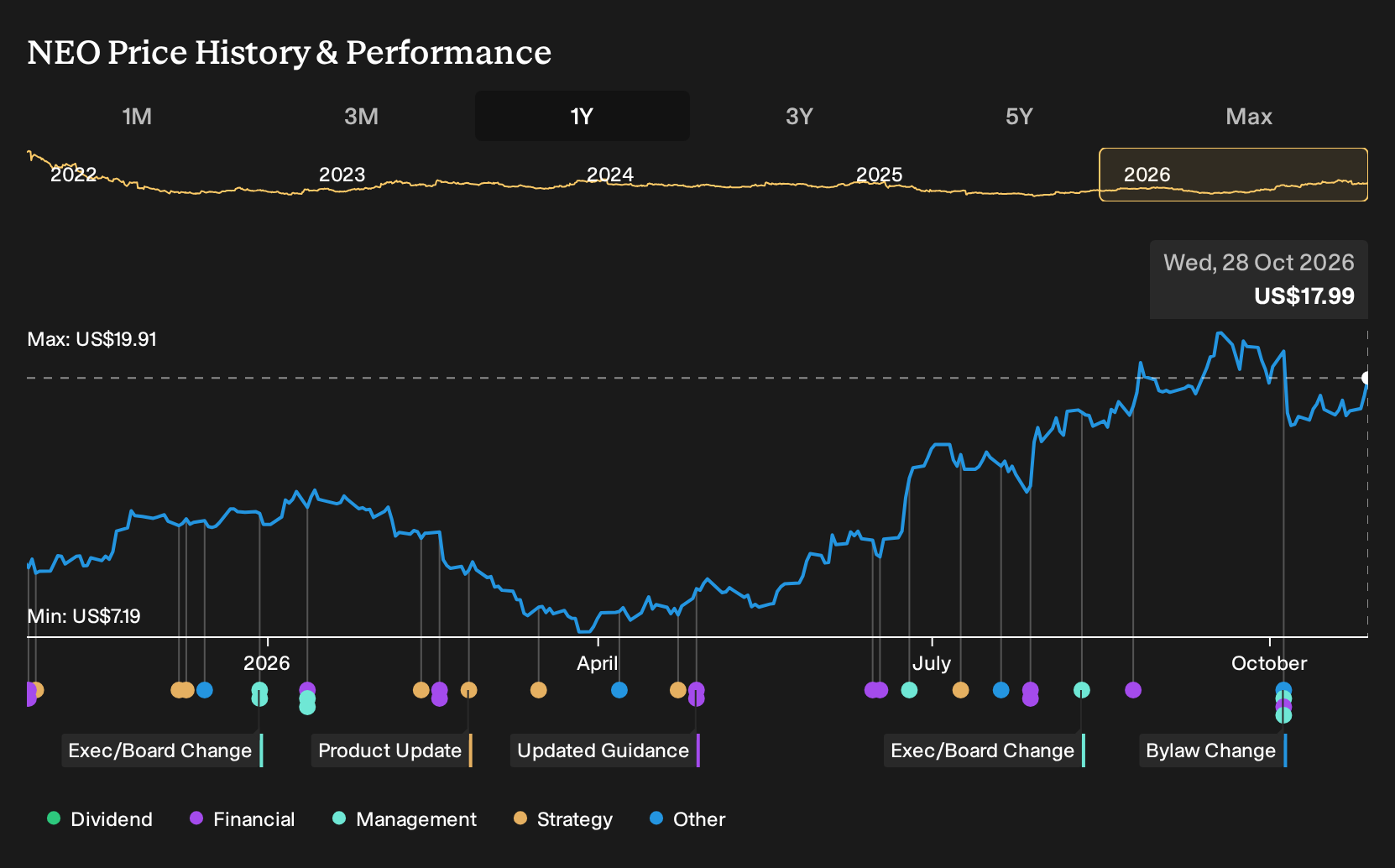
If you had bought NeoGenomics on 28 October 2025 and simply sat tight, the outcome over the next twelve months looks very different to what many investors feared. Investors who held NeoGenomics over the past year are up 75.0%, including dividends. That gain now sits alongside fresh headlines on Medicare coverage for RaDaR ST and new oncology tests. The real question is what early buyers were weighing in 2025, with pharma services under pressure and execution risk still front of mind.
Narratives are how investors here put a case on the record, with explicit assumptions about revenue, margins and the multiple. Those assumptions imply an estimated Fair Value.
This theme extends beyond NeoGenomics. See which of 36 healthcare AI stocks may still merit a closer look.
The Two NeoGenomics Stories Investors Had To Weigh
The shares cost US$9.92 at the start of the period, and NeoGenomics investors were effectively choosing between a growth story and an execution story.
The bullish Narrative put Fair Value at US$14, or 41% above the start price. It leaned on revenue growth of 10.7% and an assumed shift in profit margin to 5.3%, helped by automation, digital pathology, and aging populations that could support higher oncology testing volumes.
The bearish Narrative saw Fair Value at US$6.5, or 34% below the start price. It assumed revenue growth of 8.5% and a 5.4% margin, but focused on underutilized pharma services, regulatory complexity, and delays around products such as PanTracer as key risks to demand and earnings stability.
What The NeoGenomics Results Actually Tested
Expanded Medicare coverage for RaDaR ST and the launch of the FDA approved PTEN IHC companion test backed the bullish NeoGenomics story that focused on new oncology assays and better utilization. Q2 2026 numbers reinforced that argument, with revenue at US$201.7m and net income shifting from a loss of US$45.1m in Q2 2025 to a profit of US$2.2m and net margin moving from -24.9% to 1.1%. Profitability still looked early, so the evidence cut both ways.
The useful takeaway is simple. When a thesis hinges on better margins from new products and automation, watch two things together. Track whether fresh tests like RaDaR ST and PTEN IHC are actually launched and reimbursed, then check if net margin and absolute profit move in the same direction over several reports.
What NeoGenomics' Price Now Asks You To Believe
NeoGenomics now trades at US$17.99, after a 75.0% gain over the past year from US$9.92. The selected Narrative sees Fair Value below that quote, arguing the stock already bakes in a lot of hope around higher margin testing.
The question shifts to durability. A buyer today must judge whether the higher value NGS and MRD mix can consistently pull margins and free cash flow higher despite legal issues, leverage and weaker nonclinical work.
"Key Takeaways: Bearish analysts expect continued pressure from the weaker nonclinical segment, legal and regulatory overhangs, and balance sheet strain to keep NeoGenomics unprofitable and at risk of missing future financial targets. The main factor that needs to go right is that NeoGenomics converts its growing, higher value NGS and MRD testing mix into sustained margin expansion and consistent free cash flow generation, while keeping regulatory and legal issues contained."
One Narrative disagrees with today's price. → See where this Narrative says NeoGenomics should trade
Looking One Step Beyond NeoGenomics
NeoGenomics focuses on diagnostics, but your care bill starts earlier. It begins with who designs the plan and pays the claims.
One large operator concentrates on that problem. It builds health plans, pays hospitals and doctors, and manages prescriptions.
To keep that machine running, it pushes technology into claims handling, call centers and clinical paperwork.
It also tests care models that reward outcomes instead of volume, changing incentives.
If those tools reduce waste and guide patients into better managed care, the economics of testing, treatment and coverage could shift together.
That argument has a Narrative and a number behind it. → See the company one Narrative values 18% above its price
Have feedback on this article? Concerned about the content? Get in touch with us directly. Alternatively, email editorial-team@simplywallst.com