
What Bread Financial Shareholders Got Right
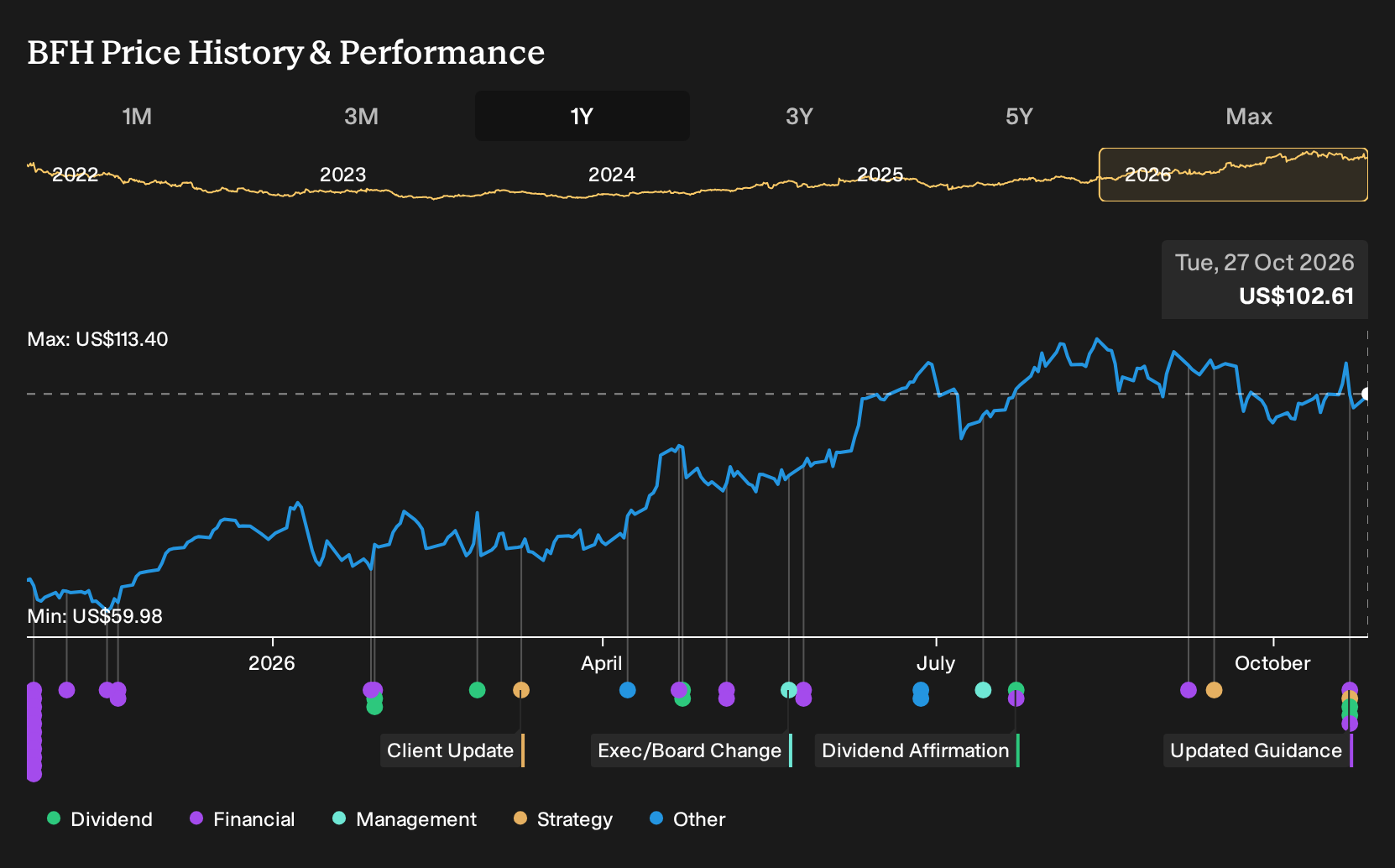
Bread Financial spent the past year signing fresh partner deals, such as Ford’s co branded card and installment program, while also renewing long relationships, including Signet’s credit agreement through 2035. Yet the real story for investors was in the payoff. For Bread Financial shareholders, the return over the past year was 55.3%, including dividends. If you were deciding on 26 October 2025, what did you need to believe about credit quality, funding and partner economics before any of this news hit the tape?
Bread Financial has already moved. See which of 29 high quality undervalued stocks still trade below our estimates.
The Two Bread Financial Stories Investors Were Arguing About
The shares cost US$65.5 at the start of the period, and anyone looking at Bread Financial then was really choosing between two coherent stories about the same business.
The bullish narrative pointed to a fair value of US$98, a price implied by assumptions of faster credit metric improvement and payoff from digital and AI investments. Supporters focused on strong liquidity above US$7.7b and rising direct deposits as fuel for buybacks, new products, and partner renewals.
The bearish view anchored on a fair value of US$51, an implied price built on worries that regulation and alternative payments would pressure margins. That camp highlighted the risk that dependence on private label and co-branded partnerships could hurt revenue if contracts were repriced or lost.
What The Results Changed For The Bread Financial Debate
The clearest data point for Bread Financial was Q3 2026, when revenue reached US$696m compared with US$672m a year earlier, yet net income slipped to US$150m from US$188m and net margin moved from 28.0% to 21.6%. That combination supported the cautious case that credit costs and funding pressures could weigh on profitability even while partner growth and new products helped the top line.
The lesson is simple. When a thesis hinges on better credit quality and funding, it may be useful to track net loss rates, funding mix, and net margin together rather than only watching headline revenue or earnings per share at the next lender on your list.
What Bread Financial's 55% Run Already Prices In
Bread Financial now trades at US$102, with the selected Narrative’s Fair Value sitting below that level. The Narrative argues that after a 55.3% move over the past year, today’s quote already bakes in a lot of faith in credit quality, deposit growth, and newer products.
The key judgement is whether improving loan performance and customer funding can keep offsetting richer retailer profit sharing, lower late fees, and heavier AI and technology spending so that earnings power does not get squeezed. A buyer today would need to believe that this trade off keeps working.
"Although Bread Financial Holdings is reporting improving credit metrics and a customer base skewed toward higher credit scores, the guidance for the net interest margin to remain only flat to slightly higher than 2025 while late fee income is pressured indicates that better credit quality may increasingly come at the cost of lower yield and fee revenue."
The price and this Narrative do not agree. → Uncover what this Narrative says Bread Financial is actually worth
Where Bread Financial’s Rail Leads Next
Bread Financial lives where cards, credit, and retailers meet. Your attention naturally stops there.
Take one step further out. Every swipe, tap, or online checkout still needs global plumbing to clear and settle.
Another payments specialist focuses on that network layer, linking banks and merchants worldwide while avoiding direct lending risk.
It earns a fee each time money moves, then reinvests heavily in security, analytics, and new payment flows.
If Bread Financial keeps riding card spending, that broader toll-road model could shape how you think about the whole sector’s risk and reward mix.
The case is on the record, with the assumptions it rests on. → See the Narrative that values this company 22% above its price
Have feedback on this article? Concerned about the content? Get in touch with us directly. Alternatively, email editorial-team@simplywallst.com